Best Insulated Lunch Bags for Hot Food: 9 Picks in 2027

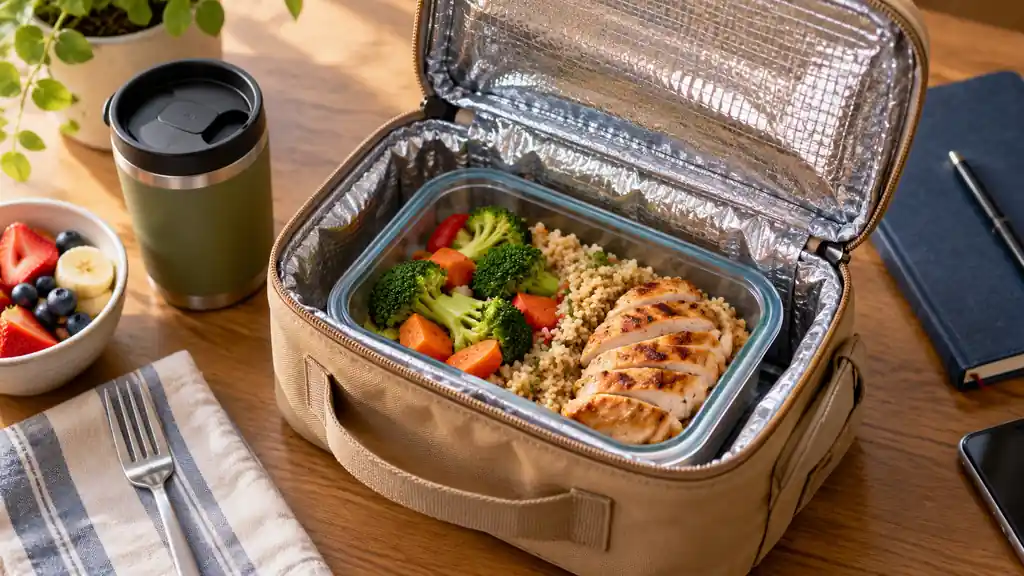
A hot lunch can lose its appeal before you reach the break room. A foil-wrapped meal may arrive lukewarm, a paper bag can soften under condensation, and a regular tote offers little protection from a cold car or a sunny picnic table. The best insulated lunch bags for hot food slow that temperature loss by surrounding the meal with an insulated, reflective interior and a closure that limits outside air exchange.
These bags do not actively reheat food, so buyers should avoid treating insulation like an electric warming system. The useful details are the interior dimensions, closure style, liner construction, carrying strength, cleaning requirements, and the length of the trip. A small reusable lunch tote suits a single work meal, while a restaurant or catering operation may need dozens or hundreds of disposable-style carriers. Different buyers also have different priorities, which is why this list includes personal lunch bags, reusable grocery totes, and bulk food-delivery options.
The strongest overall match is the Superio Hot and Cold Insulated Bag because its triple-layer construction, rigid closure, and compact 13 x 5.5 x 8.5-inch format fit short food-delivery runs and individual hot lunches particularly well. Several bulk options make more sense for catering or event service, while the TELLUMO is a lighter daily carry for office lunches and picnics.
Quick Answer
- Best Overall: Superio Hot and Cold Insulated Bag for its layered construction and interlocking closure.
- Best for Daily Lunches: TELLUMO Insulated Lunch Bag for a lightweight, portable design and stated four-hour insulation claim.
- Best for Bulk Catering: Hushee 200-Piece Insulated Takeout Bags for its large package quantity and roomy 10.24 x 11.02 x 6.69-inch format.
Best Insulated Lunch Bags for Hot Food Comparison Table
| Product | Best For | Construction | Size or Capacity |
|---|---|---|---|
| Superio Hot and Cold Insulated Bag | Best overall | Triple-layer liner, interlocking closure | 13 x 5.5 x 8.5 in |
| TELLUMO Insulated Lunch Bag | Daily office lunches | Insulated lining, magic-tape closure | 8.86 x 5.31 x 10.04 in |
| Reusable Insulated Grocery Bags | Large personal loads | PE foam and foil lining, zipper | 18L, 12 x 7 x 13 in |
| 120-Piece Insulated Takeout Bags | Large food-service quantities | Non-woven exterior, foil interior | 9.5 x 6 x 9.5 in |
| 110-Piece Insulated Takeout Bags | Events and catering | Water-resistant exterior, foil liner | 9.5 x 6 x 9.5 in |
| Hushee 200-Piece Takeout Bags | High-volume packing | Non-woven exterior, foil liner | 10.24 x 11.02 x 6.69 in |
| Feedtrie Insulated Takeaway Bags | Self-adhesive food packaging | Three layers, adhesive closure | 9.4 x 9.4 x 5.9 in |
| ZENFUN Insulated Takeaway Bags | Small mixed-color sets | Waterproof non-woven fabric, foil | 9.3 x 5.7 x 9.3 in |
| FoldTier Insulated Bags | Picnics and food service | Foil-lined carrier, handle | 9.45 x 9.45 x 5.91 in |
The detailed reviews below show where each bag fits, from a single warm lunch in a backpack to repeated takeout packing for a busy event.
1. Superio Hot and Cold Insulated Bag — Best Overall

The Superio earns the top position because its construction addresses the everyday weak points of a hot-food carrier. The listing describes a triple-layer design with a thermal aluminum outer layer, a waterproof EPE layer, and an inner PE film layer. That combination creates more separation between a warm meal and the surrounding air than a thin single-layer tote, which matters during a commute, a grocery run, or a short delivery route.
The 13 x 5.5 x 8.5-inch format is relatively narrow, so it feels better suited to an individual order or lunch container than a large family meal. Its hard handle and interlocking hard-top closure are useful details when a bag is riding in a car, where a loose flap can shift and allow heat to escape. The listing also describes use for hot food, frozen food, beach trips, lunches, and picnics. This is a passive carrier, however, and the product information does not establish a measured internal temperature or a guaranteed holding period.
Pros
- Triple-layer construction includes aluminum, EPE, and PE film layers.
- Interlocking hard-top closure helps limit air exchange.
- Rigid handle makes short-distance carrying easier.
- Suitable for both warm meals and chilled or frozen items.
- Compact dimensions fit individual lunches and smaller delivery orders.
Cons
- The narrow interior may not suit wide meal-prep containers or large orders.
- It provides passive insulation rather than active heating.
This bag makes the most sense for someone who wants one carrier for weekday lunches, grocery transport, and occasional food delivery. Pack hot food in a sealed container and close the top promptly for the best chance of retaining warmth. Buyers carrying several large containers should choose a wider bulk bag instead, while anyone needing reheating will need an electrically powered product that is outside this category.
To buy this product, click here.
2. TELLUMO Insulated Lunch Bag — Best for Daily Office Lunches

The TELLUMO is shaped more like a personal lunch tote than a restaurant carrier, and that narrower purpose is a strength. It measures 8.86 x 5.31 x 10.04 inches and weighs about 120 grams according to the supplied product information. A worker carrying a meal, a snack, and a drink can slip it into a routine without the bulky feel of a larger grocery bag, while the 4.72-inch handle gives it a straightforward grab-and-go profile.
The magic-tape closure opens quickly with one hand and is described as leakproof, while the lining can be wiped clean. The listing claims insulation for up to four hours, but that should be treated as a product claim affected by starting food temperature, container choice, ambient heat, and how often the bag is opened. The design is useful for work, travel, and picnics, though the soft closure is less substantial than the Superio’s rigid interlocking top.
Pros
- Lightweight construction is practical for routine commuting.
- Interior dimensions accommodate a full meal, snacks, and drinks.
- Magic-tape closure allows quick one-handed access.
- Wipe-clean lining simplifies daily maintenance.
- Product information states insulation for up to four hours.
Cons
- The smaller personal format is unsuitable for large catering orders.
- The stated four-hour duration is a claim, not an independently verified result.
Choose the TELLUMO for a desk drawer, backpack, or office refrigerator routine where light weight matters as much as insulation. It is especially convenient for someone who opens the bag at lunch and carries it home afterward. A meal-prep user with wide containers or several bulky dishes will find the narrow body restrictive, and the soft closure demands sensible packing if liquids are involved.
To buy this product, click here.
3. 2-Piece 18L Reusable Insulated Grocery Bags — Best for Large Personal Loads

For a hot meal that arrives with drinks, fruit, or several containers, the extra room of these reusable grocery bags is more useful than a slim lunch tote. Each bag is listed at 18 liters with 12 x 7 x 13-inch dimensions, giving the tall interior room for grocery items, pizza, bottles, or a larger packed meal. The multi-layer construction combines non-woven fabric, PE foam insulation, and aluminum foil lining.
A zipper provides a more complete closure than an open-top shopping bag, and wrap-around handles with reinforced stitching are intended for repeated carrying. The pair also folds flat for storage, which is handy when the bags live in a vehicle or kitchen cupboard between trips. Since the product is a large grocery-style carrier rather than a structured food-service box, buyers should check the shape of their containers and avoid assuming the full 18-liter figure equals usable space for every meal setup.
Pros
- 18-liter capacity supports larger meals, drinks, and groceries.
- PE foam and aluminum foil provide layered passive insulation.
- Zippered top helps contain the warm interior.
- Reinforced stitching and wrap-around handles support repeated use.
- Two bags can be folded flat for storage.
Cons
- The grocery-tote shape may not hold containers as securely as a rigid carrier.
- Its larger footprint is excessive for a single small lunch.
This set is a sound choice for families, meal preppers, or anyone picking up a warm entrée with sides and drinks. Picture a Saturday drive from a restaurant to a picnic: the tall format gives the order breathing room without forcing every container into a cramped stack. A solo commuter carrying one sandwich and a small thermos should choose the TELLUMO instead, since the 18L size trades compactness for flexibility.
To buy this product, click here.
4. 120-Piece Insulated Takeout Bags — Best for High-Volume Food Packing

This set is aimed at a very different lunch-bag problem: packing many individual hot meals for restaurant delivery, events, donations, or repeated outings. The supplied dimensions are approximately 9.5 x 6 x 9.5 inches, and the listing describes a waterproof non-woven exterior with an aluminum foil inner layer. The handles use ultrasonic heat pressing, a construction detail intended to improve load support when a bag contains food containers and drinks.
The package quantity makes this option practical for a café, caterer, or community event that needs a fresh carrier for each order. The product information states that the bags can hold approximately 11 pounds and can keep food warm for three hours in winter conditions, but those figures should be viewed as listed claims rather than guarantees across all meals. The bags can also carry cold food, groceries, or picnic supplies, although the relatively shallow 6-inch dimension may limit tall containers.
Pros
- Large 120-piece quantity suits repeated food packing.
- Waterproof non-woven exterior is easier to manage around spills than paper.
- Aluminum foil interior supports hot and cold transport.
- Heat-pressed handles are intended for heavier loads.
- 9.5 x 6 x 9.5-inch format fits many individual takeout orders.
Cons
- The bulk quantity is excessive for ordinary household lunch use.
- The stated three-hour warm period depends on food, weather, and packing conditions.
Restaurants and event organizers should choose this set when throughput matters more than long-term storage efficiency. A volunteer handing out dozens of packed meals can use the bags as consistent carriers, while a single office worker will have little reason to store 120 pieces. The bags are insulated transport packaging, not a source of heat, so hot food should be packed promptly and handled according to applicable food-safety practices.
To buy this product, click here.
5. 110-Piece Insulated Takeout Bags — Best for Events and Catering

The 110-piece set occupies the event-service niche, where a matching group of carriers can simplify a wedding, birthday gathering, picnic, or catering handoff. Each bag measures about 9.5 x 6 x 9.5 inches and uses a waterproof non-woven outer layer with an aluminum foil interior. That combination is suited to short transport of hot meals, cold drinks, coffee, or prepared food that needs a little separation from outdoor temperatures.
The listing states that the bags can keep food warm for up to three to four hours. Since the supplied information does not provide test conditions or internal food-temperature readings, that duration should guide expectations rather than act as a food-safety guarantee. Reinforced handles are helpful when guests or staff carry a meal away from a serving area, while the compact shape can be easier to distribute than a large open grocery tote.
Pros
- 110-piece quantity fits repeated event or catering distribution.
- Compact 9.5 x 6 x 9.5-inch size suits individual orders.
- Waterproof non-woven exterior handles ordinary food-service messes.
- Foil lining supports both warm and chilled food transport.
- Reinforced handles make hand-carrying more convenient.
Cons
- Bulk packaging is impractical for a single household.
- The three-to-four-hour insulation statement is not an independently verified holding result.
This set fits an organizer who needs many uniform carriers for guests, volunteers, or delivery customers. It is less useful for someone seeking a durable personal lunch bag that will be opened and reused every weekday. Buyers should also plan the container arrangement before ordering, since the 6-inch dimension can rule out tall food jars or stacked drink bottles.
To buy this product, click here.
6. Hushee 200-Piece Insulated Takeout Bags — Best for Large Orders

Hushee offers the largest package quantity in this group, with 200 insulated bags for restaurants, caterers, food retailers, and frequent event use. The individual bag measures approximately 10.24 x 11.02 x 6.69 inches, giving it a wider footprint than many of the smaller takeout carriers. The listing says the bottom can hold a square box up to 9 x 6 inches or a round container under 6 inches in diameter, which gives shoppers a more useful packing reference than the exterior dimensions alone.
The non-woven exterior and foil lining are intended for hot and cold transport, while ultrasonic heat-pressed handles are described as supporting loads up to 27.5 pounds. That load figure should not be treated as a universal recommendation for every configuration, but it signals that the bag targets fuller orders. The product information also states a three-hour warm period. With 200 pieces on hand, storage space and waste management become more relevant than they would be with a reusable daily lunch tote.
Pros
- 200-piece package supports high-volume food service.
- Interior footprint accommodates larger square or round food containers.
- Ultrasonic heat-pressed handles are intended for substantial loads.
- Foil lining supports transport of warm, chilled, and fresh food.
- Simple carrier format works for restaurants, groceries, and events.
Cons
- Two hundred bags require significant storage and may create more disposable waste.
- The 6.69-inch height can still restrict tall containers and bottles.
Choose Hushee for a commercial or community operation that packs many orders and wants a larger base than the smaller 50- or 60-piece sets provide. It can also suit a large family event where food leaves the serving area in waves. A household buyer looking for one lunch bag should skip the bulk format and choose a reusable carrier with a zipper or closure built for repeated daily use.
To buy this product, click here.
7. Feedtrie Insulated Takeaway Bags — Best for Self-Adhesive Closure

Feedtrie takes a packaging-focused approach with 50 bags measuring approximately 9.4 x 9.4 x 5.9 inches. Each bag uses three listed layers: non-woven fabric, a pearl-cotton insulation layer, and an aluminum foil liner. That construction is relevant for hot fried food, sandwiches, bakery items, coffee, or chilled products that need a short trip across town without sitting exposed in a plain paper sack.
The self-adhesive closure is the defining feature. Once packed, the top can be sealed to create a more enclosed space, though repeated opening and closing is less convenient than a zipper. The bags arrive folded for shipping and need to be opened along their creases. The listing states a load-bearing capacity of 16.5 pounds, but container shape, handle use, and the adhesive seal still matter in real packing situations.
Pros
- Three-layer design includes pearl cotton and aluminum foil insulation.
- Self-adhesive top creates a closed transport space.
- 50-piece quantity suits small food businesses and gatherings.
- Waterproof and oil-proof materials fit messy takeaway foods.
- 9.4 x 9.4-inch footprint accommodates many compact meal boxes.
Cons
- Adhesive closure is less convenient for meals that need repeated access.
- Bags arrive folded and require reshaping before use.
Feedtrie makes sense for a bakery, café, or party host sealing meals for one-way transport. A sealed bag can keep the order contained while a customer walks from the counter to a car, but the format is less appealing for a reusable lunch routine. Buyers should also measure their containers against the 5.9-inch height before ordering, especially if the meal includes a drink or tall soup container.
To buy this product, click here.
8. ZENFUN 60-Piece Insulated Takeaway Bags — Best for Mixed-Color Sets

ZENFUN supplies 60 bags in five colors, with 12 of each color, and each bag measures about 9.3 x 5.7 x 9.3 inches. The mixed palette can help a picnic host, food stall, or event organizer separate orders by group without adding labels to every carrier. The exterior is waterproof non-woven fabric, while the aluminum foil inner layer is described as resistant to oil and suitable for warm or cold food.
Reinforced handles give the bags more carrying support than a basic paper sack, and the size is tall enough for many individual meal containers. The listing openly states that the insulation layer is very thin and cannot provide long-term insulation. That limitation is central to the buying decision: these are short-trip carriers for food delivery, beach days, potlucks, or grocery runs, not a substitute for a thick cooler or an active food warmer.
Pros
- 60-piece package provides a moderate quantity for events and small businesses.
- Five colors can help organize orders or guest groups.
- Reinforced handles support hand transport.
- Waterproof, oil-resistant construction suits varied food types.
- 9.3 x 5.7 x 9.3-inch format is compact for individual meals.
Cons
- The listing states that the thin insulation is unsuitable for long-term temperature retention.
- The 5.7-inch depth may limit tall containers and large drink bottles.
This is the sensible pick for short journeys where organization and quantity matter more than heavy insulation. Imagine a school fundraiser sending meals home in color-coded groups or a picnic host assigning each family a carrier. For a long drive, hot food held for several hours, or a user seeking robust daily reuse, a thicker reusable carrier such as the Superio or the 18L grocery bags is a better fit.
To buy this product, click here.
9. FoldTier 50-Piece Insulated Bags — Best for Picnics and Small Food-Service Runs

FoldTier’s 50-piece set occupies a useful middle ground between personal lunch bags and very large catering packs. Each bag is approximately 9.45 x 9.45 x 5.91 inches, a compact square format that can hold a takeaway box, snacks, or a small group of food items. The foil-lined construction is intended to help with hot and cold transport, and the handle makes the bag easy to carry from a restaurant counter to a car, picnic table, or beach blanket.
The product information describes the bags as suitable for restaurants, groceries, camping, and family gatherings. It also warns that vacuum-sealed packaging may leave the bags slightly wrinkled on arrival. That cosmetic issue should not be confused with insulation performance, but the bags may need a little time to regain their shape before packing. Their modest depth makes them better for squat containers than tall meal jars or stacked bottles.
Pros
- 50-piece quantity works for small catering jobs and gatherings.
- Square 9.45 x 9.45-inch footprint suits compact takeaway boxes.
- Foil lining supports both warm and chilled food transport.
- Handles simplify carrying to picnics, beaches, and events.
- Can be used for restaurants, groceries, camping, and family meals.
Cons
- The 5.91-inch depth limits tall food containers.
- Vacuum-sealed packaging may leave the bags wrinkled when they arrive.
FoldTier is a practical choice for a host who wants a ready supply of carriers without storing a 100- or 200-piece carton. It works well for a weekend gathering where guests take home compact meals, and the square base can be easier to load than a narrow tote. Buyers needing a truly reusable personal bag should look elsewhere, while anyone transporting tall drinks should check the height before placing an order.
To buy this product, click here.
Buying Guide
Separate Insulation From Active Heating
Every product in this roundup is a passive insulated carrier. The foil, foam, fabric, and closure slow temperature change, but they do not generate heat or reheat food. A lunch packed hot may cool gradually during a commute, while a refrigerated item may stay cold for a time, yet the result depends on the starting temperature, container, ambient conditions, and how often the bag is opened.
If the bag is for a camping meal, the guide to packing and serving hot food at camp helps keep passive transport separate from heating.
Measure the Container, Not Just the Bag
Exterior dimensions can be misleading. A bag listed as 9.5 inches wide may have less usable room after seams, insulation, and the closure are accounted for. Measure the widest meal container, drink bottle, or food box, then compare it with the interior shape. Shallow bags such as the Feedtrie and FoldTier are better for squat containers, while the taller TELLUMO and 18L grocery bags offer more vertical room.
Choose Reusable or Bulk Packaging
A reusable zippered or handled bag is more practical for one person’s weekday lunch. Bulk takeout bags make sense for a restaurant, fundraiser, caterer, or event where many meals leave the serving area. Large packs require storage, and products described as disposable or one-way packaging may not provide the same long-term value as a carrier built for repeated daily use.
Study the Closure
A closure affects convenience as well as insulation. Zippers and interlocking tops are useful for repeated opening, while adhesive tops are better for sealing a packed order until delivery. A magic-tape flap is quick to open but may not feel as secure as a rigid closure if the bag is tipped. Match the closure to the routine rather than assuming every insulated top performs the same way.
Think About Load and Handle Design
Meals become surprisingly heavy once containers, drinks, sauces, and ice packs share the same carrier. Reinforced or heat-pressed handles are useful for heavier food-service loads, while a lightweight personal tote may be more comfortable for a single lunch. Listed load capacities are product claims, so pack evenly and avoid using the bag as a substitute for a rigid crate.
Plan Cleaning and Food Handling
Water-resistant or wipe-clean interiors are convenient after a sauce leak, but an insulated fabric bag is still easier to maintain when containers are sealed and spills are cleaned promptly. These carriers do not establish a safe holding temperature by themselves. In the United States, USDA guidance generally identifies 140°F or above for hot holding, while commercial operations may need to follow applicable FDA Food Code provisions and local requirements. Use a food thermometer for temperature-sensitive meals and follow the carrier and container instructions.
Best Insulated Lunch Bags for Hot Food FAQ
Can an insulated lunch bag reheat cold food?
No. The products reviewed here provide passive insulation rather than active heating. They can slow heat loss from food that is already hot, but they do not contain a heating element, battery, or electrical connection for reheating a chilled meal.
How long will hot food stay warm in an insulated bag?
There is no single time that applies to every meal. Some listings state periods of three hours, three to four hours, or up to four hours, but those claims depend on the starting temperature, food quantity, container, weather, and opening frequency. Treat the stated duration as a product claim rather than a guarantee of a particular internal food temperature.
What size insulated bag is suitable for one lunch?
A personal bag such as the TELLUMO is suitable for a meal, snacks, and a drink when the containers fit its 8.86 x 5.31 x 10.04-inch format. A larger 18L tote is better for multiple containers, groceries, or a meal with several drinks. Measure the actual containers before ordering.
Are these bags suitable for restaurant delivery?
Several are specifically shaped for restaurant delivery and catering, especially the bulk sets from Hushee, the 120-piece carrier, the 110-piece carrier, Feedtrie, ZENFUN, and FoldTier. They are appropriate for transporting packed orders over short trips, but they do not replace active hot-holding equipment or establish safe food temperatures throughout the delivery period.
Is a foil-lined bag better than a regular lunch tote?
A foil-lined interior reflects radiant heat and forms part of an insulated barrier, so it is generally more suitable for temperature-sensitive transport than an ordinary unlined tote. Performance still depends on the rest of the construction, including foam or fabric layers, closure quality, fit, and how much empty air remains around the food.
Can I put a hot container directly into an insulated lunch bag?
Use a sealed food container that is appropriate for the meal and compatible with heat. Avoid assuming that the bag itself is heatproof, microwave-safe, or suitable for direct contact with very hot liquids. Keep the carrier upright, close it promptly, and clean any spill as soon as practical.
Which closure is easiest for repeated daily use?
A zipper or interlocking top is usually more convenient for a bag that opens and closes throughout the day. Magic tape is quick and lightweight, while a self-adhesive closure suits one-way takeaway packing. The right choice depends on whether the bag carries one lunch repeatedly or seals an order for delivery.
Final Verdict
The Superio Hot and Cold Insulated Bag is the strongest overall choice for Best Insulated Lunch Bags for Hot Food because it combines a compact personal format with a triple-layer interior, waterproof middle layer, and interlocking hard-top closure. It fits short commutes, small deliveries, grocery trips, and picnics without the storage burden of a bulk carton. The TELLUMO is the better daily office companion for buyers who value a very light carry, while the 18L reusable grocery bags suit larger meals and mixed loads.
For restaurants, fundraisers, and events, the ranking shifts toward quantity and packing workflow. Hushee offers the largest set and roomier individual footprint, the 120-piece and 110-piece options support repeated distribution, and Feedtrie adds a self-adhesive seal for one-way takeaway packaging. The key decision is whether you need a reusable personal carrier or many short-trip food bags. Choose the size around your actual containers, treat insulation claims as conditional, and use separate temperature checks whenever food safety depends on maintaining a specific holding temperature.

- Graham
Keeping food warm isn't always as simple as it sounds. From family dinners to large catered events, different settings call for different equipment. Graham Ellis approaches these choices with an eye for the details that matter, including temperature control, serving capacity, ease of cleaning, and overall convenience. His contributions to Best Food Warmers aim to make the buying process less confusing and help readers find solutions that fit the way they serve food.
- Best Soup Warmers: 9 Picks in 2027 October 19, 2026
- Best Infrared Food Warmers: 9 Picks in 2026 October 18, 2026
- Heat Lamp vs. Heat Strip: Which Is Better for Food Warming? October 17, 2026
- Best Heat Lamps for Food: 9 Picks in 2026 October 16, 2026
- Best Commercial Heated Holding Carts: 9 Picks in 2026 October 15, 2026