How Much Water Do You Put in a Chafing Dish?

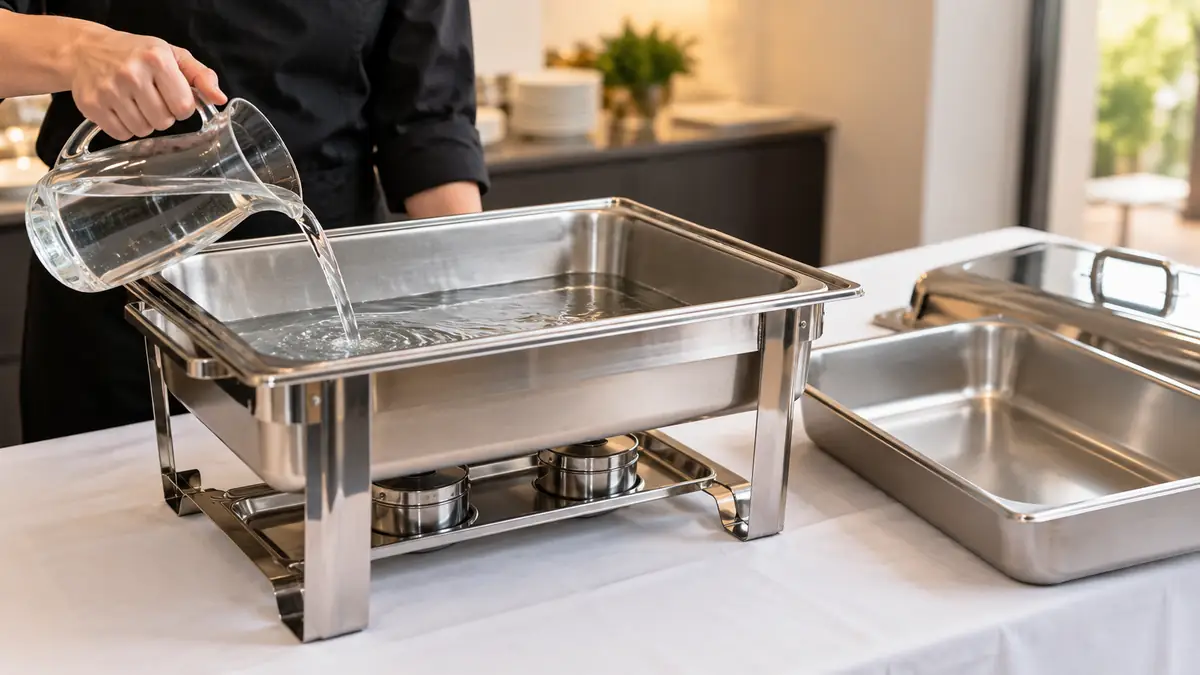
For a water-bath chafing dish, put water in the water pan beneath the food pan, using the fill line or amount specified by the manufacturer. There is no single measurement that fits every chafing dish. The water should be deep enough to remain in the pan during service, with enough space below the rim that it will not overflow when the food pan is inserted.
If you are still choosing a buffet setup, compare chafing dishes with different pan arrangements and check the water-pan instructions for each model.
How to Set the Water Level
- Identify the water pan. In a typical setup, the food pan sits inside a separate water pan, which rests above the heat source. Do not pour water into the fuel holder or add it to the food.
- Check for a fill line or instructions. Follow the directions for your chafing dish, especially if its water pan has a marked minimum or maximum level.
- Add water before heating. With the dish stable and the heat source off, add water to the water pan. If there is no marked level, start with a shallow bath that covers the bottom of the pan rather than filling it near the rim.
- Set the food pan in place and check for overflow. The food pan displaces space in the water pan. Remove some water if it rises too close to the rim or spills.
Pan depth, food-pan fit, heat source, and service duration all affect how much water is needed. A shallow pan used briefly may need less water than a deeper pan kept hot through a longer service. The manufacturer’s instructions take precedence over a general rule of thumb.
For the steps around fitting the food pan and starting the heat source, follow the full chafing-dish setup sequence.
Keep Water in the Pan During Service
Water distributes heat beneath the food pan and helps prevent the localized overheating that can occur if a water-bath unit runs dry. Check the level periodically because water evaporates as the dish operates. Do not let a chafing dish run dry if its instructions require a water bath.
Hot pans, water, and steam can burn. If the pan needs more water, follow the equipment’s instructions for doing so safely. Keep water away from fuel containers and exposed flames, and do not move a fuel-powered chafing dish while a flame is exposed.
Does Every Chafing Dish Need Water?
No. The separate water pan is common in fuel-heated chafing dishes, but electric models vary. Some use a water bath; others have a different heating arrangement. Check the instructions for the exact unit rather than adding water to an electric appliance unless its design calls for it.
Water level also does not tell you whether the food is hot enough. A chafing dish is generally used to hold food that is already hot, not to slowly reheat refrigerated food. Check the food itself with a suitable thermometer. For household serving, USDA guidance recommends keeping hot food at 140°F (60°C) or above. Commercial operations must follow applicable local requirements; the FDA Food Code generally specifies 135°F (57°C) or above for hot-held food requiring time and temperature control for safety, subject to its provisions and exceptions.
Use the marked fill level when one is provided. Otherwise, add a shallow bath, test-fit the food pan to prevent overflow, and monitor the water throughout service.
When comparing electric chafing dishes, check the individual heating arrangement rather than assuming every model uses the same water bath.

- Graham
Keeping food warm isn't always as simple as it sounds. From family dinners to large catered events, different settings call for different equipment. Graham Ellis approaches these choices with an eye for the details that matter, including temperature control, serving capacity, ease of cleaning, and overall convenience. His contributions to Best Food Warmers aim to make the buying process less confusing and help readers find solutions that fit the way they serve food.
- Best Soup Warmers: 9 Picks in 2027 October 19, 2026
- Best Infrared Food Warmers: 9 Picks in 2026 October 18, 2026
- Heat Lamp vs. Heat Strip: Which Is Better for Food Warming? October 17, 2026
- Best Heat Lamps for Food: 9 Picks in 2026 October 16, 2026
- Best Commercial Heated Holding Carts: 9 Picks in 2026 October 15, 2026