How to Clean an Electric Warming Tray

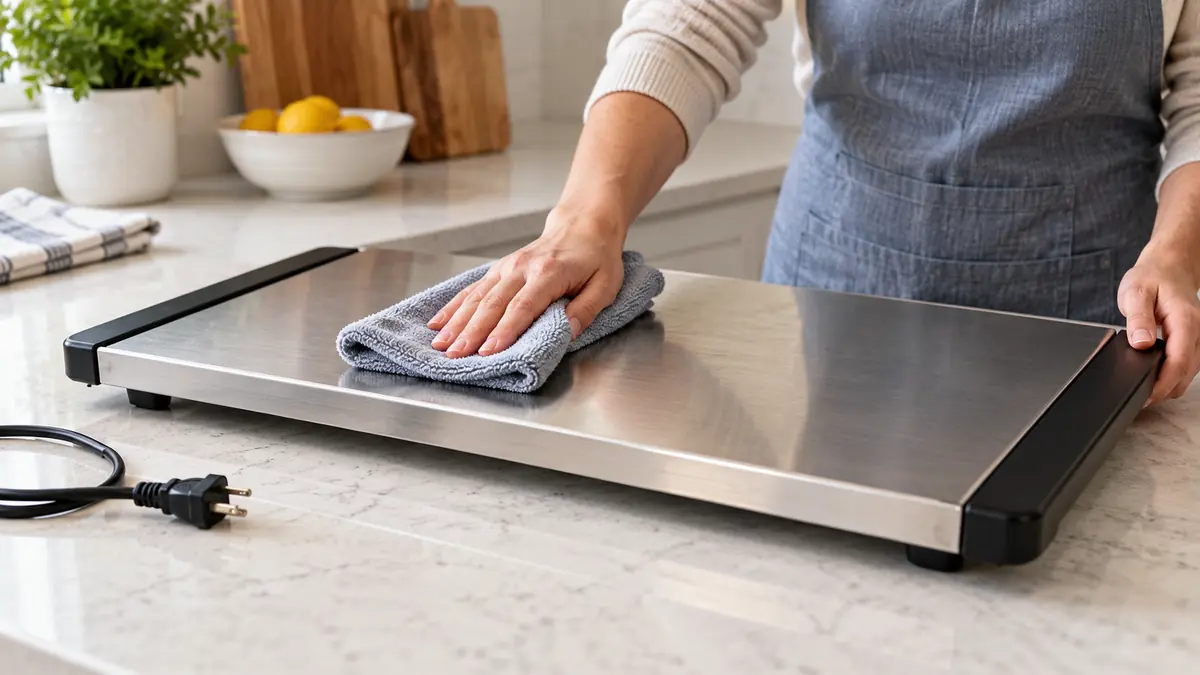
To clean an electric warming tray, unplug it, let it cool completely, then wipe the heating surface with a soft cloth dampened with mild soapy water. Remove soap residue with a separate damp cloth and dry the tray before storing or using it again. Keep water out of the controls, cord connection, vents, and seams. Check the manual first if your tray has a removable surface or special coating.
If you are choosing a tray for regular entertaining, compare warming trays by surface and serving layout while checking the care instructions for each option.
Step-by-Step Cleaning Instructions
- Turn off and unplug the tray. Remove serving dishes and allow the heating surface to cool completely. Do not pour cold water onto a hot surface.
- Remove loose debris. Lift away crumbs and dried food with a soft, dry cloth. Avoid using a knife or metal scraper, which could damage the surface.
- Wipe the heating surface. Add a small amount of mild dish soap to warm water, dampen a soft cloth, and wring it out well. Wipe away grease and spills without letting liquid run into openings or around the controls.
- Loosen stuck-on food gently. Hold the damp cloth against the spot briefly, then wipe again. Repeat rather than scrubbing with an abrasive pad or flooding the surface.
- Remove soap and dry. Wipe the cleaned area with a fresh cloth dampened with plain water. Dry it with a soft towel, paying attention to edges where moisture can collect.
Clean the exterior and controls with a lightly damp cloth if the manufacturer permits it. Never spray cleaner directly onto the appliance or immerse its electrical base. Leave the tray unplugged until it is fully dry.
Clean Removable Parts Separately
Some warming trays come with removable serving pans, lids, or racks. Take these off before cleaning the electrical base and wash them according to the instructions for the exact model. A removable part is not automatically dishwasher-safe, and the base should not go into a sink or dishwasher unless its manufacturer explicitly says it can.
If food touches a removable serving pan, wash that pan thoroughly using the manufacturer-approved method. In commercial food service, food-contact components may also require sanitizing under applicable local requirements. Cleaning removes food and grease; sanitizing is a separate step and should follow the approved product and procedure.
What to Avoid on the Heating Surface
Warming trays may have glass, metal, or coated heating surfaces, and finishes can require different care. Follow the manual if it specifies a cleaner or prohibits one. Unless the manufacturer approves them, avoid steel wool, abrasive powders, sharp scrapers, oven cleaner, and harsh solvents. These can scratch or damage a surface, while excess liquid can reach electrical components.
For a persistent mark, try another pass with a soft cloth and mild soapy water after the tray has cooled. If it remains, consult the model’s cleaning instructions rather than using a stronger chemical by guesswork.
Our comparison of warming tray and warming mat materials explains why the two surfaces can need different handling and storage.
Check the Tray Before Using It Again
Once the tray is clean and dry, inspect the cord, plug, controls, and surface. Stop using the appliance if you notice a frayed cord, cracked plug, damaged heating surface, or signs that liquid entered the electrical assembly. Do not open the base or attempt an electrical repair as part of routine cleaning; contact the manufacturer or a qualified service provider.
Wiping spills after each use, once the tray is unplugged and cool, helps prevent residue from hardening. Store the clean, dry appliance as directed by its manufacturer, without tightly wrapping the cord around the plug or controls.

- Graham
Keeping food warm isn't always as simple as it sounds. From family dinners to large catered events, different settings call for different equipment. Graham Ellis approaches these choices with an eye for the details that matter, including temperature control, serving capacity, ease of cleaning, and overall convenience. His contributions to Best Food Warmers aim to make the buying process less confusing and help readers find solutions that fit the way they serve food.
- Best Soup Warmers: 9 Picks in 2027 October 19, 2026
- Best Infrared Food Warmers: 9 Picks in 2026 October 18, 2026
- Heat Lamp vs. Heat Strip: Which Is Better for Food Warming? October 17, 2026
- Best Heat Lamps for Food: 9 Picks in 2026 October 16, 2026
- Best Commercial Heated Holding Carts: 9 Picks in 2026 October 15, 2026