How to Clean and Maintain Commercial Food Warmers

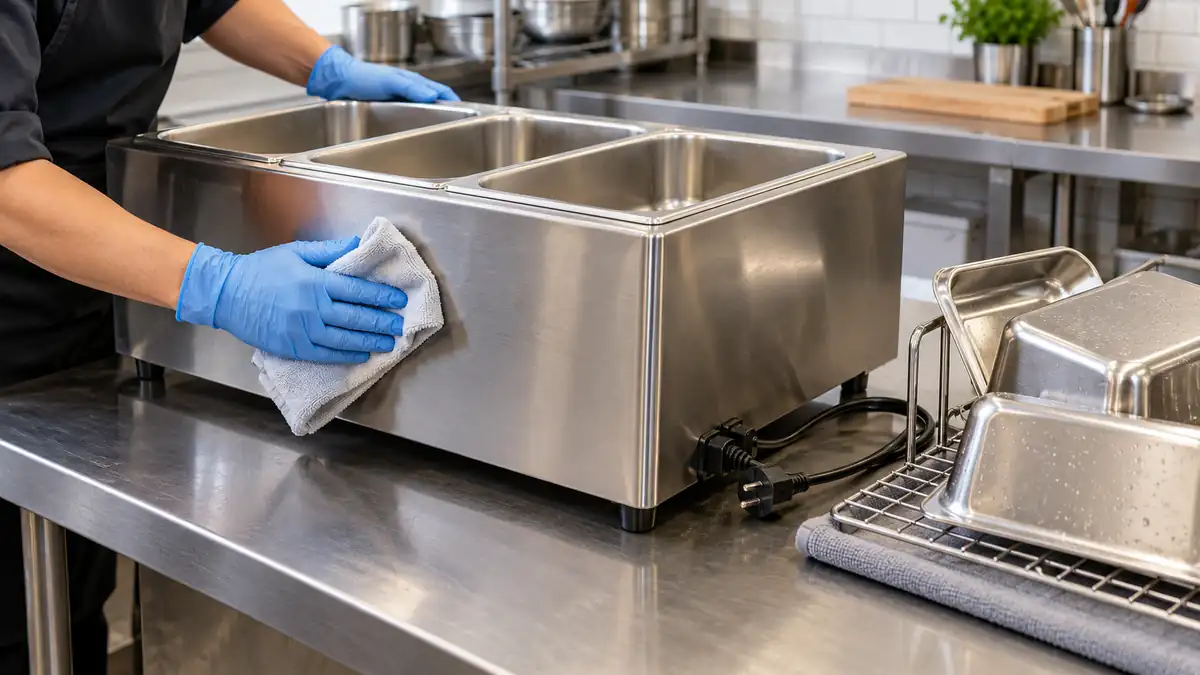
Clean commercial food warmers by removing food, shutting down the equipment according to its manual, and allowing hot parts to cool before handling them. Wash removable food-contact components, rinse and sanitize them as required, then clean the fixed surfaces without exposing electrical parts to water. Routine maintenance includes checking water wells, drains, gaskets, vents, cords, and temperature performance. The exact procedure depends on whether the warmer is a steam table, countertop unit, holding cabinet, or radiant heater.
If you are choosing equipment for a new station, compare commercial warmers by construction and layout with cleaning access in mind.
Clean the Warmer After Service
Keep the manufacturer’s instructions available for the exact model. They determine which parts can be removed, which cleaners are compatible with the equipment, and whether a particular well is meant to operate wet or dry. Staff should also follow the cleaning and sanitizing requirements that apply to the food-service operation.
- Remove and handle the food. Take out food pans and follow the operation’s food-safety procedures for any food that will be saved or discarded. A warmer’s dial or cabinet-air display does not establish the temperature of the food. Use an appropriate food thermometer when checking food that has been held.
- Shut down the unit safely. Turn off heat and follow the manual’s shutdown sequence. Disconnect a plug-in unit before cleaning where the instructions call for it. Allow pans, wells, shelves, and other hot surfaces to cool enough to handle safely. Do not bypass a required fan cooldown cycle or other model-specific shutdown step.
- Remove loose parts. Take out food pans, lids, shelves, racks, and removable water trays as permitted. Empty a water well through its designated drain or by the method specified in the manual. Protect staff from hot water and steam.
- Wash removable food-contact parts. Remove food residue, wash with a compatible detergent, and rinse. Sanitize food-contact surfaces using a sanitizer appropriate for the operation, following its label directions and applicable local requirements. Follow the required drying method; do not wipe freshly sanitized surfaces with a soiled towel. A removable pan is not automatically dishwasher-safe.
- Clean the fixed surfaces. Wipe accessible wells, cabinet interiors, door edges, and exterior surfaces with the method and cleaner approved for the unit. Keep water out of controls, outlets, heating elements, fans, and electrical compartments. Do not spray or hose down a unit unless its manufacturer specifically permits that cleaning method.
- Inspect and reassemble. Check for trapped debris, standing water, loose components, and visible damage. Refit only clean, dry parts. Leave the warmer ready for the next service according to its operating instructions.
Cleaning and sanitizing are separate tasks. Washing removes food and grease. Sanitizing follows cleaning on surfaces that require it. A sanitizer cannot reliably do its job through a layer of food residue, and its concentration and contact time must follow the product label and applicable food-service rules. Do not mix cleaning chemicals.
Adjust the Method to the Equipment
Steam Tables and Water-Bath Wells
Drain and clean water wells as directed, paying attention to mineral deposits, food spills around pan openings, and buildup near drains. Use a manufacturer-approved descaling method if deposits develop. An aggressive acid, abrasive pad, or metal scraper can damage some finishes or components, so do not assume that a cleaner suitable for one stainless steel pan is suitable for the entire warmer.
Keep drain openings clear and check for leaks before refilling. When the unit returns to service, use the water level and operating method specified for that model. Some commercial hot-food wells are designed for dry operation; others require water. A dry well should not be filled merely because it resembles a water-bath unit.
For a new pan station, compare commercial food wells by well arrangement and the access needed for filling, draining, and cleanup.
Heated Holding Cabinets
Remove accessible racks and shelves for cleaning where permitted. Wipe the cabinet interior, door frame, and gasket area, where crumbs and spills can collect. Clean a removable humidity pan separately if the cabinet has one. Keep liquid away from fans, vents, controls, and electrical assemblies, and do not block airflow openings during use.
Check that doors close properly and gaskets are intact. A damaged gasket or misaligned door can affect the cabinet’s ability to maintain its intended conditions. Follow the manual for cleaning any fan cover or other guarded component; do not dismantle it as part of routine wiping.
Understanding how a hot holding cabinet is arranged helps identify the shelves, access points, and enclosed surfaces that need attention.
Countertop Warmers, Buffet Units, and Radiant Heaters
For countertop warmers and buffet units, clean removable serving pans separately from the heated base. Wipe the base rather than immersing it. Clear food residue from accessible edges and controls without letting liquid run into switches or connections.
For heat lamps and strip heaters, turn the equipment off and let it cool before cleaning accessible surfaces. Follow the manufacturer’s instructions for lamp covers, reflectors, and replacement lamps. Do not spray cleaner onto a hot lamp or attempt to clean wiring or internal components as a routine maintenance task.
Build Maintenance Into the Service Routine
Cleaning removes residue; maintenance catches conditions that cleaning alone cannot fix. A simple inspection routine can help staff spot problems before the warmer is used again:
- Before service: Check that pans, shelves, and lids fit properly; water wells and drains are in their required condition; vents are unobstructed; and cords and plugs show no visible damage.
- During service: Watch for spills, unexpected water loss, unusual noises, error messages, or food that is not holding at the required temperature. Use food-temperature checks under the operation’s food-safety procedures rather than relying solely on the warmer setting.
- After cleaning: Inspect gaskets, hinges, drains, and accessible surfaces for wear, leaks, corrosion, or recurring deposits. Record problems so they can be addressed before the next use.
- At the intervals specified by the manufacturer: Complete any prescribed descaling, filter care, calibration checks, or professional service. Intervals and procedures vary by model and operating conditions.
Commercial hot holding has to meet the requirements applicable to the location and food being served. The FDA Food Code is a model code that generally specifies hot holding at 135°F (57°C) or above for food requiring time and temperature control for safety, subject to its provisions and exceptions. State and local rules govern an individual operation. Measure the food with a suitable thermometer: a thermostat setting, water-bath temperature, or cabinet-air reading is not the same as the food’s temperature.
A food warmer is generally intended to hold food that is already hot, not to reheat refrigerated food slowly. If food is below the temperature required by the operation’s procedures, follow its approved corrective-action process rather than turning up the warmer and assuming the food will become safe.
Keep checking warmer settings against food temperature in the operating routine after the unit has been cleaned and returned to service.
Know When to Stop Using the Unit
Take a warmer out of service and seek qualified help if it has a damaged cord or plug, exposed wiring, repeated electrical trips, a leaking electrical compartment, an unreliable control, or heating performance that cannot maintain the required food temperature. Do not defeat a safety control, modify a plug, or open an electrical enclosure to complete a cleaning task.
Consistent care is straightforward: remove food residue promptly, clean and sanitize the appropriate surfaces, keep water and chemicals out of electrical components, and check the parts that affect heating and closure. Pair those habits with the exact model’s manual and the operation’s food-safety procedures so the warmer is clean and ready to hold food safely at the next service.

- Graham
Keeping food warm isn't always as simple as it sounds. From family dinners to large catered events, different settings call for different equipment. Graham Ellis approaches these choices with an eye for the details that matter, including temperature control, serving capacity, ease of cleaning, and overall convenience. His contributions to Best Food Warmers aim to make the buying process less confusing and help readers find solutions that fit the way they serve food.
- Best Soup Warmers: 9 Picks in 2027 October 19, 2026
- Best Infrared Food Warmers: 9 Picks in 2026 October 18, 2026
- Heat Lamp vs. Heat Strip: Which Is Better for Food Warming? October 17, 2026
- Best Heat Lamps for Food: 9 Picks in 2026 October 16, 2026
- Best Commercial Heated Holding Carts: 9 Picks in 2026 October 15, 2026