Best Food Warmers for Construction Workers: 9 Picks in 2026

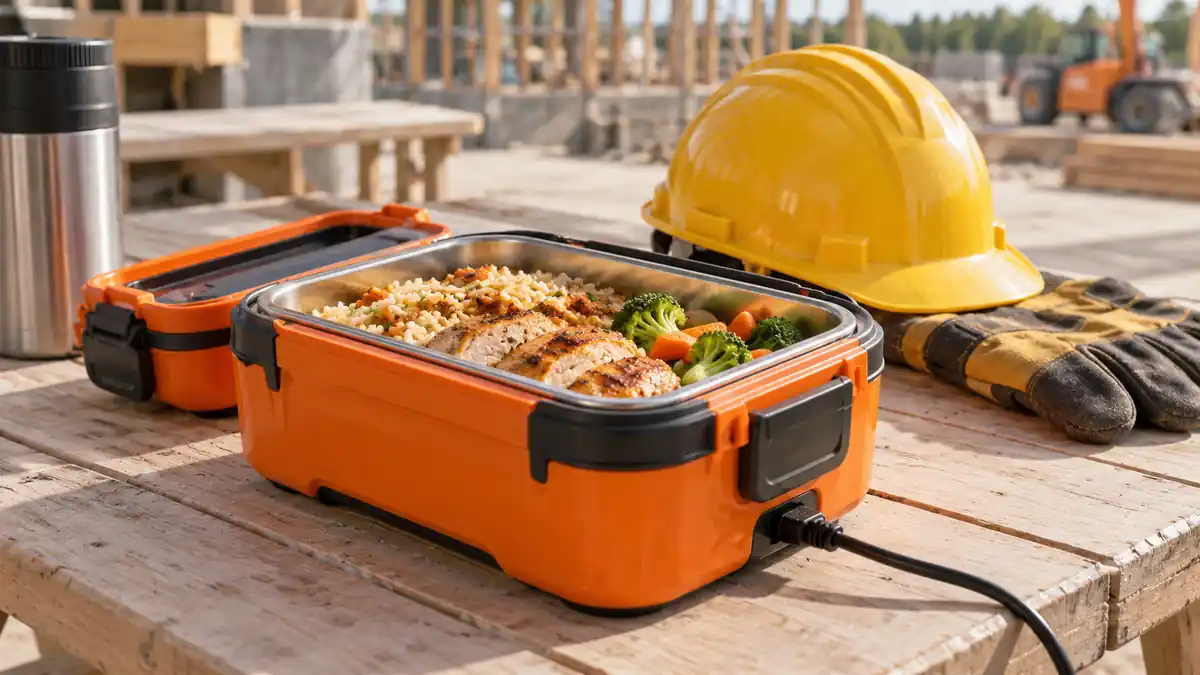
A construction lunch break rarely happens beside a convenient microwave. More often, it means sitting in a truck cab, a temporary site office, or a shaded corner near the equipment while dust, noise, and a short break shape the meal. The best food warmers for construction workers need to handle that reality. They should match the available power source, carry enough food for a demanding shift, resist spills, and warm meals without creating another chore during lunch.
The biggest mistake is treating every heated lunch box as interchangeable. A worker with access to a 110V outlet needs a different setup from someone moving between sites with only a truck socket or no outlet at all. Capacity also matters. A compact container may suit a light lunch, while a larger stainless steel box makes more sense for chili, rice, leftovers, and a separate side. Heating claims should be viewed as estimates because food quantity, container material, starting temperature, and available power can all affect the result.
This comparison focuses on portable electric lunch boxes that are documented for construction sites, vehicles, offices, or outdoor work. The LISHZEN earns the strongest overall position because it combines a large two-layer layout with 12V, 24V, and household power compatibility. Cordless alternatives from Inkbird, TaskStar, and Drafin make more sense where a jobsite outlet is unavailable, while simpler plug-in designs favor workers who value easy operation and familiar containers.
Quick Answer
Best Overall: LISHZEN Electric Lunch Box offers a 2.8-liter, two-layer layout and supports 12V, 24V, and 110–230V connections, making it a versatile choice for trucks, site offices, and home preparation.
Best Cordless Design: Inkbird Cordless Electric Lunch Box pairs a 16,000mAh rechargeable battery with a 1.5-liter stainless steel container, scheduled heating, and five-sided heating technology.
Best for Vehicle Power: Buddew Electric Lunch Box provides a generous 1.8-liter capacity with 12V, 24V, and 110V compatibility, which suits workers who regularly eat from a car or truck.
Best for Existing Containers: Aotto Portable Oven works with suitable flat-bottom glass, ceramic, metal, stainless steel, and foil containers, so workers can avoid transferring meals into a proprietary tray.
Best Food Warmers for Construction Workers Comparison Table
| Product | Best For | Capacity | Power Compatibility | Heating Approach |
|---|---|---|---|---|
| LISHZEN Electric Lunch Box | Overall jobsite flexibility | 2.8L, two layers | 12V, 24V, 110–230V | 100W electric heating |
| Inkbird Cordless Electric Lunch Box | Outlet-free job sites | 1.5L | Rechargeable battery | 60W, five-sided heating |
| TaskStar Heated Lunch Box | Scheduled cordless meals | 1.2L | 12,000mAh battery | 100W battery heating |
| Buddew Electric Lunch Box | Large vehicle-powered meals | 1.8L | 12V, 24V, 110V | 80W PTC heating |
| Sitlais Electric Lunch Box | Two-container meal prep | Two 53oz containers | 12V, 24V, 110V | Waterless circulating heating |
| Aotto Portable Oven | Workers using their own containers | Fits containers up to 9.76 x 7.01 x 3.94in | 12V, 24V, 110V | PTC conduction heating |
| HOTLOGIC Mini 12V | Simple low-slow warming | Up to 1.5 quarts | 12V | Conduction heating |
| Drafin Cordless Heated Lunch Box | Large cordless portions | 1.5L, about 6.3 cups | Rechargeable battery | 100W, 360-degree heating |
| EAST OAK Heated Lunch Box | Automatic scheduled heating | Extra large, capacity not specified | Battery powered | Automatic heating with timer |
The detailed reviews below explain how each warmer fits a different jobsite routine, power situation, and meal size.
1. LISHZEN Electric Lunch Box — Best Overall

A construction worker carrying a full meal, fruit, and a snack often faces an awkward choice: cram everything into one container and accept mixed flavors, or bring several loose containers that rattle around in a work bag. The LISHZEN addresses that problem with a 2.8-liter double-layer arrangement. Its main stainless steel container holds 1.8 liters, while the upper compartment provides another 1 liter for sides, fruit, or snacks. That separation is especially useful for meals such as chicken and rice with a cold salad.
Power flexibility gives this model its strongest jobsite advantage. The included setup supports 12V and 24V vehicle connections as well as a 110–230V household or office plug, so a worker can prepare or warm lunch in several settings. The listed 100W heating system is claimed to warm food in roughly 20 to 30 minutes, though the actual result will depend on meal size, starting temperature, and the power source. Removable inner containers simplify cleanup, while the sealed lid, reinforced buckles, carry handle, and insulated bag make transportation less fussy.
Pros
- Large 2.8L two-layer capacity for substantial meals and separate sides.
- Supports 12V, 24V, and 110–230V operation.
- 100W heating system with a listed 20–30 minute heating estimate.
- Removable containers and a dishwasher-safe stainless steel inner container.
- Includes an insulated bag, utensils, and vehicle and household cords.
Cons
- The heating base must be kept out of water during cleaning.
- The larger two-layer format may take more room in a crowded vehicle or lunch bag.
This is the best fit for workers who move between trucks, site trailers, and indoor areas and want one warmer that can follow them. The separate compartments are practical for a full shift meal, though workers who eat small portions may find the size excessive. It also requires access to a compatible power connection, so it is less suitable for remote areas without vehicle power or an outlet.
To buy this product, click here.
2. Inkbird Cordless Electric Lunch Box — Best Cordless Design

Some construction sites have power available only near the main office, while the actual lunch area may be beside a parked truck or several buildings away. The Inkbird is aimed at that kind of routine. Its 16,000mAh rechargeable battery removes the need for continuous outlet access, and the listing states that a full charge takes approximately three to four hours. The 1.5-liter removable stainless steel container provides enough room for a substantial individual meal without reaching the bulk of a two-layer warmer.
Scheduled heating is handy for workers who load lunch in the morning and have no time to supervise it at noon. The timer can be set from one to eight hours, while the five-sided heating design is intended to distribute warmth around the food rather than concentrate it beneath the container. That claim should still be treated as product information rather than an independent temperature test. A leak-resistant seal, odor-resistant stainless steel construction, and dishwasher-safe removable container make the Inkbird a sensible choice for dusty, repetitive workdays where cleanup needs to be quick.
Pros
- 16,000mAh rechargeable battery supports cordless heating.
- Five-sided heating design is intended to reduce cold areas.
- One-to-eight-hour timer supports scheduled mealtimes.
- Removable 1.5L stainless steel container is dishwasher-safe.
- Leak-resistant construction suits transport between work areas.
Cons
- Battery operation introduces charging time and runtime limitations.
- Its 1.5L capacity is smaller than the largest vehicle-powered options.
The Inkbird suits a worker who cannot count on an outlet but can charge the unit before a shift. It is especially useful for a jobsite lunch taken away from the truck, where a cord would be inconvenient or unsafe to route. Buyers should plan charging around their work schedule and should not assume that “all day” operation means unlimited heating for repeated meals.
To buy this product, click here.
3. TaskStar Heated Lunch Box — Best for Scheduled Cordless Meals

The TaskStar takes a more programmable approach to a portable jobsite lunch. Its 12,000mAh rechargeable battery is listed as providing two full heating cycles per charge, a useful arrangement for a worker with a long day or two planned meals. The 1.2-liter stainless steel container is more compact than the LISHZEN or Buddew, which can make it easier to carry in a backpack or keep beside tools in a truck cab.
Five meal modes give the unit more flexibility than a basic plug-in warmer. Heat, Warm, Scheduled, Hot Food, and Cold Food modes allow the same container to handle different meal routines, although the product information does not define every mode’s exact temperature behavior. A scheduled setting can help someone start heating before a break, while the removable 304 stainless steel tray and divider keep cleanup and meal separation manageable. The listing also describes quiet operation and includes an insulated bag, which may appeal to workers who share a breakroom after leaving the site.
Pros
- 12,000mAh battery is listed for two full heating cycles.
- Five operating modes cover heating, warming, scheduling, hot food, and cold food.
- Scheduled heating supports predictable break times.
- Removable stainless steel tray and divider simplify meal organization.
- Includes an insulated bag and carries a stated one-year warranty.
Cons
- The 1.2L capacity may feel limited for very large portions.
- The listing specifies use of the included power adapter and cable for optimal charging.
TaskStar makes sense for a worker who values a smaller cordless format and wants more control over the daily meal routine. The two-cycle claim is useful for planning, but actual battery performance can vary with meal quantity and heating mode. Someone who regularly carries a large stew, multiple sides, or a very substantial lunch may prefer a larger model.
To buy this product, click here.
4. Buddew Electric Lunch Box — Best for Vehicle Power

For a crew member who spends lunch in a pickup, service van, or truck, power compatibility can matter more than a sophisticated control panel. The Buddew supports 12V, 24V, and 110V connections, covering common vehicle and household settings listed for this product. Its 1.8-liter capacity is generous enough for a hearty main course, while the stainless steel interior gives soups, pasta, rice, and saucy leftovers a practical home.
The 80W PTC heating system is described as a constant-temperature design intended to warm food while retaining moisture. That does not establish a measured internal food temperature, so workers should follow appropriate food-handling practices rather than treating the warmer as a food safety guarantee. Four side snaps, multiple seals, reinforced handles, and an insulated carry bag address the rougher rhythm of site transport. The included oversized fork and spoon are small details, but they are welcome when a lunch kit gets left in the truck.
Pros
- 1.8L capacity suits larger individual meals.
- Supports 12V, 24V, and 110V power sources.
- 80W PTC heating system is intended for steady warming.
- Reinforced handles, side snaps, seals, and an insulated bag support transport.
- Includes large stainless steel fork and spoon.
Cons
- It requires a power connection and has no documented cordless operation.
- The heating base and electrical components require careful cleaning.
Buddew is a practical match for workers who keep lunch near a powered vehicle and want more room than a compact personal warmer provides. It is less compelling for a remote work zone where the truck is parked far from the break area. Before ordering, confirm that the vehicle connection and voltage match the intended truck or car rather than assuming every socket provides the same power.
To buy this product, click here.
5. Sitlais Electric Lunch Box — Best for Two-Container Meal Prep

The Sitlais is built around a straightforward lunch-break problem: the worker wants a warm main dish and a separate portion without carrying several loose containers. It includes two removable 53-ounce stainless steel containers, allowing meals to stay divided during transport. That arrangement can work well for a main dish and side, or for preparing two smaller portions in advance, while the 304 stainless steel construction is described as rust-resistant and easy to clean.
Its listed 15-to-30-minute heating estimate fits a scheduled break better than an appliance that needs hours of advance planning. The product supports 12V, 24V, and 110V connections, and its 47.2-inch power cord offers some flexibility when a vehicle socket or site-office outlet is awkwardly placed. The waterless circulating heating design avoids adding water around the containers, but users still need to account for meal volume, starting temperature, and available power before expecting a particular result.
Pros
- Includes two removable 53-ounce stainless steel containers.
- Supports 12V, 24V, and 110V operation.
- Lists an approximately 15–30 minute warming time.
- Long 47.2-inch power cord helps with vehicle and office placement.
- Sealed lid and silicone ring help contain soups and sauces.
Cons
- It is a plug-in warmer with no documented rechargeable battery.
- The two-container arrangement may be bulkier than a single-tray design.
Sitlais fits workers who plan meals in portions and have dependable access to vehicle or household power. It is a particularly logical option for someone who dislikes food mixing during a bumpy commute. Workers who need to eat far from the truck or who prefer a single large compartment should look toward a cordless or larger single-container design.
To buy this product, click here.
6. Aotto Portable Oven — Best for Existing Containers

Some workers already pack lunch in a favorite glass or metal container and do not want to decant it into another tray every morning. The Aotto Portable Oven takes a container-friendly approach. It accepts suitable flat-bottom glass, ceramic, metal, stainless steel, and foil containers, with a listed maximum container size of 9.76 by 7.01 by 3.94 inches. Plastic containers need to be rated for heat up to 257°F, and the containers shown with the product are not included.
The unit uses PTC conduction heating with automatic temperature control and no buttons or timer. That simplicity can be useful when a worker plugs in lunch and returns to another task, but it also means the user has fewer ways to adjust the heating process. The product is described as a conduction warmer rather than a microwave, and refrigerated food or larger portions may take longer, especially through a 12V connection. Its foldable body, shoulder strap, handle, and 12V, 24V, and 110V cords make storage easier in a crowded vehicle.
Pros
- Works with several types of suitable flat-bottom food containers.
- Supports 12V, 24V, and 110V power sources.
- Foldable design with handle and shoulder strap aids transport.
- Automatic PTC temperature control requires no stirring or button sequence.
- Accommodates containers up to the listed 9.76 by 7.01 by 3.94-inch size.
Cons
- Food containers are not included.
- It has no timer or adjustable heating controls, and 12V heating may take longer.
Aotto is a strong match for workers who want to heat meal-prep containers directly and who can tolerate a slower, passive-style heating process. It is less suitable for anyone expecting microwave-like speed or precise temperature selection. Measure the container before ordering, then verify that its material and shape are suitable for the warmer.
To buy this product, click here.
7. HOTLOGIC Mini Heated Lunch Box — Best for Simple 12V Warming

The HOTLOGIC Mini keeps the routine deliberately simple. Place a sealed, flat-bottom container inside, connect the 12V cord, and let the low-slow conduction system warm the meal. There is no timer, stirring, or complicated control sequence, which can be appealing to a worker who wants to start lunch before heading onto the site. The warmer accommodates containers up to 8.75 inches wide by 6.75 inches long by 2.5 inches high, or up to 1.5 quarts of food.
Its compatibility with glass, plastic, Tupperware-style containers, metal, aluminum foil, and cardboard gives meal prep plenty of flexibility, provided the container is sealed and suitable for the heating situation. The product information describes the unit as capable of reheating, holding warmth, and slowly cooking some foods, but it should not be treated as a fast reheating appliance. Since this version is 12V, it is aimed primarily at vehicle use rather than a jobsite with only a wall outlet.
Pros
- Simple plug-in operation with no buttons or timer to manage.
- Accepts many flat-bottom, sealable container types.
- Fits up to 1.5 quarts of food.
- 12V format suits vehicle-based lunches.
- Low-slow conduction approach can warm meals without constant supervision.
Cons
- 12V-only operation limits use away from a compatible vehicle connection.
- Slow conduction heating is less suitable for workers who need rapid reheating.
This model makes sense for a worker who spends lunch in a truck or van and values a predictable, low-effort routine. It is less useful for a remote crew without vehicle access, and its container height limit deserves attention before packing thick meals. Workers who need multiple voltage options or cordless heating should choose a different design.
To buy this product, click here.
8. Drafin Cordless Heated Lunch Box — Best for Large Cordless Portions

A large appetite and a remote jobsite can make a small battery warmer feel restrictive. Drafin addresses both concerns with a 1.5-liter capacity, listed as approximately 6.3 cups or 50.7 ounces, and a rechargeable battery-powered design. The removable divider lets a worker keep a main dish and side apart, which is useful for food that becomes soggy or loses its character when mixed during a long morning in a truck.
This model provides more adjustment than a basic heat-and-wait lunch box. The published settings list temperatures from 167°F to 212°F and heating times from 15 to 40 minutes, along with a smart timer for setting a meal ahead of the break. Those are selectable appliance settings, not proof that the food reaches an even internal temperature throughout. The 360-degree heating description, leak-resistant silicone seal, dishwasher-safe detachable parts, utensils, and insulated carry bag create a well-equipped package for workers who want cordless convenience without giving up meal size.
Pros
- 1.5L capacity provides a large individual meal portion.
- Rechargeable cordless operation suits remote jobsite breaks.
- Offers listed temperature settings from 167°F to 212°F.
- Provides 15–40 minute heating selections and a smart timer.
- Includes divider, utensils, insulated bag, and dishwasher-safe detachable parts.
Cons
- Battery operation still requires advance charging and has finite runtime.
- Users should release steam through the lid valve before opening after heating.
Drafin is suited to workers who want a sizable meal and control over the heating schedule without staying beside a truck outlet. The adjustable settings add flexibility for different foods, but they also make it important to read the operating instructions and handle steam carefully. Buyers who prefer a simple plug-in warmer may find the battery and controls unnecessary.
To buy this product, click here.
9. EAST OAK Heated Lunch Box — Best for Automatic Scheduled Heating

The EAST OAK earns its place for workers who want the lunch warmer to follow a preset schedule. The supplied product information identifies it as battery powered and describes automatic heating with a smart timer. Its memory function can retain the last settings, which may reduce morning setup for someone who follows a regular break time. That kind of routine is useful on a construction schedule where lunch comes at a predictable hour but the worker may be busy with equipment or site tasks immediately beforehand.
The listing calls the format extra large, but it does not provide a specific capacity, heating wattage, battery capacity, temperature range, or charging time in the supplied information. Those omissions matter. A buyer should verify the current listing details and confirm the expected meal size and charging arrangement before ordering. Compared with the more fully documented models above, EAST OAK is a choice for the appeal of automatic scheduling rather than a product that can be compared confidently on every technical specification.
Pros
- Battery-powered design supports use away from a continuous outlet.
- Automatic heating can be scheduled around a regular break.
- Memory function can retain previous settings.
- Extra-large format is intended for substantial meals.
- Simple scheduling may reduce repeated morning adjustments.
Cons
- The supplied information does not specify capacity, wattage, battery size, or charging time.
- Detailed power and cleaning information should be confirmed before purchase.
EAST OAK is worth a look for a worker whose main priority is automatic scheduled heating and who is prepared to verify the missing specifications. It is a weaker fit for buyers who need a documented 12V or 24V connection, exact capacity, or clearly stated container details before ordering. The product should be selected only after confirming that its battery and meal-size requirements fit the intended workday.
To buy this product, click here.
Buying Guide
Match the Power Source to the Jobsite
Start with the connection available during the actual lunch break, not the one available at home. A 12V warmer can suit a pickup or car, while 24V compatibility may matter for certain truck setups. Dual- or triple-voltage products such as the LISHZEN, Buddew, Sitlais, and Aotto offer more flexibility between a vehicle and an office or trailer. A cordless model avoids a live cord at the eating area, but it introduces charging requirements and finite battery capacity.
Never assume that a 12V appliance can connect directly to a 24V system, or that a household AC plug can be used in a vehicle without the correct equipment. Confirm the product’s listed voltage and use the supplied cord or adapter where required.
Build a hot lunch plan for work around the actual outlet, storage space, and break window available on the jobsite.
Choose Capacity for the Meal You Actually Pack
Construction work can make a small lunch feel smaller by mid-afternoon. The 2.8L LISHZEN and 1.8L Buddew provide more room for a main course and sides, while the 1.2L TaskStar is easier to carry but may suit smaller portions. A 1.5-liter cordless warmer sits between those extremes. Capacity should also account for the shape of the container, since a stated volume does not tell you whether a tall serving of stew or a wide meal-prep tray will fit comfortably.
Separate compartments help keep salads, fruit, and crisp foods away from hot food. A single larger container may be easier to fill with chili, pasta, or rice-based meals.
Understand Heating Versus Holding
These appliances use conduction or surrounding heat to warm food containers. They are not microwave ovens, and a listed heating time is an estimate rather than a guarantee. Refrigerated food, dense portions, cold metal containers, and vehicle power conditions can all change the result. The Aotto and HOTLOGIC use slower conduction-style heating, while the LISHZEN, Inkbird, and other models list higher-power or surrounding-heating approaches.
A warmer’s setting or surface temperature does not prove that every part of the food reaches a safe internal temperature. Follow the appliance instructions and applicable food safety guidance. For household food safety, USDA guidance generally identifies 140°F or above for hot holding, but an appliance claim alone does not establish that the food remains at that temperature throughout the container.
Inspect the Container and Seal Design
Construction sites are rough on lunch bags. A silicone seal, secure latches, and a reinforced handle reduce the chance of soup spreading through a tool bag, but no seal makes careless packing risk-free. Keep the container upright, avoid overfilling, and inspect the lid before carrying it across a site.
Removable stainless steel containers are useful because the food-contact part can be separated from the heating base. The LISHZEN, Inkbird, TaskStar, Sitlais, and Drafin all provide removable food-contact components in the supplied information. Electrical bases should not be submerged, even when an inner tray is dishwasher-safe.
Plan Charging for Cordless Models
Battery-powered warmers are attractive for lunch areas far from a truck, generator, or trailer. They also require a daily charging routine. Inkbird lists a 16,000mAh battery and a three-to-four-hour full-charge estimate, while TaskStar lists a 12,000mAh battery and two heating cycles per charge. Drafin lists a rechargeable battery but does not provide a battery capacity in the supplied details.
Those figures are planning information, not a promise of identical runtime under every load. A full container, repeated heating cycles, and frequent scheduled operation can affect battery use. Charge the warmer before the shift and keep the charging equipment with the unit.
Think About Transport and Storage
A lunch warmer may ride in a truck cab, toolbox area, site office, or backpack before it reaches the break area. Measure the space around the seat or storage compartment, especially for two-layer models and large cordless units. Insulated bags help with carrying, but they do not turn an appliance into a dustproof or waterproof piece of jobsite equipment.
Foldable designs such as the Aotto can be easier to store after lunch. Larger fixed containers provide more meal space but may compete with water bottles, PPE, and tools for room.
Best Food Warmers for Construction Workers FAQ
What Is the Best Type of Food Warmer for a Construction Worker?
A portable electric lunch box is usually the closest match because it can warm an individual meal in a vehicle, site office, or outdoor work setting. The best type depends on power access. Choose a multi-voltage plug-in model if the worker uses a truck and indoor outlet, or choose a rechargeable model if lunch is taken away from available power.
Can a 12V Food Warmer Be Used in a Truck?
A 12V food warmer can be suitable for a compatible 12V vehicle connection, but the vehicle and appliance voltage must match. Do not assume that every truck outlet is 12V. Some products in this roundup also support 24V, including the LISHZEN, Buddew, Sitlais, and Aotto, while the HOTLOGIC model reviewed here is listed for 12V use.
Are Cordless Heated Lunch Boxes Better for Remote Jobsites?
They can be more convenient when the eating area is far from a vehicle, trailer, or outlet. Inkbird, TaskStar, and Drafin provide rechargeable operation and remove the need for a cord during lunch. Their trade-off is charging time and limited battery runtime. A plug-in unit may be better for a worker who always eats beside a powered truck.
How Long Does a Construction Lunch Warmer Take to Heat Food?
The listed estimates in this roundup range from approximately 15–30 minutes for the Sitlais and LISHZEN to slower, less specifically timed operation for the Aotto and HOTLOGIC. Actual results depend on the amount and starting temperature of the food, container material, ambient conditions, and the available power source. Treat the advertised time as a guide rather than a guaranteed result.
Can These Warmers Reheat Cold Food Safely?
A product’s ability to warm food does not prove that the center of a cold meal reaches a safe temperature. Dense or large portions may warm unevenly, and a surface or appliance setting is not the same as an internal food reading. Follow the product instructions and applicable food safety guidance, and use a food thermometer when the temperature matters.
Are Heated Lunch Boxes Dishwasher-Safe?
Some removable food containers are listed as dishwasher-safe, including the stainless steel container in the LISHZEN and the removable container in the Inkbird. Drafin’s detachable components are also described as dishwasher-safe. The electrical heating base should not be immersed unless the product instructions specifically allow it. Remove food-contact parts and clean the base according to its instructions.
Do I Need Special Containers for a Portable Food Warmer?
It depends on the model. The Aotto is designed to accept suitable flat-bottom containers made from materials such as glass, ceramic, metal, stainless steel, and foil, but the containers are sold separately. HOTLOGIC also accepts various flat-bottom, sealable containers within its size limits. Lunch boxes with dedicated removable trays use the supplied inner container instead.
Final Verdict
The LISHZEN Electric Lunch Box is the strongest overall match for construction workers because it combines a roomy 2.8-liter two-layer design with 12V, 24V, and household power compatibility. It can handle a substantial main meal plus separate sides, and its removable stainless steel container, carry bag, and reinforced closure suit the daily trip from kitchen to vehicle to jobsite. Workers who regularly eat away from an outlet should choose the Inkbird for its rechargeable battery, timer, and 1.5-liter capacity, or the Drafin if adjustable settings and a larger cordless portion matter more.
Buddew and Sitlais are strong choices for vehicle-based routines, while Aotto and HOTLOGIC appeal to workers who prefer using familiar containers and simple conduction warming. TaskStar offers a more compact scheduled cordless format, and EAST OAK is worth considering only after its less-documented specifications are confirmed. Before ordering, check the vehicle voltage, meal capacity, charging plan, container dimensions, and cleaning restrictions. The right warmer is the one that fits the actual break location and food routine, not simply the one with the longest feature list.

- Graham
Keeping food warm isn't always as simple as it sounds. From family dinners to large catered events, different settings call for different equipment. Graham Ellis approaches these choices with an eye for the details that matter, including temperature control, serving capacity, ease of cleaning, and overall convenience. His contributions to Best Food Warmers aim to make the buying process less confusing and help readers find solutions that fit the way they serve food.
- Best Soup Warmers: 9 Picks in 2027 October 19, 2026
- Best Infrared Food Warmers: 9 Picks in 2026 October 18, 2026
- Heat Lamp vs. Heat Strip: Which Is Better for Food Warming? October 17, 2026
- Best Heat Lamps for Food: 9 Picks in 2026 October 16, 2026
- Best Commercial Heated Holding Carts: 9 Picks in 2026 October 15, 2026