How to Keep Food Warm for a Party

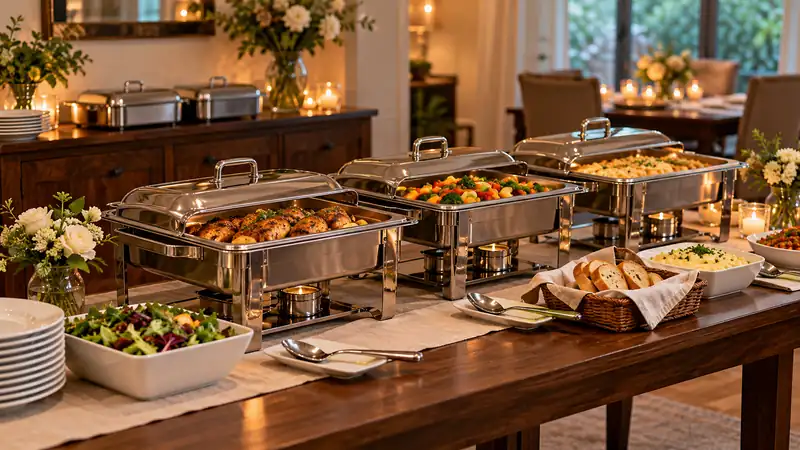
To keep food warm for a party, cook or reheat it before guests arrive, then move it promptly into equipment that can hold it hot. A slow cooker on its warm setting, a chafing dish, a warming tray, or a low oven can work, depending on the food and the space available. For perishable dishes, check the food’s temperature with a thermometer rather than relying on how warm the container feels.
For a household buffet, USDA guidance recommends keeping hot food at 140°F (60°C) or above. Plan the serving setup before cooking so dishes do not sit on the counter while you find outlets, light chafing fuel, or clear oven space.
For the equipment side of the plan, compare food warmers for a party buffet by the dishes and serving space you actually have. Assign the holding position before cooking is finished.
Set Up the Buffet Before the Food Is Ready
- Match each dish to a holding method. Use a slow cooker for foods such as chili or pulled pork, a covered chafing dish for saucy buffet dishes, and a low oven for foods that need to stay in their baking dishes. Check that serving containers are compatible with the equipment.
- Prepare the equipment. Place warmers on stable, heat-resistant surfaces and follow their preheating instructions. Set up chafing dishes according to their manufacturer’s directions, including the required water pan and approved heat source. Keep cords out of walkways and away from water.
- Cook or reheat the food separately. Bring each dish to its appropriate serving temperature before transferring it to a warmer. For household leftovers, USDA guidance generally calls for reheating to an internal temperature of 165°F (74°C). Do not use a hot-holding device to slowly reheat refrigerated food unless its instructions specifically support reheating and the food can meet applicable safety guidance.
- Transfer food promptly and cover it where appropriate. Lids help moist dishes retain heat. For foods that should stay crisp, a low oven may preserve texture better than a covered, steamy pan.
- Check and replenish during service. Measure the temperature in the food, especially after it has been on the buffet for a while. Replace a nearly empty pan with a freshly heated one rather than mixing fresh food into an older batch. Follow the equipment instructions as dishes are removed and the setup is shut down.
Choose a Holding Method That Suits the Food
Slow Cookers
A slow cooker’s warm setting can hold an already-hot soup, stew, dip, or other moist dish. Keep the lid on between servings and check the food temperature. Settings and holding performance vary by model, so a setting labeled “warm” is not proof that every part of the food remains at 140°F.
Chafing Dishes
A typical chafing dish holds a food pan above a heated water pan. The water helps transfer heat gently, making this setup useful for many buffet dishes. Fill and monitor the water pan according to the equipment instructions; there is no water level that fits every model. The water bath and the food can be at different temperatures, so check the food itself.
If the chafing dish uses fuel, use the approved type and follow both the dish and fuel instructions. Keep the setup stable and away from combustible materials. Do not refill a burning or hot fuel container, and do not move the dish while a flame is exposed.
For the preparation sequence around the pan and heat source, follow how to set up and use a chafing dish before loading food for the event.
Warming Trays and Buffet Servers
A warming tray heats compatible serving containers from below. A buffet server generally has a heating base with removable food pans. Both can make serving easier, but their controls describe the appliance, not necessarily the temperature inside a deep casserole. Check container compatibility, protect the countertop as directed, and verify the food temperature.
Gravy and Small Sauce Portions
Heat gravy appropriately before transferring a smaller serving portion to its intended holding vessel. Compare gravy warmers for the dinner table by the vessel size and actual heat source; a passive jug and a powered warmer do different jobs.
Have a suitable lid, ladle, and stable serving position ready. Follow the vessel’s instructions for stirring, covers, and contact with hot contents, and check the gravy rather than the outside of the container.
Keep the reserve batch under appropriate temperature control and replenish manageable portions using a suitable food-handling routine. Do not continuously mix a new batch into older gravy without accounting for its history. A family gravy vessel does not need the same dispensing system as a commercial cheese pump or bottle station.
Low Ovens
An oven can hold several dishes before serving, provided there is space and its temperature can be managed appropriately. Cover moist foods to limit drying; use a suitable rack or an uncovered pan when trapped steam would soften a crisp surface. Check the food temperature rather than assuming the oven setting reflects the temperature at the center of each dish.
Insulated Carriers
An insulated carrier slows heat loss during transport, but it does not add heat. Pack food while it is properly hot, keep the carrier closed, and check the food temperature on arrival. If the food has cooled too far, insulation alone will not bring it back to a safe hot-holding temperature.
Manage Food That Cannot Stay on a Warmer
Put out smaller portions and keep the rest under appropriate temperature control until needed. This also prevents a large serving pan from spending the entire party on the buffet. If a dish is intended to be served cold, keep it cold rather than allowing it to drift toward room temperature beside the hot foods.
For perishable food served without temperature control, USDA household guidance generally limits room-temperature exposure to two hours, or one hour when the surrounding temperature is above 90°F (32°C). Track the total time the food has been out, including setup. Do not use a warmer to make food safe again after it has sat out too long.
For the service window, see how holding time depends on food temperature. A long-running warmer and food that has remained appropriately hot are separate questions.
Keep the Serving Plan Simple
Before guests arrive, assign a holding spot to every hot dish, confirm that the equipment and serving containers fit, and leave room to check temperatures safely. Cook or reheat first, transfer promptly, then monitor the food throughout service. That sequence keeps the buffet practical while preserving the distinction between heating food and holding already-hot food.

- Graham
Keeping food warm isn't always as simple as it sounds. From family dinners to large catered events, different settings call for different equipment. Graham Ellis approaches these choices with an eye for the details that matter, including temperature control, serving capacity, ease of cleaning, and overall convenience. His contributions to Best Food Warmers aim to make the buying process less confusing and help readers find solutions that fit the way they serve food.
- Best Soup Warmers: 9 Picks in 2027 October 19, 2026
- Best Infrared Food Warmers: 9 Picks in 2026 October 18, 2026
- Heat Lamp vs. Heat Strip: Which Is Better for Food Warming? October 17, 2026
- Best Heat Lamps for Food: 9 Picks in 2026 October 16, 2026
- Best Commercial Heated Holding Carts: 9 Picks in 2026 October 15, 2026