How to Use a Chafing Dish

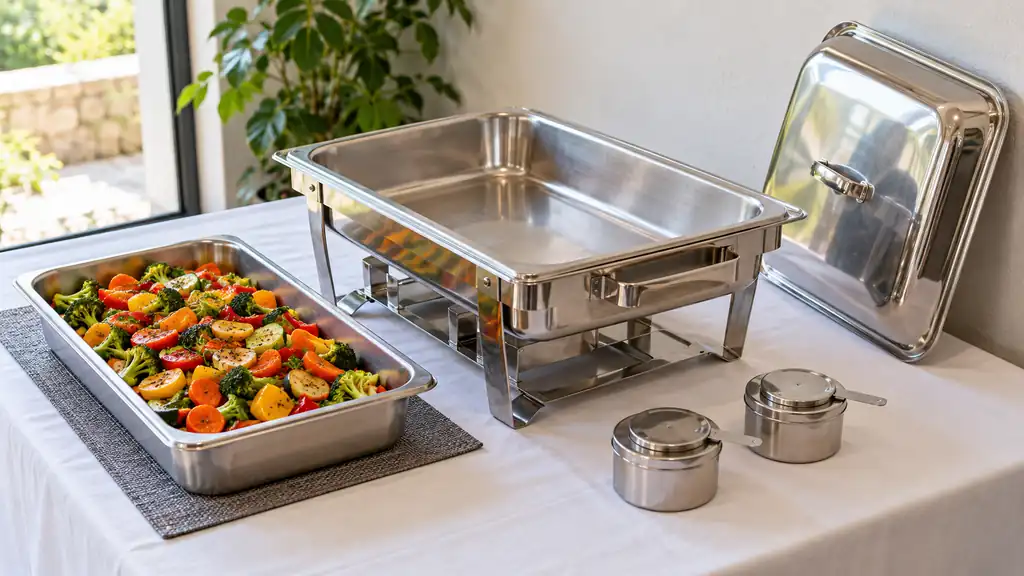
A chafing dish keeps prepared food hot for buffet service. For a typical water-bath model, place the water pan in the frame, add water according to the manufacturer’s instructions, set a pan of already-hot food above it, and start the approved heat source. Keep the water pan from running dry, check the food with a thermometer, and extinguish the fuel or switch off the electric heater when service ends.
The key distinction is that a chafing dish is a hot-holding device, not a reliable way to cook or reheat cold food. Heat reaches the food gradually through the pan and, on water-bath models, through the heated water beneath it.
If you are choosing your setup, compare chafing dishes by pan size and heat source before buying fuel or arranging the buffet.
Identify the Parts Before You Start
A common fuel-heated chafing dish has a frame, a lower water pan, an upper food pan, a lid, and holders for chafing fuel beneath the water pan. The fuel holder supports the fuel container; it is separate from the pans that hold water and food.
Electric chafing dishes replace the fuel flame with an electric heat source. Some use a water bath, while others have different heating arrangements. Check the instructions for your model before adding water or turning on the heat. The steps below describe a typical water-bath setup, with electric-model differences noted where they matter.
If you have not settled on the equipment yet, compare a buffet server versus chafing dish before choosing the serving layout.
How to Set Up and Use a Water-Bath Chafing Dish
Set up the dish where guests cannot easily bump the frame, reach an exposed flame, or catch clothing on a hot surface. Have the prepared food, a suitable food thermometer, serving utensils, and any manufacturer-approved fuel ready before starting.
- Place the frame on a stable, level, heat-resistant surface. Leave room to open the lid and serve food without reaching awkwardly over the heat source. Keep paper decorations, table linens, and other combustible materials clear of the fuel area. Follow venue fire-safety rules for indoor use.
- Seat the water pan in the frame and add water. Use the amount specified for your dish. There is no water level that fits every model. The pan needs enough water for its intended operation without overflowing when the food pan is inserted. Avoid splashing water near fuel or electrical parts.
- Put already-hot food in the food pan. Cook or reheat the food using an appropriate appliance first, then transfer it promptly to the chafing dish. Set the food pan securely above the water pan and position the lid.
- Start the heat source according to its instructions. For a fuel model, use the approved fuel and compatible holders. Put each fuel container in its holder before lighting it, and follow the fuel manufacturer’s ignition directions. For an electric model, follow its instructions for water use, controls, and electrical connection.
- Monitor the food and water during service. Check the food itself with a food thermometer; the water temperature or heater setting does not establish the food’s internal temperature. Stir food when appropriate, replace the lid between servings, and check that the water pan has not run dry. If water needs replenishing, follow the equipment instructions and take care around hot pans, steam, and the heat source.
- Shut down and let the equipment cool. Extinguish fuel using the method specified by its manufacturer, or switch off and unplug an electric unit as directed. Do not move the chafing dish while a fuel flame is exposed. Allow fuel containers, pans, and water to cool before handling or emptying them.
For the water-pan step, see how much water to put in a chafing dish and follow the fill guidance for the exact model.
Keep the Food at a Safe Holding Temperature
For household service in the United States, USDA guidance generally recommends keeping hot food at 140°F (60°C) or above. Commercial food service must follow its applicable state and local requirements. The FDA Food Code, a model code rather than a universal local rule, generally specifies 135°F (57°C) or above for hot holding food requiring time and temperature control for safety, subject to applicable provisions and exceptions.
Measure food in the pan with a suitable thermometer, especially in deeper portions or spots farther from the heat. A burning fuel can or a warm water bath does not prove that all the food is holding at a safe temperature. Lid opening, food depth, and the amount of food in the pan can affect how well it stays hot.
Heat refrigerated leftovers appropriately before they go into the chafer. For household leftovers, USDA guidance generally recommends reheating to an internal temperature of 165°F (74°C). Commercial reheating rules depend on the food and operation. Do not rely on a chafing dish to bring cold, perishable food up to a safe reheating temperature.
If food falls below the temperature required for your setting, do not assume turning up the heat makes it safe to continue serving. Take it out of service and follow the applicable food safety procedure; discard it if its safety cannot be established.
Handle Fuel, Hot Water, and Serving Pans Safely
- Use the specified fuel. Chafing fuels and holders differ. Do not substitute an improvised fuel or assume containers are interchangeable.
- Never refill a burning or hot fuel container. Follow the fuel manufacturer’s directions for replacement, extinguishing, cooling, and storage.
- Watch for steam when opening the lid. Lift it carefully and keep hands away from the opening. Pan rims, handles, and utensils may also be hot.
- Keep water where it belongs. Avoid operating a water-bath dish dry when its design requires water, and avoid filling it so high that inserting a food pan causes an overflow.
- Replace food thoughtfully. A fresh pan of hot food is easier to manage and monitor than repeatedly adding new food to an older batch. Use clean serving utensils and follow appropriate food-handling practices.
Our comparison of chafing fuels for compatible holders helps you review package formats and burn-duration claims before selecting the manufacturer-approved fuel.
Clean Up After Service
Once the heat source is off and all components are cool enough to handle, remove the food pan and deal with leftovers according to applicable food safety guidance. Empty the water pan carefully. Wash food-contact pans and utensils according to their manufacturer’s instructions, and follow applicable sanitizing requirements in commercial service.
Wipe down the frame and lid as their materials and instructions permit. Keep electric heating assemblies, plugs, and cords away from cleaning water unless the manufacturer explicitly directs otherwise. Store fuel separately according to its label, after it has been properly extinguished and cooled.
For reliable service, begin with hot food, use the water and heat source specified for the dish, and check the food temperature throughout the buffet rather than judging it by the flame or the warmth of the pan.

- Graham
Keeping food warm isn't always as simple as it sounds. From family dinners to large catered events, different settings call for different equipment. Graham Ellis approaches these choices with an eye for the details that matter, including temperature control, serving capacity, ease of cleaning, and overall convenience. His contributions to Best Food Warmers aim to make the buying process less confusing and help readers find solutions that fit the way they serve food.
- Best Soup Warmers: 9 Picks in 2027 October 19, 2026
- Best Infrared Food Warmers: 9 Picks in 2026 October 18, 2026
- Heat Lamp vs. Heat Strip: Which Is Better for Food Warming? October 17, 2026
- Best Heat Lamps for Food: 9 Picks in 2026 October 16, 2026
- Best Commercial Heated Holding Carts: 9 Picks in 2026 October 15, 2026