How to Keep Food Hot in a Thermos

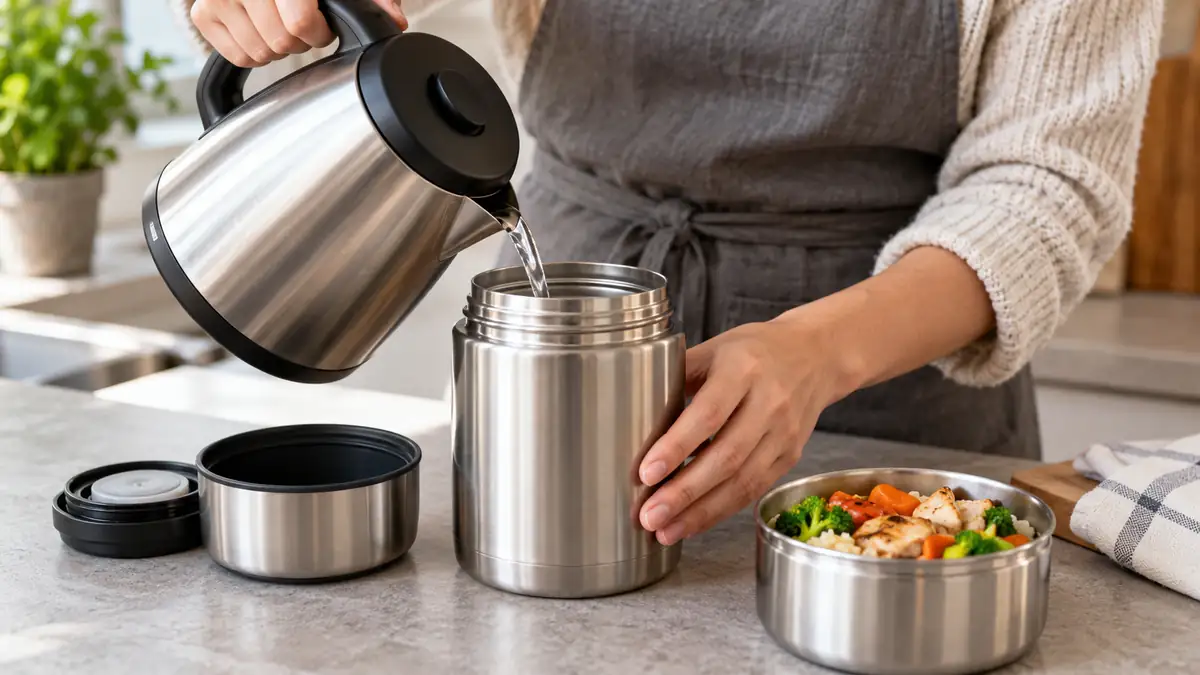
To keep food hot in a thermos, preheat the food jar, fill it promptly with food that is already thoroughly hot, and close the lid tightly. Keep it closed until mealtime. A thermos slows heat loss, but it does not heat food or guarantee that food stays at a safe temperature for a particular number of hours.
If you are choosing a jar for this routine, compare insulated food thermoses by portion size, opening width, and lid design.
Pack Hot Food in a Thermos Step by Step
- Start with a clean, food-safe insulated jar. Check that the lid and gasket are clean and fit properly. Follow the manufacturer’s instructions for hot foods and preheating.
- Preheat the jar. Fill it with hot water at a temperature the manufacturer permits, secure the lid, and let the jar warm while you prepare the food. Pour out the water immediately before filling. Handle the hot jar and water carefully.
- Heat the food separately. A thermos is for holding food that is already hot, not for cooking or slowly reheating it. For household leftovers, USDA guidance recommends reheating to an internal temperature of 165°F (74°C) before packing. Stir soups and other thick foods as they heat, and use a food thermometer to check the food rather than relying on steam or how the pot feels.
- Fill and close it promptly. Transfer the hot food directly into the preheated jar. Fill it as fully as practical without exceeding its fill line or preventing the lid from sealing. Wipe the rim if needed, then tighten the lid as directed by the manufacturer.
- Leave it closed until you eat. Each opening lets heat escape. Open the jar carefully at mealtime, since the contents and escaping steam may still be very hot.
For a school or work lunch, prepare the food and pack the jar close to departure rather than letting the heated food sit on the counter first.
For a school lunch, food thermoses sized for kids offer a more focused comparison of smaller portions and child-friendly handling.
What Helps a Thermos Retain Heat?
A vacuum-insulated food jar reduces heat transfer through its walls. Heat can still escape through the lid and opening, so both the container and the way it is packed matter.
- Starting temperature: Food packed barely warm will not become hotter inside the jar. Heat soups, stews, chili, and other foods thoroughly before filling.
- Preheating: A warm interior draws less heat from the food as it is poured in. Use the preheating method permitted for your container.
- Fill level: A small serving in a large jar generally cools faster than a fuller jar. Choose a container suited to the portion while leaving enough room to close it securely.
- Lid fit: A damaged gasket or loose lid can increase heat loss and cause leaks. Replace worn parts according to the manufacturer’s instructions.
- Opening frequency: Repeated checks release warmth. If you need to assess food temperature, use a food thermometer at the time you plan to eat.
Thick foods and foods with large pieces need particular care during reheating. Stir and check that the food is hot throughout before packing. Do not put refrigerated food into the jar expecting the insulation to warm it.
Heat Retention Is Different From Food Safety
For household use, USDA guidance recommends keeping hot food at 140°F (60°C) or above. A thermos has no heating element, and its outside temperature does not tell you the temperature of the food inside. How long the contents stay hot depends on the jar, portion size, starting temperature, surrounding conditions, and how often it is opened.
For perishable foods such as meat dishes, cooked rice, and soups, use a food thermometer if you need to confirm the temperature at mealtime. Do not assume a printed heat-retention claim establishes that your particular meal has remained at 140°F or above. If you cannot keep a perishable lunch safely hot, pack it cold with appropriate cold packs instead. When the food’s temperature history is uncertain, smell and taste are not reliable safety checks.
See how long food stays hot in a thermos for the factors that change heat retention between packing and mealtime.
After the Meal
Empty the jar and wash it according to the manufacturer’s instructions, paying attention to the lid, threads, and removable gasket. Let all parts dry before reassembling or storing the container. A clean, properly sealing lid helps the thermos work as intended the next time you pack a hot meal.

- Graham
Keeping food warm isn't always as simple as it sounds. From family dinners to large catered events, different settings call for different equipment. Graham Ellis approaches these choices with an eye for the details that matter, including temperature control, serving capacity, ease of cleaning, and overall convenience. His contributions to Best Food Warmers aim to make the buying process less confusing and help readers find solutions that fit the way they serve food.
- Best Soup Warmers: 9 Picks in 2027 October 19, 2026
- Best Infrared Food Warmers: 9 Picks in 2026 October 18, 2026
- Heat Lamp vs. Heat Strip: Which Is Better for Food Warming? October 17, 2026
- Best Heat Lamps for Food: 9 Picks in 2026 October 16, 2026
- Best Commercial Heated Holding Carts: 9 Picks in 2026 October 15, 2026