Steam Table vs. Bain-Marie: What’s the Difference?

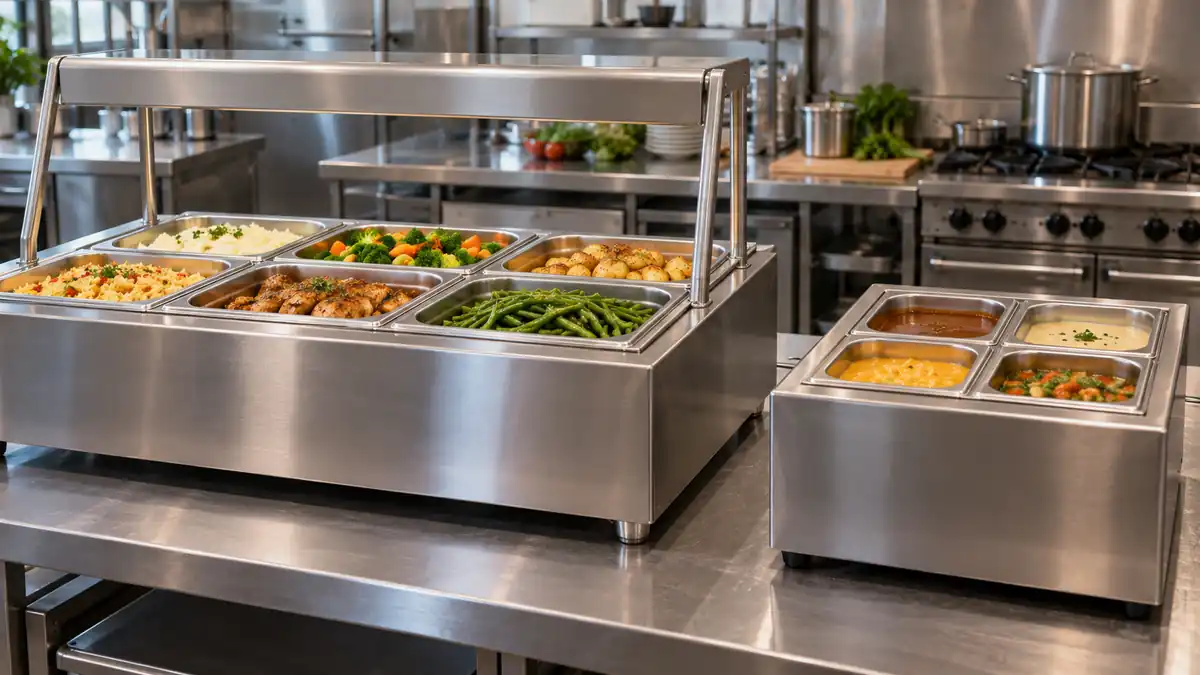
A steam table is usually a serving station with one or more heated wells that hold food pans. A bain-marie is an indirect-heating method and, in food-service equipment, often refers to a heated well or water-bath unit. The terms overlap: a steam table may use a bain-marie-style water bath, and a unit sold as a bain-marie may look much like a small steam table. The useful distinction is the equipment’s layout and heating method, not its name alone.
For a pan-based serving line, compare commercial steam tables by pan layout after checking which heating arrangement your kitchen needs.
Steam Table vs. Bain-Marie at a Glance
| Feature | Steam table | Bain-marie |
|---|---|---|
| Usual meaning | A food-serving station with heated pan wells | An indirect-heating method or equipment that uses it |
| Typical arrangement | One or more wells built into a countertop or serving line | Can be a single countertop well, a larger food-service unit, or a water-bath setup |
| Heat transfer | Depends on the model; wells may use water or be designed for dry operation | Traditionally uses heated water to transfer heat gently to a separate container |
| Common use | Holding several prepared dishes ready for service | Gently heating or holding food in a pan or container |
Neither name guarantees a particular number of pans, water requirement, or heating design. Check the specifications and operating instructions for the actual unit.
How the Heating Arrangements Work
Wet Steam Table Wells
In a wet well, an element heats water beneath or around the food pan. Heat passes through the pan to the food. This is an indirect-heating arrangement, even though the equipment is called a steam table. It does not need to produce a visible cloud of steam to do its job.
Water levels and pan placement depend on the unit. Too little water can cause problems in equipment designed for wet operation; too much can spill when pans are inserted. Follow the manufacturer’s filling and drainage instructions.
Dry Steam Table Wells
Some steam tables have wells designed to operate without added water. Their heating elements warm the well and food pan without a water bath. A dry well is still a steam table because the name commonly describes the serving-station format, rather than a promise that it heats with steam. Do not operate a wet-only well dry or add water to a dry-only well unless its instructions permit it.
Bain-Marie Water Baths
In its traditional culinary sense, a bain-marie holds a container of food in or above heated water. The water buffers the heat reaching the container, which is useful for foods that can scorch under direct heat, such as certain sauces and custards. The term can also describe a countertop food warmer that holds serving pans over a heated water bath.
“Bain-marie” is used broadly in equipment listings, so the label alone does not prove that a particular unit requires water. Look at its well design and instructions before operating it.
For a smaller water-bath setup, compare bain-marie food warmers by container layout and filling requirements.
Which Term Fits a Food-Service Setup?
Picture a cafeteria line with several pans of prepared food set into heated wells. Steam table describes the overall serving station. If those wells heat the pans through water, bain-marie also describes the heating method.
A compact countertop unit holding one pan over heated water is more likely to be called a bain-marie, though a supplier might call it a countertop steam table. Larger bain-marie units and smaller steam tables blur that naming distinction further. Compare the number and size of wells, compatible pans, heating method, and installation needs rather than relying on the product category.
Outside buffet service, bain-marie can mean a double-boiler arrangement on a stove or a water bath used during baking. Those uses share the indirect-heating principle but are not steam-table serving stations.
Our guide to matching a commercial warmer to the job covers the space, capacity, and service-flow questions behind the equipment name.
Food Safety Depends on the Food Temperature
Steam tables and food-service bain-maries are commonly used to hot-hold food that has already been properly heated. A thermostat setting or water-bath temperature does not establish the temperature throughout a deep pan of food. Check the food with a suitable thermometer, including areas that may heat less effectively.
For household use in the United States, USDA guidance generally recommends keeping hot food at 140°F (60°C) or above. For commercial food service, the FDA Food Code generally specifies hot holding at 135°F (57°C) or above for food requiring time and temperature control for safety, subject to applicable exceptions. The Food Code is a model code; a commercial operation must follow the rules that apply in its location.
Hot holding is different from reheating. Do not put refrigerated perishable food into a holding well and assume it will reheat safely. Reheat food by an appropriate method first, following the requirements for the food and setting. For household leftovers, USDA guidance generally recommends reheating to an internal temperature of 165°F (74°C). A particular warmer should be used for reheating only if its manufacturer supports that use and the applicable food safety requirements can be met.
Practical Differences in Operation and Care
- Water management: A water-bath unit needs the water level specified by its manufacturer and monitoring during service. A dry well has different operating requirements.
- Pan fit: Pans must be supported as intended by the well. An ill-fitting pan can affect heat transfer and create handling problems.
- Serving capacity: A multiwell steam table can keep several dishes accessible along a line. A single-well bain-marie suits a more limited serving arrangement.
- Cleaning: Water-bath wells may need draining and mineral-deposit removal. Dry wells have no bath to drain, but still require cleaning. Let equipment cool, disconnect electrical power where directed, and follow the manual for cleaning food-contact parts and electrical assemblies.
For a serving line, “steam table” is generally the more specific name for the complete station. “Bain-marie” identifies indirect water-bath heating more precisely, although suppliers also use it as an equipment name. A steam table can use that method, so the two terms are sometimes accurate for the same setup. The model’s well design and instructions settle how it should actually be used.
Review the equipment-specific advice for maintaining water-bath commercial warmers before deciding how the unit will be drained and cleaned.

- Graham
Keeping food warm isn't always as simple as it sounds. From family dinners to large catered events, different settings call for different equipment. Graham Ellis approaches these choices with an eye for the details that matter, including temperature control, serving capacity, ease of cleaning, and overall convenience. His contributions to Best Food Warmers aim to make the buying process less confusing and help readers find solutions that fit the way they serve food.
- Best Soup Warmers: 9 Picks in 2027 October 19, 2026
- Best Infrared Food Warmers: 9 Picks in 2026 October 18, 2026
- Heat Lamp vs. Heat Strip: Which Is Better for Food Warming? October 17, 2026
- Best Heat Lamps for Food: 9 Picks in 2026 October 16, 2026
- Best Commercial Heated Holding Carts: 9 Picks in 2026 October 15, 2026