Can You Use an Electric Lunch Box in a Car?

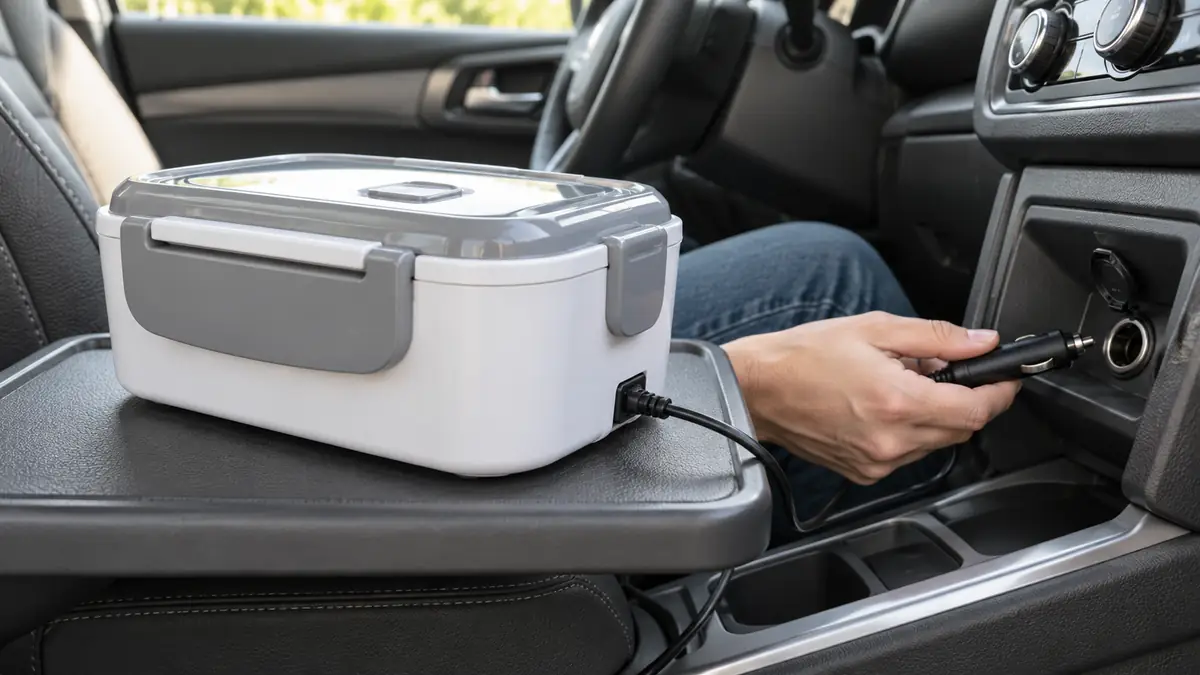
Yes, you can use an electric lunch box in a car if the lunch box is made for a compatible vehicle power source and the vehicle outlet can supply the power it requires. A model labeled for 12V DC may work with a suitable 12V accessory outlet. A lunch box with only a household AC plug needs an appropriately rated inverter; it cannot plug directly into a DC outlet.
For a vehicle-based meal routine, compare food warmers for car use after checking the exact outlet and supplied connection. The appliance and vehicle need to be compatible as a complete setup.
Check the Power Requirements Before Plugging It In
Read the rating label and instructions for the exact lunch box, then check the vehicle manual for the outlet’s limits. Look for these details:
- Voltage and power type: Match 12V DC to a supported 12V DC outlet. A 24V vehicle outlet is not automatically compatible with a 12V lunch box.
- Power draw: Confirm that the appliance’s wattage or current draw stays within the outlet’s rating. Other devices sharing the circuit may affect what is available.
- Plug and cord: Use the connection specified by the manufacturer. Do not modify a plug or use an adapter to work around a voltage mismatch.
For an AC-only lunch box, an inverter must be suitable for the appliance and the vehicle power source. Account for the inverter’s own power requirements, and follow both manufacturers’ instructions. A USB or USB-C port should not be assumed to provide heating power simply because a lunch box has a charging connection.
How to Use It Safely in a Vehicle
- Park before setting it up. Put the lunch box on a stable surface where it cannot tip, spill, or interfere with pedals, controls, seat belts, or air bags. Keep the cord out of the driver’s way.
- Load and close it as directed. Use the food container and lid supplied or approved for the model. Follow any instructions about fill level, vents, and foods that may spill.
- Connect it to the verified power source. Check whether the vehicle outlet operates with the ignition off. Avoid leaving the lunch box running from the vehicle battery while parked if that could prevent the vehicle from starting.
- Check the food before eating. Heating time varies with the food’s starting temperature, quantity, container, and available power. A warm exterior or a lit power indicator does not establish the food’s internal temperature.
- Unplug it after use. Let the unit cool as its instructions direct before handling or cleaning it.
Never run a vehicle engine in a garage or other enclosed space to power a lunch box. If the appliance or plug becomes unusually hot, the connection is loose, or the outlet repeatedly shuts off, unplug it and consult the equipment instructions rather than continuing to use it.
Plan Heating Around Truck Stops
For a truck route, map cold storage, parked breaks, and the permitted heating location before choosing equipment. The guide to food warmers for truck drivers helps compare formats around that daily routine rather than the outlet alone.
If the actual vehicle supply is confirmed as24V, review 24V food warmer options and check the exact appliance rating. A12V-only unit is not a substitute, and a multi-voltage claim must apply to the supplied model and connection.
Keep perishable food appropriately cold until heating, secure the appliance while parked, and allow the heating stage to fit the break. Use the guide to electric lunch box heating times to plan around the meal’s portion and starting temperature rather than treating a timer as proof the food is ready.
Warming Food Is Different From Safely Reheating Leftovers
Electric lunch boxes vary in what they are intended to do. Some are used to warm an already-hot meal during travel; others are marketed for heating chilled food. Neither description proves that a particular meal will reach a safe internal temperature. A low-power unit may heat a large portion slowly, and its heating surface can be much hotter than the center of the food.
For household leftovers, USDA guidance recommends reheating to an internal temperature of 165°F (74°C). Use a food thermometer in the thickest or coolest part of the food rather than relying on the lunch box’s setting or elapsed time. If the manufacturer does not document the lunch box for reheating refrigerated food, use an appropriate reheating method before loading it. If it is intended for reheating, follow its instructions and verify that the food reaches the recommended temperature.
Transport perishable food cold until you are ready to heat it, or keep food that is already hot at a safe temperature. For household use, USDA guidance recommends keeping hot food at 140°F (60°C) or above. An electric lunch box does not guarantee that temperature throughout the food, particularly during a long trip or when power is interrupted. Check the food itself with a thermometer if you plan to rely on the appliance for hot holding.
A car-compatible lunch box can make a meal more convenient, but compatibility and food safety are separate questions. Match the electrical ratings, secure the unit away from driving equipment, and verify food temperature rather than assuming that powered-on means ready to eat.

- Graham
Keeping food warm isn't always as simple as it sounds. From family dinners to large catered events, different settings call for different equipment. Graham Ellis approaches these choices with an eye for the details that matter, including temperature control, serving capacity, ease of cleaning, and overall convenience. His contributions to Best Food Warmers aim to make the buying process less confusing and help readers find solutions that fit the way they serve food.
- Best Soup Warmers: 9 Picks in 2027 October 19, 2026
- Best Infrared Food Warmers: 9 Picks in 2026 October 18, 2026
- Heat Lamp vs. Heat Strip: Which Is Better for Food Warming? October 17, 2026
- Best Heat Lamps for Food: 9 Picks in 2026 October 16, 2026
- Best Commercial Heated Holding Carts: 9 Picks in 2026 October 15, 2026