How Long Does an Electric Lunch Box Take to Heat Food?

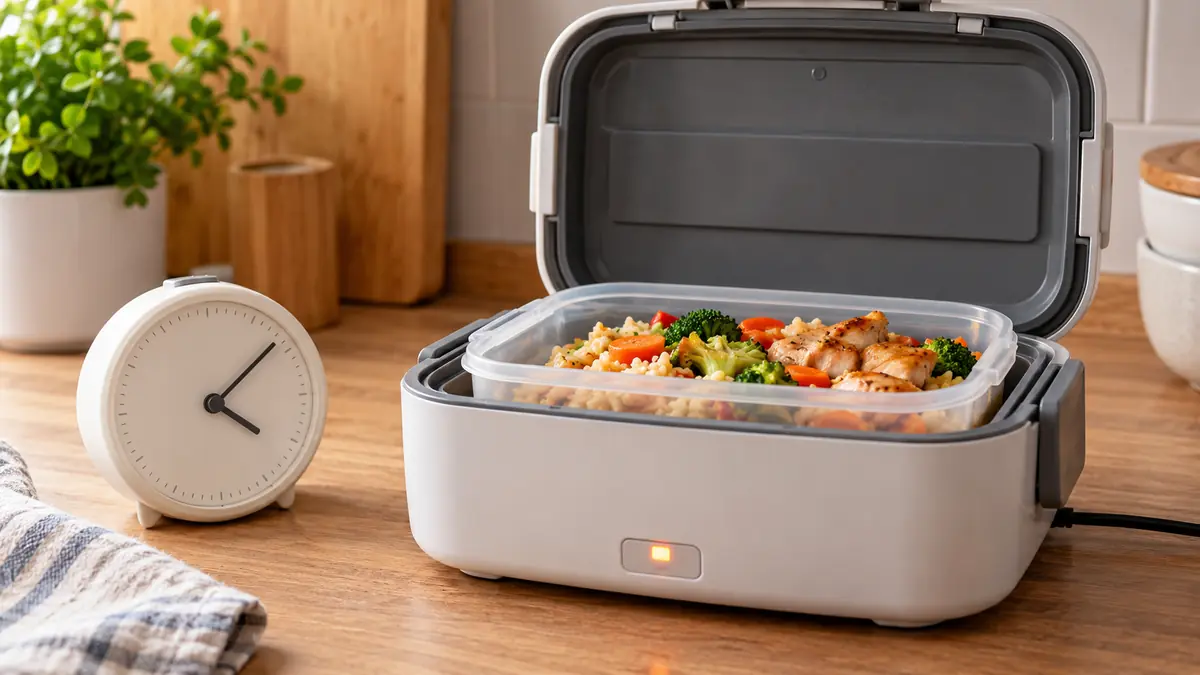
An electric lunch box may warm a meal in about 30 to 60 minutes, but that is a rough planning range, not a reliable time for every appliance or food. A small portion that starts warm may be ready sooner. A large, dense, or refrigerated portion can take longer. The only dependable way to judge the result is to check the food, rather than rely on the clock or the temperature of the container.
When choosing between electric lunch boxes, compare the power supply and container layout alongside the heating guidance for each model.
What Changes the Heating Time?
Electric lunch boxes add heat gradually through a heating base or element. How quickly that heat reaches the center of the meal depends on several factors:
- Starting temperature: Refrigerated food takes longer to heat than food that is already warm.
- Portion size and depth: A deep container of food generally heats more slowly at its center than a shallow portion.
- Food composition: Thick foods, such as dense rice dishes or casseroles, may heat unevenly. Foods that can be stirred are easier to warm throughout.
- Appliance and power supply: Models differ in heating design and electrical rating. A compatible vehicle outlet or other power source must provide the power the appliance requires.
- Container and lid design: Heat has to pass through the container into the food, while an open lid allows more heat to escape.
A higher wattage rating alone does not establish how long a particular meal will take. Use the heating guidance for the exact model as a starting point, then check the food itself.
Understanding how an electric lunch box transfers heat helps explain why a deep portion may take longer to warm.
Warming a Meal Is Different From Safely Reheating Leftovers
An electric lunch box can make food feel pleasantly warm without heating its center sufficiently. For household leftovers, USDA guidance recommends reheating to an internal temperature of 165°F (74°C). Check the thickest or coolest part with a food thermometer, and stir the food first if the container and meal permit it. A hot container or visible steam does not confirm the internal temperature.
Some electric lunch boxes are intended chiefly to warm food or maintain heat, rather than rapidly reheat refrigerated leftovers. Prolonged, gradual warming of perishable food can create a food safety concern. Follow the manufacturer’s instructions for the appliance’s intended use. If it cannot reheat a refrigerated meal appropriately, keep the meal cold until you can use a suitable reheating appliance.
Hot holding is a separate task. USDA household guidance recommends keeping hot food at 140°F (60°C) or above. An electric lunch box being switched on does not prove that the food stays at that temperature, especially after cold food is added or the lid is opened.
How to Plan Your Lunch Break
- Check the manual for the model’s intended use, power requirements, and any heating-time guidance.
- Allow substantially more time than you would for a microwave. Treat 30 to 60 minutes as a planning estimate, not a promise.
- Keep refrigerated perishable food properly cold before heating it. Do not leave it at room temperature while waiting to plug in the lunch box.
- Follow the appliance instructions for filling and closing the container. If stirring is permitted, stir partway through to help distribute heat.
- Check the center of the food before eating. For reheated household leftovers, verify that it reaches 165°F (74°C).
If a meal is still cool in the middle at the end of your planned heating period, it needs further appropriate reheating. An electric lunch box is convenient for a meal away from a kitchen, but its timer or estimated heating period cannot substitute for checking the food temperature.
If your lunch break depends on vehicle power, check the requirements for using a lunch box in a car before planning the heating window.

- Graham
Keeping food warm isn't always as simple as it sounds. From family dinners to large catered events, different settings call for different equipment. Graham Ellis approaches these choices with an eye for the details that matter, including temperature control, serving capacity, ease of cleaning, and overall convenience. His contributions to Best Food Warmers aim to make the buying process less confusing and help readers find solutions that fit the way they serve food.
- Best Soup Warmers: 9 Picks in 2027 October 19, 2026
- Best Infrared Food Warmers: 9 Picks in 2026 October 18, 2026
- Heat Lamp vs. Heat Strip: Which Is Better for Food Warming? October 17, 2026
- Best Heat Lamps for Food: 9 Picks in 2026 October 16, 2026
- Best Commercial Heated Holding Carts: 9 Picks in 2026 October 15, 2026