How to Plan a Food Truck Hot-Holding Station

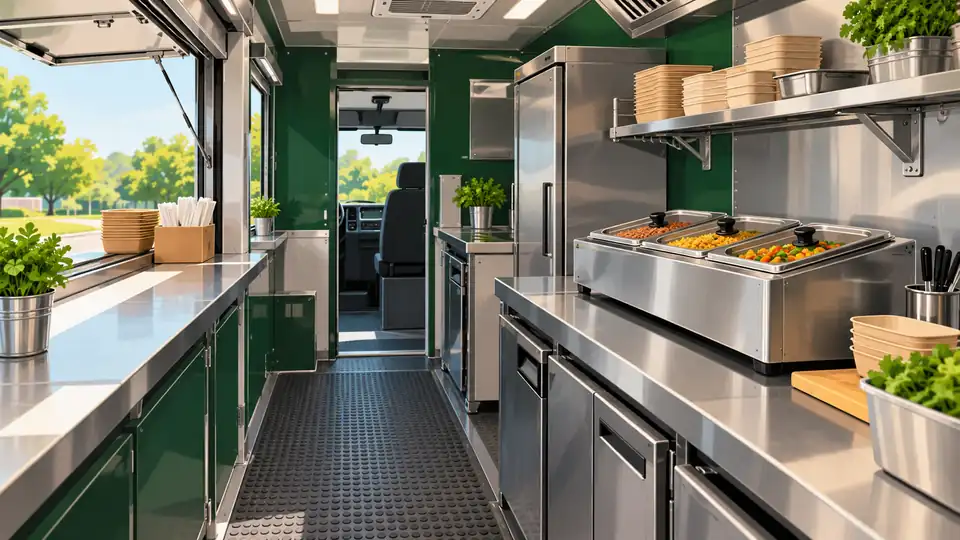
Plan a food-truck hot-holding station by mapping the menu to pans, measuring the working counter, and checking the power and operating requirements of the exact equipment. The station needs to fit the complete service cycle: loading hot food, serving, replacing pans, checking temperatures, and cleaning after the rush.
Once those needs are clear, compare countertop steam tables for a food-truck station against the actual pan layout and secured counter space. Keep personal lunch warmers for truck drivers separate from equipment used to serve customers.
Map the Menu to Pans and Service Flow
List the foods that must be held at the same time and the containers already used to prepare them. Record pan dimensions, depth, lid clearance, and the amount needed between replenishment runs. Daily sales volume alone does not tell you how much food needs to sit in the station at once.
Sketch the working sequence from cooking equipment to the holding station and then to assembly or pickup. A warmer that makes staff carry a hot pan across the order queue may fit the counter while still creating a poor workflow.
| Station question | What to record |
|---|---|
| How many foods are held simultaneously? | Active menu items and whether they can share a control arrangement. |
| What fits each position? | Compatible pan footprint, depth, lids, and any adapter bars specified for the unit. |
| Where do replacement pans wait? | A separate, suitable holding location and a safe route to the serving line. |
| How will the station be emptied? | Access for removing food pans and, where relevant, draining the well. |
Measure the Usable Counter, Including Access
Measure the station with lids open, controls accessible, and cords connected. Allow for the clearances in the equipment’s installation instructions. Also check doorways and the route for bringing the unit into the truck.
If you are weighing a pan station against other formats, review the food-warmer options listed for food trucks by intended task. For customer service, narrow that list to equipment designed for the volume and pan format you use; a personal lunch warmer is a different category.
Account for the working space in front of the unit. Staff need to remove a loaded pan, put down a lid, use a serving utensil, and replace food without reaching awkwardly over another hot surface.
Build an Electrical Schedule Before Ordering
Record the exact model’s rated voltage, wattage or current, plug type, and any installation instructions. Put the warmer alongside the other equipment expected to run during service, including refrigeration, lighting, and cooking appliances.
Have a qualified person check the supply and circuit arrangement where needed. Do not treat a physically available outlet as proof that there is enough capacity, and do not solve a mismatch with an improvised adapter or overloaded power strip.
Secure the equipment in a way approved for the installation and the truck’s operation. A countertop appliance is not automatically designed to remain loose during travel. Plan shutdown, cooling, and transport separately from stationary service.
Choose the Heating Arrangement for the Food
Check whether the selected unit uses a water bath, dry wells, or another heating method. Wet and dry operation are model-specific. A unit with a stainless well is not automatically safe to run empty, and adding water to an appliance does not make it a bain-marie.
Our explanation of steam tables and bain-marie heating clarifies those terms. Use the manual for the actual unit to establish filling, preheating, water monitoring, and permitted pan arrangements.
Covered pans of soup or sauce, a quick assembly line, and open serving trays create different demands. For more service-oriented layouts, compare commercial food warmers for buffet-style serving while checking access, controls, and pan changes against the truck’s menu.
Keep Reheating and Holding Separate in the Workflow
A station intended for holding should receive food that has already been cooked or reheated appropriately. Do not assume a high thermostat setting gives every warmer the ability to reheat refrigerated food. Equipment specifically intended for rethermalizing has its own documented process.
Define who checks the food temperature, when readings are taken, and what happens if the station cannot maintain the required conditions. Commercial operators should follow the food-safety requirements and approved procedures that apply to their operation.
Check the food itself rather than relying on the well temperature or control dial. Frequently removing lids, changing pans, and adding food all belong in the real service routine you evaluate.
Plan Filling, Draining, and Cleanup
For a water-bath unit, check how the well will be filled and emptied in the installed position. A drain is useful only if staff can reach and use it safely. Keep the water-handling route separate from electrical parts and customer service activity.
Make sure removable pans and covers can be lifted out without disassembling the station. Follow the equipment instructions for cooling, cleaning, and any sanitizing procedure required for food-contact surfaces. A removable component is not automatically dishwasher-safe.
A Practical Pre-Order Walkthrough
- Set out empty pans in the proposed menu arrangement.
- Mark the full equipment footprint, clearances, and lid movement on the counter plan.
- Check how a worker will replace a pan while another assembles an order.
- Verify the exact electrical requirements with the installation plan.
- Walk through the end-of-service draining and cleaning tasks.
Use the broader guide to choosing a commercial food warmer if you are still deciding which type of equipment belongs at the station. Choose the final unit after the space, power, and service questions have workable answers.

- Graham
Keeping food warm isn't always as simple as it sounds. From family dinners to large catered events, different settings call for different equipment. Graham Ellis approaches these choices with an eye for the details that matter, including temperature control, serving capacity, ease of cleaning, and overall convenience. His contributions to Best Food Warmers aim to make the buying process less confusing and help readers find solutions that fit the way they serve food.
- Best Soup Warmers: 9 Picks in 2027 October 19, 2026
- Best Infrared Food Warmers: 9 Picks in 2026 October 18, 2026
- Heat Lamp vs. Heat Strip: Which Is Better for Food Warming? October 17, 2026
- Best Heat Lamps for Food: 9 Picks in 2026 October 16, 2026
- Best Commercial Heated Holding Carts: 9 Picks in 2026 October 15, 2026