How to Keep Food Warm While Camping

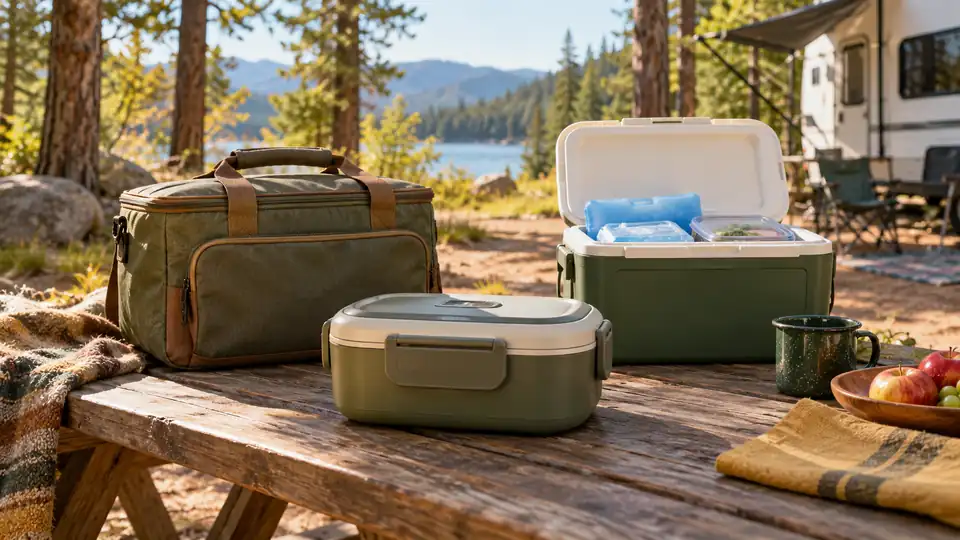
To keep food warm while camping, plan the transport, cooking or reheating, and serving stages separately. Use a suitable insulated container for a hot meal that will be eaten soon, or keep perishable food cold until it can be cooked or reheated at camp. Do not rely on a warm bag to cover an entire day or an overnight wait.
Once the campsite’s power arrangement is clear, compare food warmers for camping setups by the supply and use environment each appliance requires. A handle or carrying bag does not make an electric warmer suitable for every campsite.
Decide Where the Meal Will Be Heated
Start with the itinerary. A picnic after a short drive, a meal at a powered camper site, and dinner after a day of hiking have different storage and heating opportunities.
If the journey or wait makes hot holding difficult, transport perishable food chilled and use a suitable cooking or reheating method later. USDA’s camping guidance emphasizes planning the menu and keeping perishable food under appropriate temperature control during the trip.
| Camping arrangement | Planning direction | Check before packing |
|---|---|---|
| Powered site or camper | Use an appliance intended for the available supply and location. | Voltage, rated load, placement, and permitted operating environment. |
| Vehicle-based stop | Use compatible vehicle equipment only as directed. | The exact outlet and cord; do not assume 12V and 24V are interchangeable. |
| No usable electrical supply | Plan suitable cooking equipment or an appropriately packed insulated meal. | Site rules, storage time, and how the food will be checked. |
| Long hike or multi-day trip | Plan food storage for the whole itinerary, not just the first hot meal. | Whether cold storage or shelf-stable food better suits the later meals. |
Pack the Journey Before Planning the Serving Table
Use suitable covered containers and keep hot and cold foods in separate arrangements. Put the food you need first where it can be reached without repeatedly unpacking everything else.
A passive bag adds no heat. If a smaller personal meal is being carried hot, compare insulated lunch bags for hot food around the actual container dimensions and closure. Check the bag’s permitted contact with hot containers rather than loading cookware directly from a hot cooking surface.
Do not mix the hot-transport plan with the chilled-transport plan. A refrigerated meal in an unpowered warmer needs a cold source or refrigeration until the heating stage; insulation alone does not make gradual warming a suitable storage method.
Match Active Equipment to the Power and Location
Check the appliance label and instructions against the actual electrical source. A household outlet, a vehicle socket, and a portable power station can have different limitations. A plug that fits does not establish sufficient capacity or permitted use.
When comparing portable food warmer formats, distinguish a personal lunch appliance from equipment intended to support a larger serving dish. Also distinguish charging a battery from powering the heater directly.
Use electrical equipment only in the environment and position approved for it. Do not improvise rain protection that traps heat around the appliance, run a cable through a walkway, or place an operating unit inside a closed tent.
The guide to electric lunch box heating and power sources explains the differences behind many personal-meal designs. Use the exact model’s instructions to decide whether it fits your campsite.
Serve Smaller Batches When the Meal Is Ready
Have plates, utensils, lids, and a stable serving place ready before transferring the food. Bring out amounts that the group will eat promptly while the reserve food remains under appropriate temperature control.
Keep container lids fitted where appropriate and avoid leaving the whole meal open while everyone arrives back at camp. A shaded table may be more comfortable, but shade does not establish the food’s temperature.
For the distinction between time and temperature, read how long food can remain in a warmer. Check the food itself instead of relying on how warm the carrier feels.
Have a Plan for a Changed Itinerary
Consider what happens if arrival is late, a power source is unavailable, or the group decides to eat later. Keep a backup meal appropriate to the available storage and preparation facilities instead of expecting a warmer to solve every delay.
For a longer trip, decide how leftovers will be cooled, stored, and used under an appropriate food-handling plan. Do not leave a meal in an unplugged warmer overnight and treat the insulation as refrigeration.
Pack Cleanup Equipment Too
Bring suitable utensils, washing supplies, and a way to carry used food containers. Keep food-contact parts separate from electrical components when cleaning, and follow the appliance’s cooling and care instructions.
The useful camping setup is the one that fits the trip from departure through cleanup. Choose the warming method after the storage, power, and mealtime questions have workable answers.

- Graham
Keeping food warm isn't always as simple as it sounds. From family dinners to large catered events, different settings call for different equipment. Graham Ellis approaches these choices with an eye for the details that matter, including temperature control, serving capacity, ease of cleaning, and overall convenience. His contributions to Best Food Warmers aim to make the buying process less confusing and help readers find solutions that fit the way they serve food.
- Best Soup Warmers: 9 Picks in 2027 October 19, 2026
- Best Infrared Food Warmers: 9 Picks in 2026 October 18, 2026
- Heat Lamp vs. Heat Strip: Which Is Better for Food Warming? October 17, 2026
- Best Heat Lamps for Food: 9 Picks in 2026 October 16, 2026
- Best Commercial Heated Holding Carts: 9 Picks in 2026 October 15, 2026