How to Keep an Outdoor Buffet Warm Without Electricity

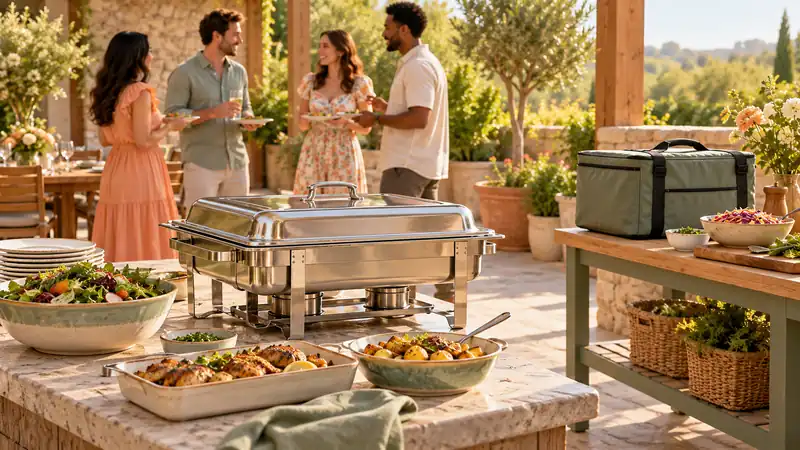
To keep an outdoor buffet warm without electricity, separate transport from service, use a permitted holding method for the venue, and bring out food in manageable batches. A suitable fuel-heated chafer may support service where allowed; an insulated carrier can support transport but does not add heat to food.
Compare food warmers for outdoor parties after checking the venue and weather conditions. Narrow the options by their actual power or fuel requirements rather than assuming every outdoor-oriented listing works without electricity.
Start With the Venue and the Forecast
Confirm where the buffet may be set up and whether the intended fuel or heat source is permitted. Check the manufacturer’s operating conditions alongside the venue’s rules. An outdoor location does not automatically make every fuel arrangement acceptable.
Choose a stable surface and a position that supports safe serving and monitoring. Think about wind, rain, traffic around the table, and where hot lids and utensils will be placed.
Have a plan for conditions that make the setup unsuitable. Moving to a permitted sheltered location or changing the serving schedule is preferable to improvising an enclosure around a heat source.
Keep the Journey Separate From the Buffet
Cook or reheat the food appropriately before hot transport, or transport it under suitable cold conditions and use an appropriate preparation method at the destination. Decide which plan the event can actually support before departure.
Use suitable covered containers in a compatible carrier, keep them secure, and arrange the receiving area. Opening a transport carrier repeatedly for buffet service creates a different task from keeping it closed during the journey.
| Stage | Main task | Important distinction |
|---|---|---|
| Transport | Move covered food under suitable temperature control. | Passive insulation retains heat; it does not reheat cooled food. |
| Setup | Prepare the approved holding equipment before food is loaded. | A rack, pan, water bath, and fuel holder must work as the intended system. |
| Service | Monitor the food and replenish manageable batches. | A visible flame or hot water does not establish the food temperature. |
Choose a Complete, Permitted Fuel Setup
Check the rack, water pan where required, food pans, lids, and fuel holders together. The appropriate fuel is the type specified for the equipment and permitted at the venue.
Compare chafing fuel package formats only after confirming compatibility. Burn-duration claims describe the fuel under stated conditions; they do not guarantee an equal period of suitable food holding outdoors.
For an occasional event, review disposable chafing sets by what is actually supplied. Food pans alone do not make a complete buffet setup, and a lightweight rack needs the support and loading arrangement intended for it.
Account for Wind Without Improvising a Shield
Use only manufacturer-approved accessories and operating arrangements. Do not wrap a rack tightly in foil, crowd combustible materials around a heat source, or create an unapproved enclosure to compensate for wind.
Keep serving activity clear of the hot parts and assign someone to monitor the station. Fuel lighting, extinguishing, replacement, and cooling should follow the product’s instructions. Do not move a fuel-powered chafer while a flame is exposed.
Prepare Water-Bath Equipment Before Loading Food
Follow the specific unit’s filling and preheating directions. Monitor water where required and use the approved method for topping up during service. The water pan and the food can be at different temperatures.
The guide to setting up and using a chafing dish covers the sequence around the food pan and heat source. Do not treat a general setup diagram as a replacement for the model’s instructions.
Serve Smaller Batches and Keep Reserve Food Controlled
Set the first batch out when the equipment and guests are ready. Keep reserve food under the appropriate temperature-control arrangement and plan who will change pans during the event.
Use a food thermometer to check the actual food and follow the handling procedure appropriate to the event. Do not assume a hot day makes a buffet self-warming or that a shaded table establishes a safe temperature.
Read how holding time depends on food temperature when planning the service window. If a heat source fails or the food cools, assess the food’s history and follow an appropriate corrective plan rather than simply adding more fuel.
When Electricity-Free Holding Is Not the Right Plan
If the venue does not allow the heat source, the weather prevents suitable operation, or the food cannot be monitored, change the menu or service arrangement. A shorter, clearly scheduled meal may be more workable than a long open buffet.
For the equipment decision itself, see electric versus fuel chafing arrangements. The useful choice is the one the venue can support from setup through shutdown, not the one that merely avoids an electrical cord.

- Graham
Keeping food warm isn't always as simple as it sounds. From family dinners to large catered events, different settings call for different equipment. Graham Ellis approaches these choices with an eye for the details that matter, including temperature control, serving capacity, ease of cleaning, and overall convenience. His contributions to Best Food Warmers aim to make the buying process less confusing and help readers find solutions that fit the way they serve food.
- Best Soup Warmers: 9 Picks in 2027 October 19, 2026
- Best Infrared Food Warmers: 9 Picks in 2026 October 18, 2026
- Heat Lamp vs. Heat Strip: Which Is Better for Food Warming? October 17, 2026
- Best Heat Lamps for Food: 9 Picks in 2026 October 16, 2026
- Best Commercial Heated Holding Carts: 9 Picks in 2026 October 15, 2026