Electric vs Fuel Chafing Dishes: Where Disposable Sets Fit

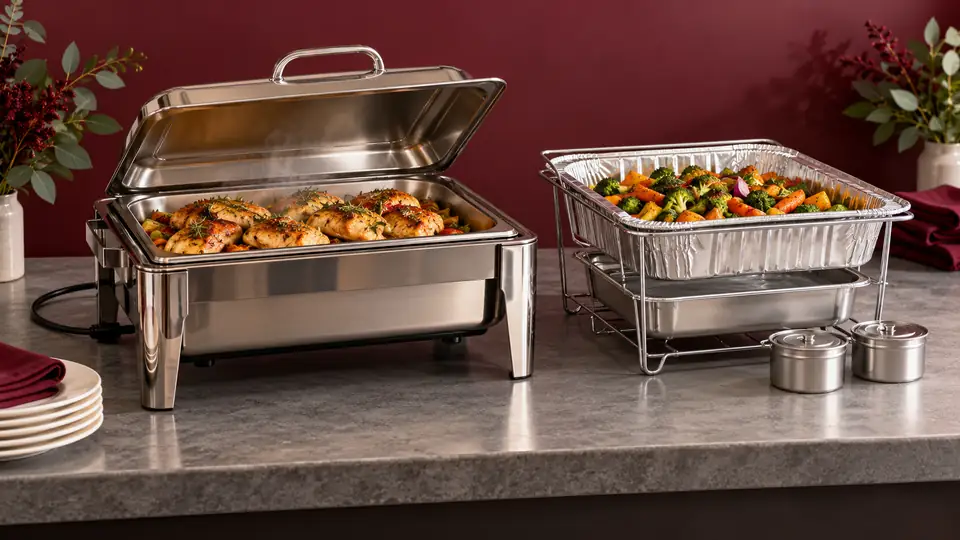
Choose between electric and fuel chafing dishes by the venue’s permitted heat source, pan arrangement, and service routine. Then decide whether a reusable unit or a disposable set fits the event. Disposable describes the equipment format; it is not a separate power source.
Where suitable outlets are available, compare electric chafing dishes by the pan layout and heating arrangement of the exact model. An electric label does not establish whether the unit uses a water bath or a different design.
Make Two Separate Choices
First choose the heat source: electricity or the manufacturer-approved fuel arrangement. Second choose the equipment and consumables: a reusable chafer, a disposable pan-and-rack setup, or another permitted format.
| Question | Electric arrangement | Fuel arrangement |
|---|---|---|
| What must the venue provide? | A suitable electrical source and permitted location. | Permission for the fuel and setup, with the required operating conditions. |
| What needs planning during service? | Cords, controls, pans, and any model-specific water requirements. | Approved fuel, stable holders, monitoring, and any required water bath. |
| What needs handling afterward? | Cooling and separation of electrical and washable parts. | Safe shutdown, cooling, and fuel handling according to the labels. |
Neither column determines whether the pans are reusable. Check what is included in the package before choosing accessories or planning the event.
Start With the Venue
Confirm suitable outlets, the usable serving area, and any restrictions on open-flame or fuel-based equipment before ordering. A nearby socket does not establish that the circuit can supply all the appliances planned for the table.
For fuel use, follow both the chafer and fuel instructions and the venue’s requirements. Do not treat an indoor or outdoor label on one component as permission to use every combination of rack, fuel, and cover.
Match Pans and Serving Access
List the dishes served simultaneously, the depth of the food pans, and how staff or guests will lift the lids. A full-size pan and several smaller pans create different replenishment tasks even when the nominal total capacity looks similar.
Compare chafing dishes by pan shape and serving layout when the main question is how the food will be presented. Check adapter bars, lids, water pans, and fuel holders against the actual unit rather than assuming they are universal.
Where Disposable Sets Make Sense
A disposable set can be practical for an occasional event where the permitted format and cleanup plan suit it. Check the complete contents: a package may include food pans but omit the water pan, rack, lids, or fuel.
Our comparison of disposable chafing dish sets helps distinguish those package formats. Plan a stable supporting table and the load the rack is designed to hold; thin pans should not be expected to act like a rigid commercial appliance.
Check the manufacturer’s reuse instructions for every component. Do not assume a foil pan, rack, and fuel holder all share the same intended service life simply because they arrived together.
Check the Actual Water-Bath Instructions
A common chafer places a food pan above a separate heated water pan, but electric designs vary. Follow the exact model’s instructions for filling, preheating, monitoring, and adding water.
The guide to setting the water level in a chafing dish explains why one measurement cannot be applied to every unit. A general setup diagram should not override a marked minimum or maximum on your equipment.
Keep water away from electrical parts and fuel containers as directed. Do not run a unit dry when its operating method requires water, and do not add water to a design that does not call for it.
Plan the Whole Service Routine
Load food that has been cooked or reheated appropriately for holding. Confirm the food temperature during service instead of treating the appliance setting, hot water, or a burning fuel can as proof that the food is holding correctly.
For the setup sequence and pan handling, use the guide to setting up a chafing dish. Assign someone to monitor the station and handle changes during the event.
Account for Outdoor Conditions Separately
Removing the need for an outlet does not remove the need for a suitable location. Wind, an unstable table, and a poor shutdown arrangement can make a fuel setup impractical.
For that setting, the guide to keeping an outdoor buffet warm without electricity covers the event plan. Use only accessories and operating arrangements approved for the equipment; do not improvise a tight wind enclosure around a heat source.
Choose the Setup You Can Operate Consistently
Choose electric where the supply and installation fit the venue. Choose an approved fuel arrangement where it is permitted and manageable. Choose disposable components only when their load, contents, and cleanup requirements suit the event. The best format is the one that works through preparation, serving, and shutdown.

- Graham
Keeping food warm isn't always as simple as it sounds. From family dinners to large catered events, different settings call for different equipment. Graham Ellis approaches these choices with an eye for the details that matter, including temperature control, serving capacity, ease of cleaning, and overall convenience. His contributions to Best Food Warmers aim to make the buying process less confusing and help readers find solutions that fit the way they serve food.
- Best Soup Warmers: 9 Picks in 2027 October 19, 2026
- Best Infrared Food Warmers: 9 Picks in 2026 October 18, 2026
- Heat Lamp vs. Heat Strip: Which Is Better for Food Warming? October 17, 2026
- Best Heat Lamps for Food: 9 Picks in 2026 October 16, 2026
- Best Commercial Heated Holding Carts: 9 Picks in 2026 October 15, 2026