Best Insulated Food Carriers: 9 Picks in 2026

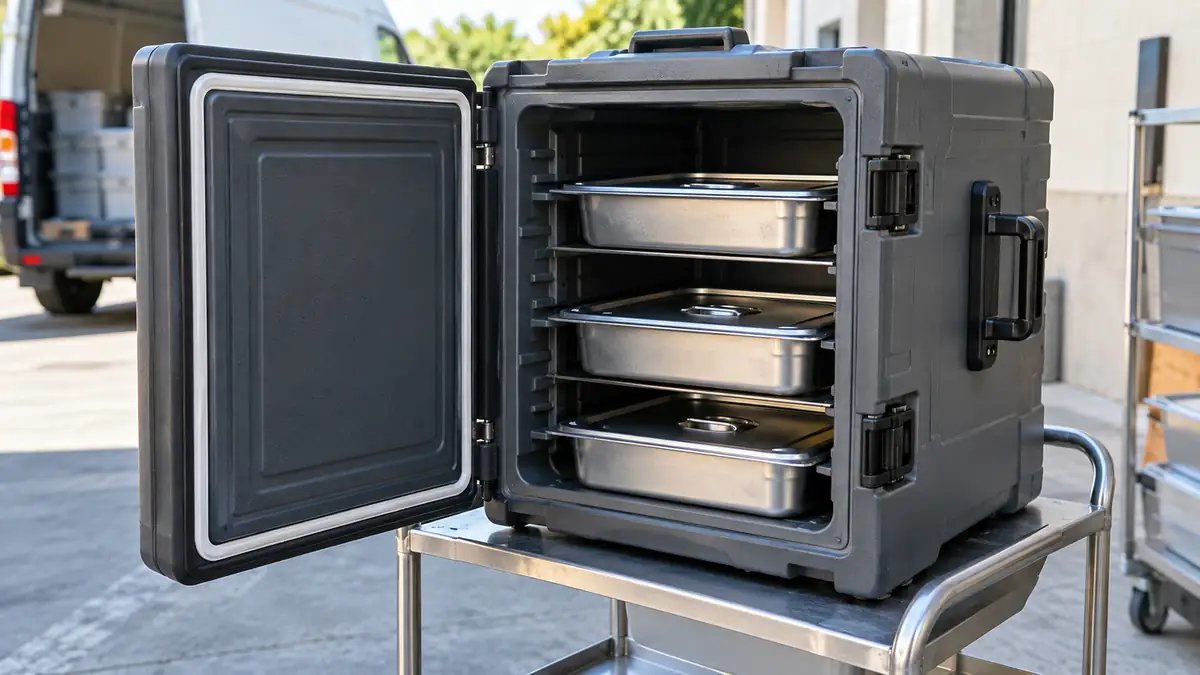
A hot casserole sliding into a community-hall buffet with steam still clinging to the lid is a satisfying sight. An insulated food carrier makes that possible without plugging in a warming cabinet at the destination. These carriers are built to slow heat loss, protect prepared dishes during transport, and keep cold foods separated from the outdoor heat. The best choice depends on whether you are moving several full-size pans for catering or carrying one lasagna to a neighborhood potluck.
A common mistake is treating every insulated carrier as the same piece of equipment. A commercial pan carrier has rigid walls, internal slots, latches, and a much larger footprint than a soft casserole tote. Another mistake is assuming that insulation reheats food or guarantees a safe internal temperature. These products are passive carriers, so food should be heated properly before loading, packed in compatible containers, and monitored according to the manufacturer’s directions and applicable food-safety requirements.
Capacity, pan compatibility, closure design, wheels, cleaning access, and the difference between a rigid hot box and a flexible bag matter more than a long feature list. A caterer delivering several trays has different priorities from a parent taking a 9-by-13-inch dish to a picnic. The CAMMOO 95-quart carrier earns the strongest overall position for its balance of capacity, mobility, front access, and documented insulation, while the smaller casserole bags make more sense for household gatherings.
Quick Answer
Best Overall: The CAMMOO NSF 95Qt Food Warmer is the most complete option for catering and large events, with room for up to six 2.5-inch full-size pans, four wheels, a 270-degree door, and a 304 stainless steel latch.
Best for Large Loads: The VEVOR 127 Qt Food Pan Carrier in Blue provides the greatest listed capacity and multiple caster wheels for moving a substantial load.
Best for Home Gatherings: The Insulated Expandable Double Decker Casserole Carrier offers two separate compartments for baking dishes, drinks, or a combination of hot and cold food.
Best Insulated Food Carriers Comparison Table
| Product | Best For | Capacity or Fit | Construction |
|---|---|---|---|
| CAMMOO 95Qt Food Warmer | Catering and events | Up to six full-size pans | LLDPE, polyurethane foam, wheels |
| VEVOR 127 Qt Food Pan Carrier | Large catering loads | 127 qt, up to eight shallow pans | LLDPE, foam, four casters |
| Pearington 85 Qt Food Pan Carrier | Compact commercial transport | Up to five full-size pans | Polyethylene, polyurethane foam |
| VEVOR 95 Qt Stainless-Latch Carrier | Flexible pan arrangements | 2.5- to 6-inch pan depths | LLDPE, foam, stainless latch |
| VEVOR 95 Qt Double-Buckle Carrier | Delivery and mobile service | Up to six 2.5-inch pans | LLDPE, foam, wheels |
| VEVOR 127 Qt Food Pan Carrier | High-volume transport | 127 qt, multiple pan slots | LLDPE, foam, wheels |
| Double Decker Casserole Carrier | Two-dish household use | Two 9-by-13 or 11-by-15-inch dishes | Insulated polyester, water-resistant fabric |
| LUNCIA Single Decker Carrier | One casserole or baking dish | Fits dishes up to 11 by 15 inches | 600D Oxford fabric, foil, EPE foam |
| MIAOJIE Casserole Carrier | Potlucks and travel | Fits 9-by-13 and up to 10-by-15-inch dishes | Foam, aluminum foil, fabric |
The detailed reviews below separate full-size commercial hot boxes from soft casserole carriers, so you can match the format to the meal, route, and available storage space.
1. CAMMOO NSF 95Qt Food Warmer – Best Overall

The CAMMOO is the most balanced fit for a caterer who needs a serious carrier without moving up to an extra-large 127-quart cabinet. Its 95-quart interior is listed to hold up to six 2.5-inch full-size pans, giving a buffet team room for entrees, vegetables, starches, or desserts in one trip. The front-loading layout is useful at a crowded serving station because the door opens 270 degrees instead of forcing staff to wrestle with a lid above the food.
Its double-walled LLDPE shell, polyurethane foam insulation, removable sealing strip, and 304 stainless steel latch support passive hot or cold transport for the listed four-to-six-hour range. That is a product claim rather than a guarantee of a particular internal food temperature, so loading temperature, ambient conditions, opening frequency, and pan fit still matter. Four wheels make a full carrier easier to move across a parking lot or hall floor, while the grooved top supports stacking when storage space is tight.
Pros
- 95-quart interior accommodates up to six 2.5-inch full-size pans.
- Four wheels simplify movement across event spaces.
- 304 stainless steel latch and door shaft are suited to repeated transport.
- Front door opens 270 degrees for easier pan access.
- Removable sealing strip and stain-resistant surface support cleanup.
Cons
- Food pans are not included.
- Warm and cold food should not be stored together in the same carrier.
This is the strongest choice for caterers, restaurants, schools, and event crews that need one mobile box for several full-size pans. It is too large for a single family casserole and still requires careful food-temperature management, but its wheels and commercial-style closure give it a practical edge over smaller rigid carriers.
To buy this product, click here.
2. VEVOR 127 Qt Food Pan Carrier in Blue – Best for High-Volume Transport

When a service involves a long folding table covered with pans, the extra capacity of this 127-quart VEVOR carrier becomes meaningful. The published interior dimensions are approximately 21 by 13 by 25 inches, with 16 internal layers spaced at about 1.4 inches. The listing describes room for up to eight 2.5-inch pans or five 6.5-inch pans, giving operators more flexibility than a carrier built around one pan depth.
Four casters, including two with brakes, help manage the weight of a fully loaded box. Top handles and side elastic stainless steel handles give one or two people additional lifting points, although a large carrier still needs a clear route and sensible loading plan. The 270-degree door helps keep pans level during removal, and the nylon buckles close the insulated compartment without electrical power.
Pros
- 127-quart capacity suits high-volume catering and food delivery.
- Internal layers support several pan depths.
- Four casters include two brakes for positioning.
- Top and side handles provide multiple carrying options.
- 270-degree door opening allows direct front access.
Cons
- Its large footprint demands substantial storage and transport space.
- Food pans are not included.
This carrier is a strong match for banquet crews and institutional kitchens that regularly move several courses at once. The scale is excessive for occasional household use, and the blue finish may be less discreet in a home setting, yet the interior organization and braking casters are valuable for high-volume service.
To buy this product, click here.
3. Pearington 85 Qt Commercial-Grade Food Pan Carrier – Best Compact Commercial Carrier

The Pearington trims the capacity slightly compared with the larger 95-quart boxes, which can be useful when a catering van, storeroom, or service corridor is already crowded. Its listed internal dimensions are 21 by 13 by 17 inches, and it can hold up to five full-size pans arranged across different intervals. That makes it a practical middle ground for a church supper, office lunch, or smaller catered reception.
A seamless double-wall shell filled with polyurethane foam provides passive insulation, while the inlaid door seal helps limit air exchange. The polyethylene body is built for repeated handling, and two ergonomic handles give staff a straightforward way to carry it. Pearington offers compatible pans separately in several capacities, so buyers should budget space and equipment around the exact containers they plan to use.
Pros
- 85-quart format is smaller than the largest commercial carriers.
- Holds up to five full-size pans.
- Double-wall polyurethane foam construction supports passive insulation.
- Two handles assist with lifting and carrying.
- Door opens 270 degrees for direct pan access.
Cons
- Compatible pans are sold separately.
- Its five-pan capacity is lower than the larger 95- and 127-quart options.
Choose this model for regular commercial transport where five pans cover the menu and storage space matters. It may be too bulky for casual potluck use, while high-volume caterers may prefer a wheeled model with more capacity. Its simpler configuration is appealing for teams that want a sturdy carrier without an oversized interior.
To buy this product, click here.
4. VEVOR 95 Qt Stainless-Latch Food Pan Carrier – Best for Flexible Pan Depths

Menu changes can make a fixed-format carrier frustrating. This VEVOR model is listed for pan depths ranging from 2.5 to 6 inches, with 12 interior dividers that allow different combinations. That flexibility can help a caterer move shallow vegetable pans one day and deeper dishes or desserts the next, provided the chosen containers fit the internal layout.
The LLDPE shell and polyurethane foam insulation are intended to hold hot food for four to six hours or cold food for three to five hours without electricity. A stainless steel latch and hinge add a more durable contact point than a basic plastic closure, while the recessed top and casters help with stacking and movement. The carrier does not supply the pans, so compatibility must be checked before loading a full menu.
Pros
- Supports pan depths from 2.5 to 6 inches.
- Twelve dividers allow flexible interior arrangements.
- Stainless steel latch and hinge suit repeated handling.
- Casters make the carrier easier to roll.
- Recessed top supports stable stacking.
Cons
- Food pans are not included.
- The listing provides retention ranges rather than a specific internal food temperature.
This carrier suits event operators with changing menus and mixed pan sizes. It is less attractive for a buyer who always uses one standardized pan configuration, since a simpler carrier may be easier to organize. The adjustable interior is the reason to choose it, especially where one box must serve several types of event.
To buy this product, click here.
5. VEVOR 95 Qt Double-Buckle Food Pan Carrier – Best for Mobile Delivery

This 95-quart VEVOR carrier is aimed at the familiar delivery routine: load hot pans in the kitchen, secure the front door, roll the box to a vehicle or event space, and open it at the serving area. The listing describes capacity for up to six 2.5-inch pans, plus a multi-slot interior for arranging the load. An integrated menu slot can reduce unnecessary door openings when several carriers are lined up for service.
The LLDPE exterior and polyurethane foam layer provide passive insulation, with listed holding ranges of four to six hours for hot food and three to five hours for cold food. Ventilation holes are described as helping balance air pressure and humidity. Built-in handles, bottom wheels, double nylon latches, and a 270-degree door create a useful transport package, though the carrier still needs compatible pans and careful separation of hot and cold food.
Pros
- 95-quart capacity holds up to six shallow full-size pans.
- Bottom wheels support movement from kitchen to service area.
- Double latches help keep the door closed during transport.
- Menu slot can reduce repeated opening.
- Stacking grooves help organize multiple carriers.
Cons
- Food pans are not included.
- It has no active heating or cooling system.
This model makes sense for catering deliveries and mobile food service where an insulated box must travel between locations without electricity. Buyers needing active reheating should choose different equipment. For passive transport, its capacity, wheels, and menu slot create a sensible working layout.
To buy this product, click here.
6. VEVOR 127 Qt Food Pan Carrier – Best for Large Catering Menus

The black 127-quart VEVOR is the large-capacity workhorse in this group. Its internal layout is described as suitable for six 2.5-inch dinner plates or three 6.5-inch dinner plates, with multiple slots for different arrangements. That combination favors a broad menu, such as several entree pans plus deeper dishes, rather than a small single-course delivery.
Like the smaller VEVOR carrier, it uses an LLDPE shell, polyurethane foam insulation, sealing ring, nylon latches, wheels, and a 270-degree opening door. The top grooves allow additional units to stack, a useful detail in a catering van or back-of-house storeroom. The listing gives hot and cold retention ranges, but the carrier does not generate heat, so the food must enter at an appropriate temperature and remain managed during service.
Pros
- 127-quart capacity supports substantial catering loads.
- Multiple slots accommodate different pan arrangements.
- Wheels reduce the effort of moving a full carrier.
- Top grooves support stable stacking.
- 270-degree door opening allows level pan removal.
Cons
- The large body requires significant storage space.
- Food pans are not included.
Pick this carrier when volume is the central concern and the transport team has room for a large wheeled box. It is excessive for a household kitchen and may be harder to maneuver through narrow doorways than a smaller 85- or 95-quart model. Its advantage appears during large meal runs where fewer trips matter.
To buy this product, click here.
7. Insulated Expandable Double Decker Casserole Carrier – Best for Two Dishes

A soft casserole carrier is a better companion for a family car than a rigid 95-quart box. This double-decker design has two separate insulated compartments, each listed at 16 by 11 by 3 inches, with room for 9-by-13 or 11-by-15-inch baking dishes. The upper compartment expands, creating a useful second layer for a side dish, dessert, drinks, or serving accessories.
The separated sections can carry hot food in one compartment and cold food in the other, provided each dish is packed appropriately. The polyester body is water resistant, stain resistant, and described as easy to clean with soap, water, or a damp cloth. A padded handle and exterior zipper pocket make the bag feel more like a practical picnic tote than a restaurant carrier.
Pros
- Two separate insulated compartments support two-dish transport.
- Fits common 9-by-13 and 11-by-15-inch baking dishes.
- Expandable upper section adds flexible storage.
- Exterior pocket holds utensils and small accessories.
- Water-resistant, stain-resistant fabric is easy to wipe clean.
Cons
- It cannot accommodate commercial full-size food pans.
- The soft structure provides less protection than a rigid carrier.
This is the natural pick for a holiday meal, office potluck, tailgate, or picnic where two dishes need to arrive together. It does not replace a commercial hot box, and the carrier adds insulation rather than active heat. Still, the divided layout is genuinely useful when one hand holds the bag and the other carries a serving platter.
To buy this product, click here.
8. LUNCIA Single Decker Casserole Carrier – Best for One Large Dish

The LUNCIA keeps the format simple: one insulated compartment, two carry handles, and a wide zippered opening. It fits a 9-by-13-inch dish and is listed as accommodating dishes up to 11 by 15 inches. That footprint works well for baked pasta, roasted vegetables, brownies, or a covered casserole heading across town without the bulk of a rigid container.
Its interior combines food-grade aluminum foil with 8mm EPE foam, while the outer 600D Oxford fabric is water resistant and dirt resistant. The exterior zipper pocket is a small but welcome detail when serving utensils, napkins, or condiments would otherwise be forgotten on the counter. The dish itself is not included, and the bag’s insulation should be viewed as passive temperature retention rather than reheating equipment.
Pros
- Single compartment fits common casserole and baking dishes.
- 8mm EPE foam adds insulation around the food container.
- 600D Oxford exterior resists water and dirt.
- Wide zipper opening simplifies loading and unloading.
- Exterior pocket stores serving accessories.
Cons
- It carries one dish rather than several pans.
- It has no rigid frame or active heating function.
This carrier suits the neighbor carrying lasagna to a gathering or the office worker transporting a prepared lunch. Buyers who need separate hot and cold sections should choose a double-decker design instead. Its appeal is the uncomplicated single-dish format, especially for people who do not need commercial capacity.
To buy this product, click here.
9. MIAOJIE Insulated Casserole Carrier – Best for Simple Potluck Transport

The MIAOJIE is shaped around a familiar household dish rather than a commercial pan system. Its exterior measures approximately 16 by 10 by 4 inches, and the bag is listed to fit 9-by-13-inch dishes along with some containers up to 10 by 15 inches. A wide opening and double zipper make loading less awkward when the casserole dish is full and still warm.
Inside, 8mm PE foam and aluminum foil provide a layer of passive insulation, while two handles make the bag easy to carry from a kitchen to a car. The exterior pocket keeps utensils close, and the foil lining can be wiped with paper towels after a spill. The listing specifically says the carrier is not machine washable, so cleanup requires hand attention rather than tossing the entire bag into a laundry cycle.
Pros
- Fits standard 9-by-13-inch casserole dishes.
- 8mm PE foam and foil lining provide passive insulation.
- Double zipper allows broad access to the compartment.
- Exterior pocket stores utensils and napkins.
- Lightweight handles suit potlucks, picnics, and cookouts.
Cons
- The carrier is not machine washable.
- It has one compartment and no rigid protection.
This bag is a sensible choice for occasional household food transport, especially when easy carrying matters more than multi-dish capacity. It should be skipped by caterers working with full-size pans or anyone who needs a washable commercial shell. The wipe-clean foil interior is useful after a sauce spill, but the hand-cleaning restriction deserves attention before purchase.
To buy this product, click here.
Buying Guide
Match the Carrier to the Food Containers
Start with the dish or pan you already use. Commercial carriers are built around full-size pans and specific depths, while soft casserole bags are shaped for household baking dishes. Measure the outside of a loaded dish, including handles or a lid, instead of relying on the nominal 9-by-13-inch label. A carrier that fits an empty pan may become difficult to close once the lid and food are in place.
Choose Rigid or Soft Construction
Rigid LLDPE or polyethylene carriers protect pans during repeated deliveries and stack more securely. They are a natural fit for restaurants, caterers, schools, and event crews. Fabric carriers weigh less and store more easily in a closet or trunk, but they offer less impact protection and less organized interior support. The right format depends on whether the carrier lives in a service vehicle or beside the family picnic basket.
Separate Passive Insulation from Active Heating
All nine options in this roundup are insulated carriers rather than plug-in heaters. Their purpose is to slow temperature change after food has been prepared. They do not replace a warming cabinet, electric lunch box, or reheating appliance. The listed retention periods for the commercial boxes are product claims, and actual performance can vary with starting temperature, quantity, container material, weather, and how often the door is opened.
Check Capacity in Practical Terms
Quarts describe the carrier’s volume, but they do not tell the whole story. A 95-quart box may be organized around six shallow pans, while a household tote may fit two baking dishes but no commercial pan. Check pan depth, internal dividers, and the door opening. A deeper pan can change the usable arrangement, particularly in carriers with fixed slots.
Plan for Weight and Movement
Wheels are valuable when a carrier is full, yet a large wheeled box still needs a clear path from kitchen to vehicle to serving table. Models with four casters are easier to reposition, while carriers with lifting handles may work better on stairs or uneven ground. For household use, a soft bag can be easier to carry than a rigid carrier even when the rigid model offers more insulation.
Review Cleaning and Food-Contact Details
Rigid carriers with stain-resistant surfaces are generally easier to wipe after a spill, while fabric models vary in their cleaning restrictions. The MIAOJIE carrier is specifically listed as not machine washable. Never submerge an insulated carrier unless the instructions allow it, and do not assume a listed food-grade lining means every component is dishwasher-safe. Remove spills promptly, especially around seams, zippers, and door seals.
Handle Food Safety Separately
An insulated carrier does not prove that food remains at a safe internal temperature. The USDA generally identifies 140°F or above as the hot-holding benchmark for household food-safety guidance, while commercial operations may follow applicable FDA Food Code provisions and local rules. Use a suitable food thermometer, follow the carrier instructions, and avoid placing warm and cold foods together in a shared compartment.
Best Insulated Food Carriers FAQ
Do insulated food carriers actively heat food?
No. The products in this roundup use passive insulation. They are intended to slow heat loss or warming after food is packed, rather than cook or reheat it. Prepare food with suitable equipment before loading the carrier.
How long can these carriers keep food warm?
The commercial rigid carriers list hot-food retention ranges of roughly four to six hours, but that is not a guarantee of a specific internal food temperature. Results depend on the starting temperature, amount of food, pan material, ambient conditions, and door openings. Soft casserole bags also retain temperature, though the supplied information does not provide a matching time claim.
Can hot and cold food share one carrier?
Use separate compartments or separate carriers whenever possible. The CAMMOO listing specifically warns against storing warm and cold food together at the same time. A double-decker household bag can separate food and drinks physically, but each compartment should still be packed and monitored appropriately.
Are commercial food pans included?
Most of the rigid commercial carriers reviewed here do not include pans. The carrier descriptions identify compatible capacities and depths, but buyers must purchase suitable pans separately. The VEVOR 36-quart model with included pans was not selected for this roundup because the final group focuses on the strongest mix of carrier formats and capacities.
Which carrier is best for a potluck?
A soft casserole carrier is usually the practical choice for one or two household baking dishes. The double-decker model suits two dishes or a dish plus cold items, while the LUNCIA and MIAOJIE models are simpler single-compartment choices. A 95-quart commercial box is unnecessary unless you are transporting several full-size pans.
For a covered baking dish, use a casserole transport plan to check fit, loading, and the handoff on arrival.
Can these carriers be used for cold food?
Yes. The rigid commercial listings describe both hot and cold transport, and the soft carriers are also presented for hot or cold food. The carrier slows temperature change but does not provide active refrigeration. Use suitable chilled food practices and keep cold items cold before packing.
How should an insulated carrier be cleaned?
Follow the product-specific instructions. Rigid carriers can generally be wiped, while fabric bags may need spot cleaning or hand cleaning. The MIAOJIE listing says it is not machine washable. Do not assume that removable seals, linings, or food containers are dishwasher-safe unless the product information confirms it.
Final Verdict
The CAMMOO 95Qt Food Warmer is the strongest overall match for Best Insulated Food Carriers because it combines substantial capacity with wheels, a front-loading door, flexible pan storage, and a 304 stainless steel latch. It suits catering crews and event teams that need to move several prepared dishes without relying on electricity at the destination. The product’s listed four-to-six-hour hot-retention range should be treated as a published claim, not a promise that every meal will remain at a safe internal temperature.
For larger operations, the VEVOR 127-quart carriers provide more room and multiple handling points, while the Pearington offers a slightly smaller commercial format. Household buyers should look instead at the double-decker casserole carrier or one of the single-dish bags. Match the carrier to your actual pans, measure the storage area, plan how a full load will move, and remember that passive insulation supports transport rather than reheating. That practical distinction will matter more than a few extra features once the food is packed and the road to the serving table begins.

- Graham
Keeping food warm isn't always as simple as it sounds. From family dinners to large catered events, different settings call for different equipment. Graham Ellis approaches these choices with an eye for the details that matter, including temperature control, serving capacity, ease of cleaning, and overall convenience. His contributions to Best Food Warmers aim to make the buying process less confusing and help readers find solutions that fit the way they serve food.
- Best Soup Warmers: 9 Picks in 2027 October 19, 2026
- Best Infrared Food Warmers: 9 Picks in 2026 October 18, 2026
- Heat Lamp vs. Heat Strip: Which Is Better for Food Warming? October 17, 2026
- Best Heat Lamps for Food: 9 Picks in 2026 October 16, 2026
- Best Commercial Heated Holding Carts: 9 Picks in 2026 October 15, 2026