How to Keep Food Hot During Delivery

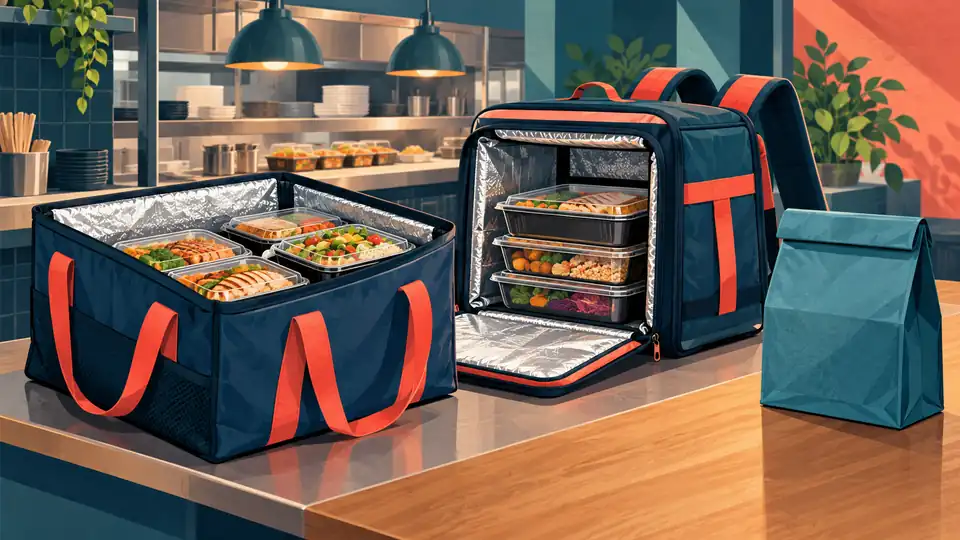
Keeping food hot during delivery starts before the bag is closed. Pack hot food promptly in suitable containers, use a carrier matched to the order, keep cold items separate, and organize the route so food spends less time waiting for collection or handoff. Insulation helps retain heat; it does not replace a temperature-control procedure.
For a route built around passive insulation, compare insulated bags for delivery orders by usable space, closure, and carrying format. Choose for your normal order mix rather than the largest advertised capacity.
Count the Waiting Time as Part of the Delivery
The drive is only one stage. An order may wait while the final dish is packed, while a driver collects another order, and while the customer comes to the door. Map the complete path from the kitchen handoff to the customer’s receipt.
A useful route sheet records when the order is ready, when it leaves, and when it is handed over. It also identifies who responds if a delay makes the planned holding procedure impractical. Adding more insulation cannot eliminate a long, unpredictable wait.
Group orders only when the route and handling procedure support doing so. If reaching a lower bag requires unloading three other orders at each stop, the nominal carrying capacity is larger than the practical capacity for that run.
Pack by Temperature and by Delivery Stop
Keep hot meals away from chilled drinks, desserts, salads, and other cold items. Use separate suitable carriers or a specifically designed divided system. A loose divider in one shared compartment does not automatically provide independent temperature control.
Match containers to the food. Check that lids fit, sauces are contained, and the packaging can withstand the heat and the normal handling of the route. Insulation cannot prevent a poorly closed soup container from spilling into the rest of the order.
- Check the complete order before loading.
- Place heavier, stable containers where they will not crush lighter packaging.
- Keep the next handoff accessible without disturbing every other order.
- Put order identification where it can be read with the carrier closed.
- Close the bag as soon as loading is complete.
These choices are about making the route repeatable. Use the carrier’s specified loading arrangement and weight limit rather than improvising a stack that becomes unstable when carried.
Choose the Carrying Format for the Route
| Format | Useful when | Check before choosing |
|---|---|---|
| Insulated tote | Orders move mainly between a counter, vehicle, and nearby doorway. | Loaded dimensions, base support, handles, and access to each order. |
| Delivery backpack | Walking or cycling makes hands-free carrying useful. | Fit, load stability, permitted carrying weight, and container orientation. |
| Powered delivery setup | The workflow includes a compatible, approved source of power. | Whether it is a complete heated carrier or an insert, plus voltage and operating requirements. |
If the route involves stairs or longer walks, compare insulated delivery backpacks with the actual packed order in mind. A backpack’s external height does not tell you whether a wide meal tray will sit level inside it.
Where active heat fits the operation, review heated food delivery bag options by their actual format. A powered pad, a complete heated bag, and a passive insulated tote have different jobs; match the complete setup before relying on it during a route.
Use Powered Equipment as a Complete System
Check the appliance rating, supplied connection, carrier compatibility, and instructions together. A plug that physically fits does not establish that the power supply or installation is appropriate. Do not place an unrelated hot plate inside a soft insulated bag.
Plan what happens when power is disconnected for loading or handoff. A vehicle-powered device may add heat while connected, but that does not establish its performance once carried away from the vehicle. Include that transition in the operating procedure.
For a restaurant choosing between transport insulation and stationary holding equipment, the guide to matching commercial warming equipment to the job provides a broader decision framework.
Manage Moisture Without Leaving Every Bag Open
Some foods suffer when moisture becomes trapped around their packaging. Others need a close-fitting lid to keep liquid contained. There is no single venting approach for pizza, soup, fried food, and a covered rice dish.
Use packaging and carrier ventilation intended for the food and follow the manufacturer’s loading instructions. Do not leave the outer carrier unzipped as a general solution: that changes heat retention and may make the load less secure.
Make Temperature Checks Part of the Handoff Plan
Check temperatures using a suitable food thermometer and the procedure required for the operation. Measuring the air in a bag or touching its lining does not establish the temperature inside the meal. Commercial delivery should follow the food-safety requirements that apply to the food and route.
Record delays that change the normal run, such as a failed pickup, a vehicle problem, or a customer who cannot be reached. The guide to how holding time depends on food temperature explains why the clock and the bag’s advertised retention claim cannot be used interchangeably.
Reset the Carrier for the Next Run
Empty the carrier and check for leaks, crushed packaging, or residue. Clean it using the method permitted for its lining and construction, then let it dry as directed. A machine-washable bag and a powered bag may need very different care.
Before reloading, inspect handles, fasteners, base supports, and any electrical parts. A repeatable delivery system ends with equipment ready for the next order, not with yesterday’s spill hidden under a new stack of containers.

- Graham
Keeping food warm isn't always as simple as it sounds. From family dinners to large catered events, different settings call for different equipment. Graham Ellis approaches these choices with an eye for the details that matter, including temperature control, serving capacity, ease of cleaning, and overall convenience. His contributions to Best Food Warmers aim to make the buying process less confusing and help readers find solutions that fit the way they serve food.
- Best Soup Warmers: 9 Picks in 2027 October 19, 2026
- Best Infrared Food Warmers: 9 Picks in 2026 October 18, 2026
- Heat Lamp vs. Heat Strip: Which Is Better for Food Warming? October 17, 2026
- Best Heat Lamps for Food: 9 Picks in 2026 October 16, 2026
- Best Commercial Heated Holding Carts: 9 Picks in 2026 October 15, 2026