How to Keep Brisket and BBQ Warm Before Serving

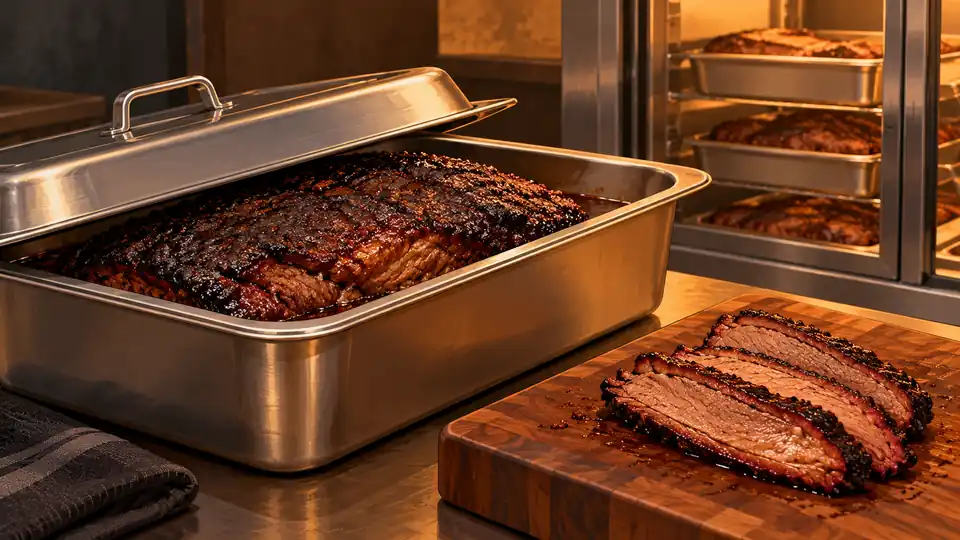
To keep brisket and BBQ warm before serving, separate the recipe’s resting step from any longer holding period. Have a suitable pan, cover, and holding method ready, keep track of the food temperature, and slice or portion the meat close to service. A wrapped brisket in a carrier and a pan in an active warmer behave differently.
For a planned wait before the meal, compare food warmers for holding brisket against the size of the cut and your serving arrangement. Choose for the stage you need to manage rather than treating every carrier or warmer as interchangeable.
Separate Resting From Extended Holding
Resting is part of finishing the cooked meat according to the recipe. Holding is the additional task of keeping prepared food ready until the meal begins or throughout service. A recipe’s rest period does not establish that a brisket can remain in any cooler or bag for the rest of the day.
Follow the recipe for the resting stage, then assess the actual wait before serving. Consider the size of the meat, how it is wrapped, the holding equipment, and whether it will need to travel. Avoid copying another cook’s reported holding time without checking your own food.
For household service, USDA recommends keeping hot food at 140°F or above. Check the meat or food itself with a suitable thermometer. A warm carrier wall, a smoker’s air reading, or a holding-cabinet display is not the same measurement.
Choose the Method for the Length and Location of the Wait
| Situation | Planning approach | Important check |
|---|---|---|
| The meal follows the recipe’s rest | Prepare the carving area and serving dishes before resting ends. | Avoid turning a short final step into an unplanned long wait. |
| Dinner is delayed at home | Use suitable, controlled holding equipment for the prepared meat. | Check the food and the equipment’s permitted operating method. |
| The brisket must travel | Use a suitable covered pan and transport arrangement, then a separate arrival plan. | Whether temperature is maintained throughout the trip and handoff. |
| BBQ will be served over a longer event | Hold reserve food appropriately and bring out manageable batches. | Replenishment, covers, utensils, and temperature checks during service. |
For a menu that includes pulled meat, sides, or several serving pans, compare food warmers for BBQ service by the containers and heat source required. A setup that fits one whole brisket may not be convenient for several foods served at different rates.
Match the Pan and Cover to the Meat
Check the whole cut’s dimensions before choosing a pan or enclosure. Leave room to handle the pan without folding the brisket into an awkward shape or pressing it against a lid. Make sure the support surface can take the loaded weight.
Wrapping, covering, and holding conditions affect the surface of the meat. A tightly enclosed, moist environment can change the bark; a more exposed surface can lose moisture. Use the recipe’s finishing approach and the equipment instructions rather than treating one wrapping method as ideal for every brisket.
If liquid is part of the recipe, keep it contained in a suitable pan. Do not pour liquid directly into an insulated soft carrier or against an electrical heating component.
Keep Transport and Serving as Separate Stages
A passive carrier slows heat loss but does not add heat. Load it in the way its manufacturer permits, keep the meat in a suitable covered food container, and secure the load so it stays level during the trip.
Ask about the destination before leaving: where will the pan go, is power available, and when will the meat actually be served? Waiting at the venue still counts as part of the plan. Do not assume the carrier will handle both the journey and an open-ended buffet.
Our guide to holding time and food temperature explains how to judge the wait. Use temperature checks and the applicable food-handling procedure rather than a claimed number of hours from a cooler anecdote.
Slice and Replenish Around the Meal
Have the board, knife, serving pan, and utensils ready before opening the held meat. Slice or portion what the table needs, then manage the remaining food under the appropriate holding conditions.
For a buffet, plan who will replace the serving pan and where the next batch waits. Keeping every slice on an exposed platter throughout a long gathering creates a different quality and temperature problem from holding the reserve meat appropriately.
The guide to keeping food warm for a party helps coordinate the meat with sides, table space, and batch changes. Assign each dish its own holding method instead of placing the entire menu around one warmer.
What if the Meat Has Cooled Too Far?
Consider the food’s time and temperature history before deciding what to do. Raising a warmer’s setting does not erase an unsafe period or establish that the food can be reheated thoroughly in that appliance.
If you are reheating properly stored household leftovers, USDA recommends an internal temperature of 165°F. Use an appropriate reheating method before transferring the food to equipment intended only for holding. If the handling history cannot establish that the food is safe, do not rely on reheating to correct it.
Can You Hold Brisket Overnight?
Do not assume a home oven, cooler, or insulated bag is suitable for an overnight hold. Extended controlled holding requires equipment, a documented operating approach, and food-temperature monitoring suited to that task. A very low dial setting and a tightly wrapped pan are not enough on their own.
For an ordinary home meal, arrange cooking, resting, and serving so the wait is manageable. If preparing ahead, use an appropriate cooling, refrigeration, and reheating plan rather than improvising a prolonged warm storage period.

- Graham
Keeping food warm isn't always as simple as it sounds. From family dinners to large catered events, different settings call for different equipment. Graham Ellis approaches these choices with an eye for the details that matter, including temperature control, serving capacity, ease of cleaning, and overall convenience. His contributions to Best Food Warmers aim to make the buying process less confusing and help readers find solutions that fit the way they serve food.
- Best Soup Warmers: 9 Picks in 2027 October 19, 2026
- Best Infrared Food Warmers: 9 Picks in 2026 October 18, 2026
- Heat Lamp vs. Heat Strip: Which Is Better for Food Warming? October 17, 2026
- Best Heat Lamps for Food: 9 Picks in 2026 October 16, 2026
- Best Commercial Heated Holding Carts: 9 Picks in 2026 October 15, 2026