What Is a Hot Holding Cabinet?

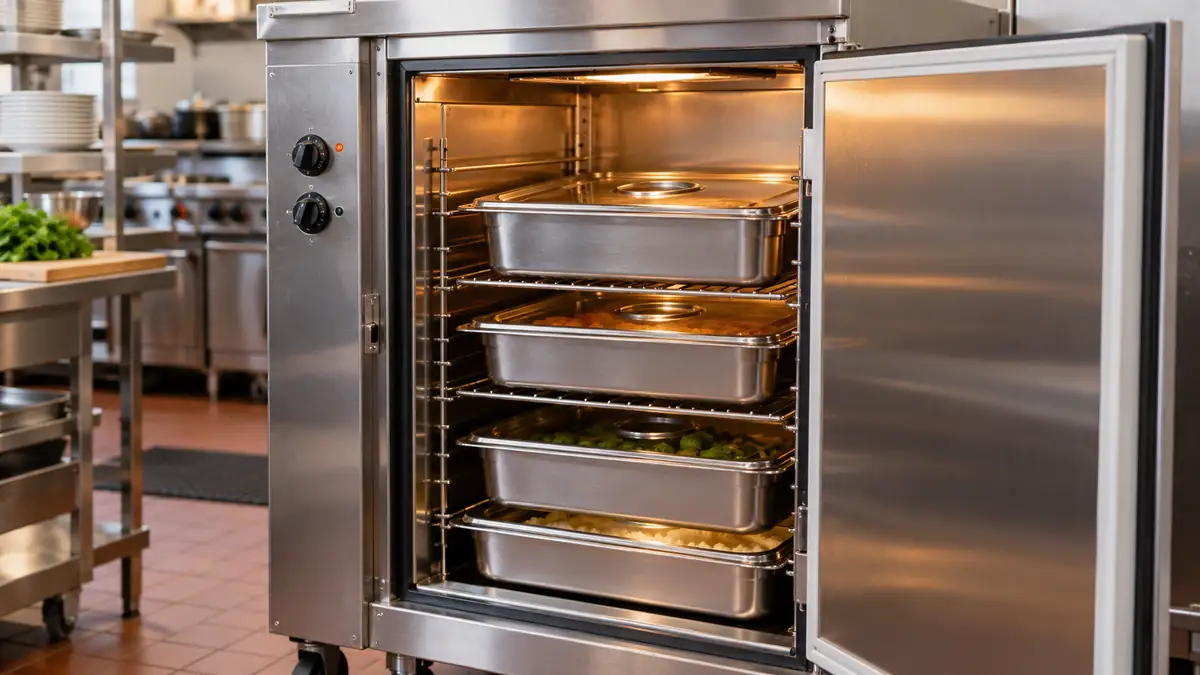
A hot holding cabinet is an enclosed, electrically heated unit that keeps prepared food hot between cooking and service. Common in restaurants, cafeterias, and catering operations, it holds trays or food pans behind a door while heated air helps maintain their temperature. Its primary job is holding food that is already hot, not cooking it or slowly reheating refrigerated food.
If your kitchen needs enclosed storage for prepared pans, compare commercial hot holding cabinets by usable space, access, and installation requirements.
How a Hot Holding Cabinet Works
A heating system warms the air inside the cabinet. Depending on the model, air may circulate naturally or with a fan. Insulation, where provided, helps limit heat loss, while a thermostat controls the cabinet’s heating system. Shelves or pan supports keep containers organized so staff can load and remove food during service.
Some cabinets offer humidity control or a water reservoir to help limit drying. Others use dry heat, and some provide separate settings for different foods. These features vary by model. A hot holding cabinet does not necessarily use steam, and adding water to a cabinet that is not designed for it can damage equipment or create a safety hazard.
Cabinets may be stationary or mounted on casters for movement within a facility. A wheeled cabinet is not automatically a safe, temperature-controlled transport container: if it is unplugged, its heater is no longer maintaining heat. Food temperature must still be monitored during any interruption in power or transport.
What Is It Used For?
A holding cabinet gives a kitchen a place to keep batches of cooked food ready for service. For example, a cafeteria might hold covered pans of cooked vegetables while the serving line is being set up. A caterer might use a cabinet to stage prepared dishes before transferring them to serving equipment.
The enclosed space can help protect food from drafts and reduce heat loss compared with leaving pans on a counter. It can also free up oven space for cooking. How well a particular food retains its quality depends on its container, whether it is covered, the cabinet’s conditions, and the length of holding. Moist foods may dry out in a dry-heat cabinet, while foods meant to stay crisp may soften in a humid one.
Hot Holding Is Different From Reheating
A holding cabinet should receive food that has already been cooked or reheated appropriately. Placing a deep pan of cold leftovers inside and turning up the thermostat does not establish that the food will reheat safely. The cabinet’s air can be hot while the center of the food remains much cooler.
Use an appropriate cooking or reheating method before transferring food to the cabinet. For household leftovers, USDA guidance generally calls for reheating to an internal temperature of 165°F (74°C). Commercial reheating requirements vary with the food and circumstances, so a food-service operation must follow the rules that apply to it. Use a cabinet for reheating only if the manufacturer documents that capability and the applicable food-safety requirements can be met.
The Cabinet Setting Is Not the Food Temperature
A thermostat setting or displayed air temperature tells you about the cabinet, not necessarily the food in every pan. Food temperature can be affected by pan depth, how hot the food was when loaded, container placement, door openings, and cabinet performance. Check food with a suitable food thermometer rather than relying solely on the display.
For U.S. household use, USDA guidance generally recommends keeping hot food at 140°F (60°C) or above. For commercial food service, the FDA Food Code generally specifies hot holding at 135°F (57°C) or above for food requiring time and temperature control for safety, subject to its provisions and exceptions. The Food Code is a model code, not a substitute for applicable state and local requirements. A commercial kitchen should follow its governing rules and procedures.
Neither a cabinet timer nor a high thermostat setting establishes a universal safe holding duration. Food temperature and quality need attention throughout service.
How to Use One in a Kitchen
- Check the cabinet’s instructions. Confirm the required electrical supply, permitted containers, loading arrangement, and whether the unit requires water for a humidity feature.
- Prepare the cabinet as directed. Position it securely, connect it to a suitable outlet, set the controls, and allow it to reach its operating condition before loading food if the manufacturer calls for preheating.
- Load properly heated food. Use compatible pans and avoid blocking any vents or interfering with the door seal. Cover food where appropriate for the dish and the cabinet’s operating instructions.
- Monitor the food. Check its temperature with a food thermometer according to the kitchen’s food-safety procedures. Adjust cabinet operation or address a problem promptly if food is not being held at the required temperature.
- Clean after service. Once the unit is shut off and cooled as directed, remove food debris and clean removable parts and interior surfaces according to the manual. Commercial food-contact surfaces must also be cleaned and sanitized as applicable.
Include cleaning and maintaining commercial warmers in the daily routine, especially around removable shelves and door seals.
How It Differs From Other Warming Equipment
A hot holding cabinet stores multiple pans in an enclosed, heated space. A steam table typically holds pans in accessible wells along a serving line, often using a water bath. A heat lamp or strip heater directs radiant heat toward food in a more open serving area. These devices can all play a role in hot food service, but their heating methods and layouts differ.
A holding cabinet also differs from a passive insulated food carrier. An insulated carrier slows heat loss without adding heat unless it has a separate, active heating system. The equipment name alone does not establish whether a unit can maintain food temperature while disconnected from power.
The practical distinction is simple: a hot holding cabinet provides enclosed, active heat for food that is ready to serve. Its settings help run the equipment, but the temperature of the food determines whether it is being held appropriately.
If you are still deciding between a cabinet and serving-line equipment, start with our guide to choosing a commercial food warmer.

- Graham
Keeping food warm isn't always as simple as it sounds. From family dinners to large catered events, different settings call for different equipment. Graham Ellis approaches these choices with an eye for the details that matter, including temperature control, serving capacity, ease of cleaning, and overall convenience. His contributions to Best Food Warmers aim to make the buying process less confusing and help readers find solutions that fit the way they serve food.
- Best Soup Warmers: 9 Picks in 2027 October 19, 2026
- Best Infrared Food Warmers: 9 Picks in 2026 October 18, 2026
- Heat Lamp vs. Heat Strip: Which Is Better for Food Warming? October 17, 2026
- Best Heat Lamps for Food: 9 Picks in 2026 October 16, 2026
- Best Commercial Heated Holding Carts: 9 Picks in 2026 October 15, 2026