Induction Warmer vs Electric Warming Tray: How They Differ

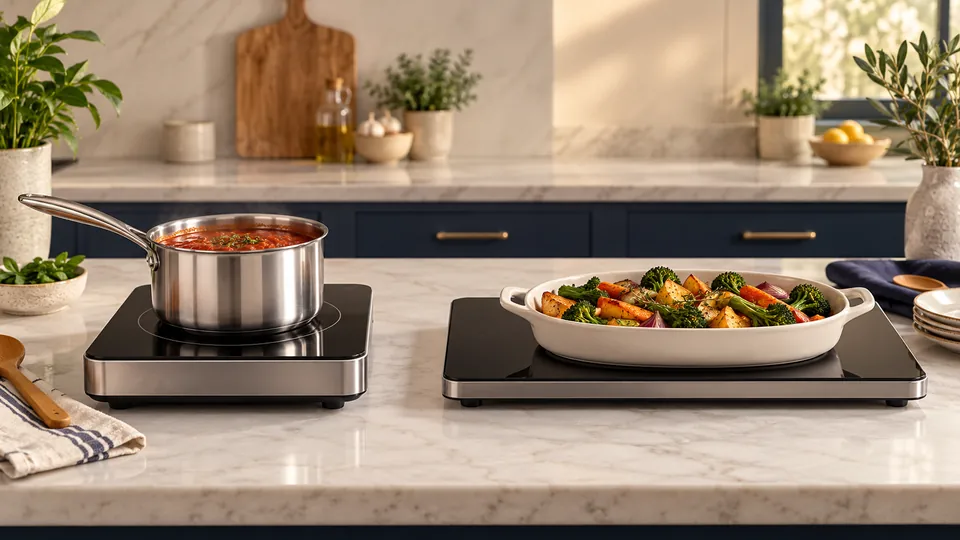
An induction warmer heats compatible cookware through an electromagnetic field; an electric warming tray heats its own serving surface, which transfers warmth into an approved dish. Choose induction around a matched heating unit and vessel. Choose a warming tray around the serving dishes you want to keep on the table. An induction-compatible saucepan alone supplies no heat.
If you already own an induction appliance and need a small vessel, our comparison of induction-compatible pans and electric serving alternatives separates those choices. Start with the pan entries for an existing induction setup; the standalone electric alternatives solve a different serving problem.
Induction Warmer vs Electric Warming Tray at a Glance
| Decision | Induction warmer | Electric warming tray |
|---|---|---|
| Complete setup | Powered induction unit plus a compatible vessel | Powered tray plus approved serving dishes |
| What determines compatibility? | Vessel base material, size, shape, and the unit’s requirements | Tray instructions, container heat tolerance, fit, and weight limits |
| Serving arrangement | Arrange vessels around the appliance’s heating zones | Arrange dishes within the usable heated surface |
| Controls to examine | Holding function, adjustment range, and shutoff behavior | Heat settings, timer, and independently controlled sections if fitted |
| Common buying mistake | Buying a compatible pan without a heating unit | Assuming every dish that fits is suitable for the heated surface |
Compare the Whole Setup, Not Just the Word “Warmer”
Shopping results can mix induction-ready saucepans, induction appliances, warming mats, and buffet servers. Before comparing features, identify what each package actually contains. A small metal butter warmer might be cookware intended for a separate heat source. A rectangular electric tray with a cord may be a complete appliance, but its glass top does not make it induction.
For a new serving station, write down both parts of the system: the appliance and the vessel. If either is missing, the setup is incomplete. For an existing station, the question is narrower: are you replacing the heat source, adding another serving position, or finding a smaller pan?
Let Your Serving Layout Guide the Choice
For one regularly served dish
Start with the vessel you plan to use and the amount you serve at once. A sauce station, for example, needs enough room to stir and portion without a handle obstructing the guest’s reach. With induction, verify that vessel against the selected unit before planning the counter around it.
Consider the changeover as well as the first fill. Keep the replacement batch accessible, leave somewhere to put the used vessel, and avoid a layout that requires carrying hot food across the guest queue. A tidy single-dish station can be more useful than extra heating area you cannot reach comfortably.
For several serving dishes
A flat tray is worth considering when the meal will stay in separate serving dishes. Sketch the actual dish footprints, including handles and the space needed to lift lids. Product width alone says little about how comfortably guests can reach the food.
Once you have that layout, compare warming trays for your serving-dish arrangement. Choose the usable surface and controls around the meal rather than selecting the longest tray first and finding dishes afterward.
Check Cookware Compatibility Before Committing to Induction
An induction label on a pan is only the beginning of the match. The magnetic part of its base must also suit the chosen appliance’s size and placement requirements. This matters especially with miniature saucepans: a vessel can be described as induction-ready yet be too small for a particular unit to detect.
Use a magnet as an initial material check, then compare the cookware specifications with the appliance manual. Measure the base that actually sits on the surface, rather than relying on the rim diameter. Avoid solving a mismatch with an adapter unless the appliance manufacturer specifically permits that arrangement.
For the wider explanation of heat moving from an appliance into its contents, see how active food warmers transfer heat. The useful comparison is the complete heat path, including the dish, rather than the appearance of the top panel.
Look for Holding Controls That Fit the Meal
A cooking hob and a buffet induction warmer can share a heating principle while serving different purposes. Examine the exact model’s intended use, available settings, and operating limits. A high maximum wattage does not answer whether the appliance is convenient for a small sauce held through service.
The same practical questions apply to trays: can you adjust the heat for this meal, see the setting clearly, and operate the timer without reaching across hot dishes? If a tray has separate sections, confirm what can actually be controlled independently.
Cooking, reheating, and maintaining already-hot food are separate tasks. Prepare the food using equipment suited to the job, then manage the serving stage. Use the food-warmer temperature and thermometer guide to check the food itself rather than treating a dial or surface reading as its temperature.
Questions Worth Settling Before You Buy
Can a glass or ceramic casserole go on induction?
A conventional glass or ceramic casserole is not a substitute for a compatible induction vessel. If keeping that casserole in service is the priority, examine a warming tray whose instructions allow that type of container. Check the dish manufacturer’s heat-use guidance too.
Can an electric warming tray be used for cooking?
Choose equipment according to its stated function. A serving tray intended to hold already-hot food should not be treated as a burner. A model with a separate documented cooking function needs to be assessed on that function’s instructions.
Which setup is easier to bring to a party?
Count everything you must move: appliance, compatible dishes, lids, utensils, and protective packing. Then check the destination’s outlet and available space. For occasional gatherings, fitting your existing serving routine may matter more than adding another appliance type.
Choose Around the Vessel and the Service
If you want induction, begin with a genuine heating unit and a confirmed vessel match. If you want several prepared dishes accessible across a buffet, begin with an approved tray-and-dish layout. That sequence keeps the purchase focused on the food you serve, the equipment you already own, and the way guests will use the station.

- Graham
Keeping food warm isn't always as simple as it sounds. From family dinners to large catered events, different settings call for different equipment. Graham Ellis approaches these choices with an eye for the details that matter, including temperature control, serving capacity, ease of cleaning, and overall convenience. His contributions to Best Food Warmers aim to make the buying process less confusing and help readers find solutions that fit the way they serve food.
- Best Soup Warmers: 9 Picks in 2027 October 19, 2026
- Best Infrared Food Warmers: 9 Picks in 2026 October 18, 2026
- Heat Lamp vs. Heat Strip: Which Is Better for Food Warming? October 17, 2026
- Best Heat Lamps for Food: 9 Picks in 2026 October 16, 2026
- Best Commercial Heated Holding Carts: 9 Picks in 2026 October 15, 2026