Plate Warmer vs Food Warming Tray: When to Use Each

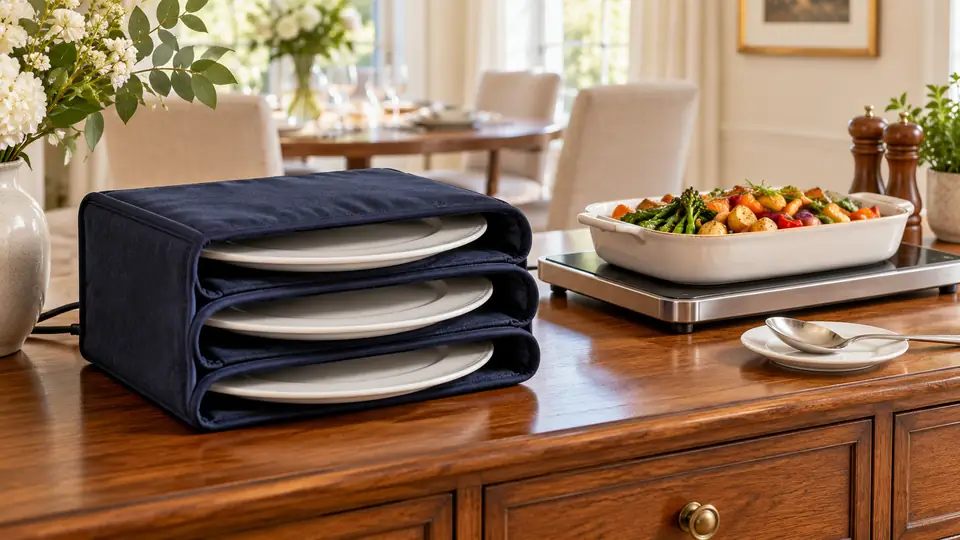
A plate warmer preheats empty dinner plates before food is served. A food warming tray supplies heat beneath approved serving dishes during the meal. Choose a plate warmer when dinnerware cools the meal too quickly; choose a warming tray when food needs to stay in serving containers while guests help themselves.
For warming empty dinner plates, begin with the dedicated plate-warmer entry in our plate-warming and serving-surface comparison. The wider trays and other heating products in that list cover different jobs, so match the entry to whether you are heating dinnerware or holding a prepared dish.
Plate Warmer vs Food Warming Tray at a Glance
| Question | Plate warmer | Food warming tray |
|---|---|---|
| What are you warming? | Empty dinnerware before plating | Prepared food inside suitable serving dishes |
| When does it help? | During final meal preparation | During a buffet or extended serving period |
| How do you assess capacity? | Approved plate size, count, and loading pattern | Usable heated area, dish footprints, and loading limits |
| What is the main fit check? | Compatibility of the warmer and your dinnerware | Compatibility of the tray and your food-filled containers |
| What should you avoid assuming? | That warm plates actively hold food after removal | That any flat tray can preheat a stack of plates |
Start With the Point at Which the Meal Cools
Think about the last meal that felt lukewarm. Was the food hot in the kitchen but cooler after being plated? Or had the casserole already cooled on the buffet before anyone took a portion? Those are different points in the serving process, and buying equipment for the wrong one can leave the original problem untouched.
For a plated dinner, prewarming suitable plates can help reduce the immediate cooling that happens when hot food meets cool dinnerware. For a buffet, focus first on the food waiting in serving vessels. You may eventually use both tools, but the first purchase should address the stage causing the difficulty.
When a Dedicated Plate Warmer Makes Sense
A plate warmer fits a meal that moves from the kitchen onto individual dinner plates shortly before eating. Examples include a family roast served at the table or a small dinner party where the plates are arranged before the final dish is ready.
Designs vary. A fabric electric plate warmer places heating sections around the plates in a specified loading arrangement; a purpose-built cabinet or drawer has its own layout and limits. Compare the exact appliance rather than assuming the plate count of one design applies to another.
Count plates and check their shape
Choose capacity for the number of place settings you actually serve. Check whether the stated count applies to your plate size and the permitted arrangement. Deep rims, irregular shapes, and very large dinnerware can change the fit.
Keep a clear path between the warmer and the plating area. A useful setup lets you take out the needed plates without moving a hot serving dish or reaching across a cord. Follow the appliance’s loading and handling instructions, including how to remove heated plates.
When a Food Warming Tray Is the Better Fit
A food warming tray suits a meal where prepared dishes remain available for self-service. Its working area should accommodate the actual containers, with enough room for guests to lift lids and use utensils without bumping adjacent dishes.
Once you know which dishes need heat, use our warming-tray comparison for buffet serving to compare surface layouts and controls. A compact tray may suit one casserole, while a longer or modular design needs to justify the extra table space with a practical serving arrangement.
Check the tray’s approved container materials and load limits before using your favorite dish. Heat-resistant dinnerware and cookware still need to be suitable for the particular heating surface. Do not put food directly onto the appliance unless its instructions expressly provide for that use.
Why One Appliance Does Not Automatically Replace the Other
A stack of plates and a shallow casserole present different heating tasks. A tray’s width does not establish that it is designed to warm stacked dinnerware, and a plate-warming wrap is not a substitute for a food-holding appliance.
The distinction is easier to assess when you follow how heat moves through food-warming equipment. Ask what the appliance is intended to heat, how that heat reaches the item, and which loading arrangement the manufacturer supports.
A warmed plate also stops receiving active heat once it leaves the warmer. It can improve the starting conditions for serving, but it does not create an ongoing hot-holding system for a meal left on the table.
Plan the Meal in Three Stages
- Before plating: prepare compatible empty plates in the plate warmer, following its instructions. Leave room beside it for handling the dinnerware.
- During service: move freshly prepared hot food to an appropriate holding appliance if it will remain in serving dishes. Keep utensils and lids accessible.
- At the table: plate manageable portions and serve promptly. Keep any remaining food in the appropriate serving setup rather than depending on the warmth of individual plates.
Give each appliance a stable location with the required clearances and a suitable electrical supply. Lay out the meal before guests arrive so removing a plate never requires shifting the buffet equipment.
Check Materials, Handling, and Cleanup
Use the dinnerware manufacturer’s guidance alongside the appliance instructions. Decorative finishes, unusual materials, and pieces with damage need particular attention; suitability for one heating method does not establish suitability for another. Avoid sudden temperature changes and handle warmed dishes with appropriate protection.
After serving, unplug the equipment and allow it to cool as directed. Plate-warmer covers, electrical inserts, and tray surfaces have different cleaning requirements. For the serving-tray part of your setup, follow our warming-tray cleaning and care guide rather than treating the whole appliance like a washable dish.
Common Questions
Will a plate warmer heat refrigerated leftovers?
Use a plate warmer for its specified dinnerware-warming purpose. Reheat leftovers with equipment intended for reheating, then serve them on the prepared plates. Warming an empty plate and bringing chilled food up to temperature are different jobs.
Do I need both for a small dinner party?
Only if both stages need attention. If everyone receives a plated meal at once, dinnerware preparation may be the priority. If guests serve themselves over time, start by arranging suitable food holding. Add the second tool when it solves a clear problem in your own routine.
Can a tray warm individual plates?
Use that arrangement only when the tray’s instructions and the dinnerware guidance allow it. Verify permitted placement and loading instead of assuming that “warming plate” in a product title means a dedicated dinner-plate preheater.
Choose the Tool for the Serving Stage
For warmer empty dinnerware ready for plating, choose a dedicated plate warmer that fits your plates and place settings. For prepared food waiting in serving dishes, choose a suitable warming tray. Keeping those roles clear makes the equipment easier to select and the meal easier to organize.

- Graham
Keeping food warm isn't always as simple as it sounds. From family dinners to large catered events, different settings call for different equipment. Graham Ellis approaches these choices with an eye for the details that matter, including temperature control, serving capacity, ease of cleaning, and overall convenience. His contributions to Best Food Warmers aim to make the buying process less confusing and help readers find solutions that fit the way they serve food.
- Best Soup Warmers: 9 Picks in 2027 October 19, 2026
- Best Infrared Food Warmers: 9 Picks in 2026 October 18, 2026
- Heat Lamp vs. Heat Strip: Which Is Better for Food Warming? October 17, 2026
- Best Heat Lamps for Food: 9 Picks in 2026 October 16, 2026
- Best Commercial Heated Holding Carts: 9 Picks in 2026 October 15, 2026