Rice Cooker vs Rice Warmer for Food Service

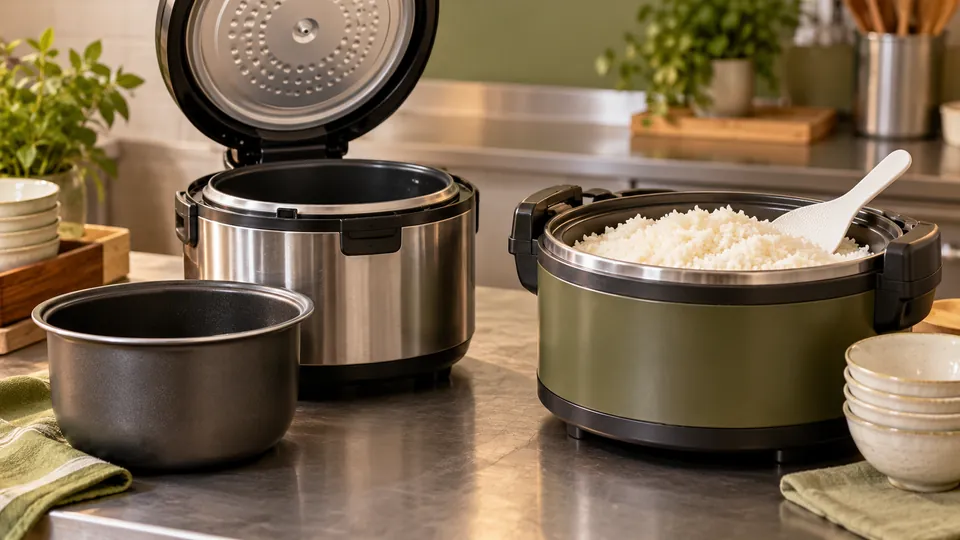
A rice cooker prepares rice from a specified rice-and-water load. A rice warmer maintains rice that has already been cooked. Some cookers include a keep-warm function, so the choice is about the exact unit’s documented functions and the service workflow rather than two completely separate appliance shapes.
If rice is cooked elsewhere and needs a serving station, compare commercial rice warmer and cooker formats by their actual cooking and holding functions. Check the listed role of each model before choosing by capacity.
Identify Which Stage Needs Equipment
| Need | Function to verify | Why it matters |
|---|---|---|
| Prepare uncooked rice | A cooking cycle with the specified pot, rice measurement, and water instructions. | Holding mode is not a substitute for a documented cooking process. |
| Hold freshly cooked rice | A permitted keep-warm or holding function. | The operating method and food checks still need to fit service. |
| Reheat chilled rice | A documented reheating method suitable for that food and operation. | A keep-warm switch does not establish reheating capability. |
Some operations use a cooker and its keep-warm function for one batch. Others cook in a separate process and transfer finished rice to a dedicated holding unit. Decide which workflow applies before comparing pot size.
Read Capacity in the Correct Units
Check whether a stated cup count refers to uncooked rice, cooked rice, or a particular measuring cup supplied with the appliance. A rice measuring cup is not always an 8-fluid-ounce US cup.
For example, some commercial cooker instructions specify a 180 mL rice cup or a larger tumbler equivalent to several such cups. Use the measurement system and fill markings for the exact model rather than transferring the cup count from another appliance.
Write down the amount of cooked rice needed between replenishment runs and compare it with the documented usable holding capacity. Leave the filling space required by the operating instructions.
Plan the Batch Flow Around Service
Record when each batch finishes cooking, where it waits, and when it enters service. If the same appliance is used for cooking and holding, consider what happens when the next cooking cycle needs to begin.
A separate warmer can provide a different workflow, but it also adds a transfer step and a second unit to operate and clean. Choose it when that arrangement solves a real service need rather than assuming two appliances are always better than one.
Keep batch identification and replenishment consistent with the operation’s food-handling procedure. Do not continually mix a fresh batch into an older one without an appropriate process.
Do Not Treat Keep Warm as a Universal Reheat Button
Manufacturers distinguish cooking, holding, and reheating in different ways. Read the instructions for the exact model and function. A unit that automatically switches to warm after cooking may still prohibit reheating through that mode.
The guide to reheating food in equipment intended for holding explains that distinction. Use a suitable reheating process when required, then transfer the rice to holding equipment as directed.
Commercial rice service should follow the requirements and monitoring procedure applicable to the operation. A warm pot wall or an indicator light does not establish the temperature throughout the rice.
Check Lids, Inner Pots, and Access
Look at how the lid opens, where condensation is handled, and whether staff can remove the inner pot safely. A large pot can be less convenient if it cannot be lifted and cleaned within the available workspace.
Use the supplied or approved inner pot and utensils. Do not add water beneath a pot, immerse a powered base, or substitute a different vessel unless the instructions permit it.
Consider the serving position too. Staff need room for the lid, rice paddle, and container being filled without blocking access to the controls or crowding another hot appliance.
Include Cleanup in the Purchase Decision
Check the permitted care method for the inner pot, lid parts, condensate components, and electrical housing. Removable does not automatically mean dishwasher-safe.
Use the framework in cleaning and maintaining commercial warmers to plan the end-of-service routine. Verify that staff can reach food-contact surfaces and let the appropriate parts dry before the next use.
Which Should You Choose?
Choose a cooker when the missing stage is preparing rice from an uncooked load. Choose a documented holding function or warmer when the missing stage is maintaining finished rice for service. If one appliance provides both, check whether its capacity and batch timing fit the operation.
The useful comparison follows the food through cooking, transfer, holding, serving, and cleaning. The name on the front of the appliance is only the beginning of that decision.

- Graham
Keeping food warm isn't always as simple as it sounds. From family dinners to large catered events, different settings call for different equipment. Graham Ellis approaches these choices with an eye for the details that matter, including temperature control, serving capacity, ease of cleaning, and overall convenience. His contributions to Best Food Warmers aim to make the buying process less confusing and help readers find solutions that fit the way they serve food.
- How Do Food Warmers Work? November 7, 2026
- How Long Can You Keep Food in a Warmer? November 6, 2026
- Can You Reheat Food in a Food Warmer? November 5, 2026
- What Temperature Should a Food Warmer Be Set At? November 4, 2026
- Best Pizza Warmers: 9 Picks in 2026 November 3, 2026